Showing posts with label AHL. Show all posts

Wednesday, 27 December 2017

JOHNNY BOWER AND MEMORIES OF AN ERA

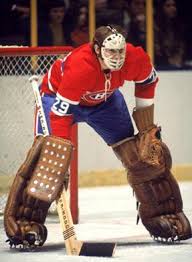
Johnny Bower with the Maple Leafs. Glenn Hall in Chicago. Terry Sawchuk of the Red Wings. Eddie Johnston in Boston. Gump Worsley in New York. And Jacques Plante with les Habitants in Montreal.

Six names, six teams, and a rush of memories. It was a simpler time. When I read that Johnny Bower had died aged 93, I almost immediately recited those six names, like some shamanistic incantation. I can't say for sure when all six of those guys played on those teams, but I am assuming they were all together in that alignment for a least a few of my youthful years.

Beyond that, I remember Sawchuk wound up in Toronto splitting time with Bower, an innovation which went against conventional wisdom that one goalie had to play every game to stay sharp. After all, goalies were supposed to wear number 1, and two guys couldn't do that. It was, of course, a move both goalies hated, though it likely helped both immensely. Of course every team was quickly using two goalies, if only to rest their better one occasionally.

I recall too the shock trade when the Canadiens sent Plante to the Rangers for Worsley (there were other players involved—Dave Balon and Phil Goyette among others) Plante who had come up with the goalie's mask, which was originally seen as a sign of weakness, if not fear, was perceived as the sport's mercurial genius, but at odds variously with coach Toe Blake and GM Frank Selke, who would soon be gone himself. Worsley, a native Montrealer, was seen as a steady plugger (despite being one of North American sport's most prodigious drinking men).

But Johnny Bower's was probably the most interesting career of them all. He was born John Kiszkan, and at 15 enlisted in the Army, serving in England during the war until he was discharged because of arthritis in his hands. When his parents divorced he took his mother's name, though later he claimed it was easier for sportswriters to spell.He was already 20 when he played a year of junior hockey in Prince Albert in 1944, then turned pro in the minor league AHL. He played eight seasons for the Cleveland Barons, and was generally considered the league's best goalie, before he got a shot in 1953 with the New York Rangers, where he replaced Worsley, who'd been the NHL Rookie of the Year in 1952. For the next three years he was in effect Worsley's backup, playing most of the time in Vancouver of the WHL or Providence of the AHL. When the Rangers let him go he returned to Cleveland for a year, before Punch Imlach talked him into giving the NHL one more chance.

Bower was 34 when he finally settled into the nets for the Maple Leafs, where he would play for 11 more seasons, his career no doubt extended by sharing time with his fellow Ukranian Sawchuk. He backstopped the Leafs to four Stanley Cups, the first three in a row in 1962-4. After playing just one game in the 1969-70 season, he retired, and at age 45 he was at the time the oldest player to have played in an NHL game.

Nobody looked less like an athlete than Gump Worsley (well, maybe baseball's Smokey Burgess) but Bower was another guy who you would pass in the street never thinking you'd seen a great. Six decades later, most of those six names still appear regularly in arguments about the best goaltenders ever.

Ssx decades on, thinking of Johnny Bower made me nostalgic for those days when you knew the names, and the faces (no masks, no helmets) of all the goalies (if not all the players) in the six-team NHL. Even though you didn't see them much on TV (though I was lucky, being able to pick up Rangers' games out of New York—and falling in love with Montreal as a result). My dad played hockey, so we followed it a bit. I saw the Providence Reds (post-Bower) play in New Haven when the city finally got an AHL team--I had seen the AHL's Baltimore Clippers play the EHL Blades in the old New Haven Arena). Hockey was what first drew me to Montreal; Evelyne, whom I met on the beach in Woodmont, may have been another factor). In many ways my life has balanced itself on the fulcrum of Montreal; had I not wanted to live there I would not have gone to McGill; had I not gone to McGill I would not have met Theresa; had I not met her I would never have moved to Britain. 

Perhaps it was the Christmas season, or the snow that fell this morning, that helped me spin a hockey player's death into un petit coup de nostalgie, but these were very pleasant memories. RIP Johnny Bower.

Saturday, 28 May 2016

RUST NEVER SLEEPS: MEMORY AND THE STANLEY CUP FINALS

In 1971, rookie goaltender Ken Dryden, with only six NHL games under his belt, led the Montreal Canadiens to the Stanley Cup, beating Boston's Big Bad Bruins in the final. I can still visualize the 6'4" Dryden stopping Phil Esposito, the Bruins' big centre who dominated the slot (the area just in front of the goal--as bumper stickers said in Boston at the time: 'Jesus saves...and Esposito scores on the rebound') as if the two were going mano-a-mano in the midst of this fast-flying team game. There is something about goalies that sticks in the imagination; I played the position in lacrosse, and it's an all-or-nothing proposition: you're only as good as you last save, you feel as if every goal is your fault, even if you should feel none of them are. A hockey goalie is probably the most important single player in team sports: expected to stop virtually every shot, a hot goalie can elevate a team throughout the playoffs.

Dryden was a surprise, and both incredibly graceful and remarkably quick despite his height; most goalies were smaller men who fit the goal better. Being 6-3 at the time, I liked this too. He would win the NHL's Rookie of the Year award, the year after he'd won the Cup. He had a remarkable career, on and off the ice, and wrote one of the best sports books ever, The Game. I was lucky enough to work with him a couple of times, that lanky youngster who excelled under the greatest pressure turned out to be a smart, dryly funny and unassuming nice guy. What everyone thinks Canadians ought to be.

Thursday night the Pittsburgh Penguins staged a remarkable comeback to beat Tampa Bay in game seven of their Conference Final series, winning at home to advance to the Stanley Cup final against the San Jose Sharks, which means the final will at least sort of look like a match-up of cities that know what ice is.


The Penguins back to back wins in Tampa and Pittsburgh were keyed by the return of goaltender Matt Murray, who turned 22 on Wednesday. Watching Murray was like watching Ken Dryden reborn. It's not just physical: Murray's listed at 6-4 but only 178 lb; Dryden was heavier, but goalies wore fewer pads in those days, so if anything Dryden looked skinnier in the nets. But it was the way Murray stands up, and then finds incredible moments of contortion in that long frame. Like Dryden, he performed well in the American Hockey League; when Dryden was called up, it was from the Montreal Voyageurs, who played their home games in the Forum. Ironically, Dryden had been drafted by the Bruins while he was still playing in Junior B hockey; when he decided to go to Cornell instead of sign, the Bruins traded his rights to Montreal. Goalies coming out of US college hockey were still a rare thing in the NHL in those days.

Murray was a second-team all-star his last year in Junior A hockey, but Pittsburgh had already seen potential and drafted him in the third round of the 2012 draft. His impact with the NHL has been very much like Dryden's was 45 years before.

Murray tore up at AHL last season, playing for the Wilkes-Barre/Scranton Penguins. He had a 1.58 goals against average, a .941 save percentage, won 25 games lost 10 with three ties. He was named MVP, rookie of the year, selected as a first-team All Star and awarded the Baz Bastien Trophy as the league's best netminder. Although he was promoted to Pittsburgh this season, he sat on the bench behind veteran Marc-Andre Fleury; when Fleury was injured he shared time with Jeff Zatkoff. In the end, he appeared in only 13 games (9 wins 2 losses 1 tie) but his goals against (2.00) and save percentage (.930) were team bests.

He took over the goaltending full-time in the third playoff game, beat the Rangers 3-1 and 5-0 in two wins, and took over as the number one goalie. I made the Dryden comparison then, because I was back in the States and watched the series with my brother and sister-in-law, devoted Rangers' fans. But after losing to Tampa Bay in Tampa last week, the Penguins went back to Fleury, who was beaten 4-3 in overtime at home. Thus Murray came back and won the remaining two games.  For the playoffs his record now stands at 11-4, GA 2.22, save pct .924. He will go into the finals against the Sharks as the number one goalie again, not bad for a guy who, like Dryden has now played more Stanley Cup playoff games than regular-season games in the NHL.

But the Penguins won that game seven against Tampa Bay not so much because Murray was spectacular, although he was good when called upon, but because their offense swarmed the Lightning throughout the game, and because of two goals by Bryan Rust, which gave him five in the playoffs, which is one goal more than he scored during 41 games of the regular season. He's not known as a goal-scorer, obviously, but in the Stanley Cup surprising things happen. I can't really visualize Rust in my old Montreal memories; Doug Risebrough a little, but he was a centre, Murray Wilson for the role he plays, but Wilson was bigger and played on the left. And although the game has changed so much since the Sixties and Seventies, we can't live in the past, can we?