I've just watched the final episode of the last series of Justified, a triumph of serial scripting that both ties up loose ends and brings the show full circle to the point where it began. Just to make sure I wasn't giving Justified some sort of nostalgic benefit of the doubt, I went back and watched the very first episode, and it was as I remembered--full attention was paid to detail and the show held firm to its six-season focus, which was primarily the relationship between Marshal Raylan Givens and the man he comes to Kentucky to get, his childhood buddy Boyd Crowder.
The sixth series maintains a frantic focus, resembling nothing more than bloody Shakespearian drama, as the betrayals and the deaths come thick and fast. Old blood feuds mix with modern greed, traditional outlaws butt heads with 'modern' corporate criminals, and the reason is the coming legalisation of pot in the Bluegrass State--a modern form of coal that could turn Harlan prosperous once again. Raylan of course is in trouble with the authorities, including Art, back on the job and played with the usual avuncular grace by Nick Searcy.
The outsiders are played by Mary Steenburgen (chilling as a cold-blooded gangster bent on revenge against the man she thinks betrayed her husband) and Sam Elliott, cast brilliantly without moustache as both a charmer and a killer. With handlebar, Elliott is a natural hero, deep-voice and solid jaw. But take away the fuzz, and it reveals a weak-lip, and a much more interesting character, the same kind of tic that makes Jere Burns as Wynn Duffy so effective too. Their machinations, with Boyd hovering between and amongst them, are worthy of the best revenge tragedies.

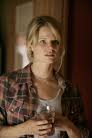
The other ongoing betrayal is between Boyd and Eva, out of prison on a deal to be Raylan's informer. In some ways Joelle Carter is at the center of this series: her decisions are sometimes hard to interpret, her feelings even moreso. But Justified ends with a couple of twists, and the first of them explains her motivations perfectly, as her actions and consequences make perfect sense.
Perhaps the weakest part of the series is the introduction of Boone, Sam Elliott's hired gun, who's even more of a neo-cowboy gunslinger than Raylan. It is building to a shootout between the two, of course, and the way that shootout ends is another twist that has been set up, deftly, by just an off-hand bit of dialogue.
 The ultimate confrontation, however, the one that the whole series has been building, is the one between Rayland and Boyd. It too has a twist, one that harkens back to the very first episode. But before that happens, we get a superb bit of scene-setting episode after episode, as Walton Goggins gets to go more and more over-the-top, his white teeth flashing and his revivalist dialogue making him seem an almost-mad king seeing his dreams drift away. The show's fulcrum has always rested between Goggins' fire and Timothy Olyphant's ice, and it works so perfectly because they play it so well, and each time they do it takes us right back to the beginning.
In the first episode, before Raylan shoots (but does not kill) Boyd, Boyd has asked if Raylan is going to kill him, and Raylan says 'if you make me I will'. Those words resonate here. Graham Yost and the writing team have kept this series true to the spirit of Elmore Leonard. And the ultimate line is the one that resonates the most, again returning right back to that first episode, which established Raylan's 'anger' (as Natalie Zea described wonderfully at the end of that very first episode) and his coolness (as the very opening shootout showed). It's a simple line, but it speaks about Harlan, about work, about men. It echoes of Leonard. 'We dug coal together.' It was Justified.