Tuesday, 31 August 2010

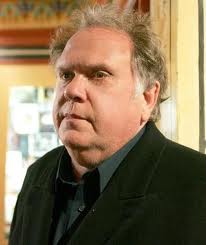
BOBBY THOMSON AND CLINT HARTUNG: THE GUARDIAN OBIT AND MORE

My obituary of the baseball player Bobby Thomson, who hit 'the shot heard round the world', is in today's Guardian, you can link to it here. As usual with American sports obits, some things I thought were significant got left out, which may or may not mean something to you.

When Leo Durocher moved Thomson from the outfield to third base, it was to accomodate the bat of a 20 year old rookie named Willie Mays, who went on to be one of the game's great outfielders. Thomson went out of his way to mentor Mays, who'd been signed out of the Negro leagues, and in some obits Willie reflected on his 'class'. Thomson's bat was very good for an outfielder, but exceptional at third, and he handled the transition to a far more demanding defensive position without complaint.

Of course, Dodgers' manager Charlie Dressen deserves some criticism. In my original copy I'd explained how the Giants won the first game at Ebbetts Field basically on Thomson's home run off Ralph Branca. Dressen chose to play the first game at home and the other two on the road, and, as many people have pointed out, both Thomson's homers would have been outs had he hit them in the other stadium. But this also makes one question why he called on Branca to pitch to Thomson at all, or why he didn't walk Thomson, loading the bases and creating force outs, and pitch to the on-deck batter, who of course was Willie Mays.

I pointed out that the World Series stayed in New York that year; after all it was the centre of the universe. And I described their loss to the mighty Yankees as 'inevitable', which I wish had been left in. It also occurs to me that Thomson was one of a small group of native New Yorkers who went straight to and starred for one of the hometown teams (Branca, from Mount Vernon, was close enough to be another), like Lou Gehrig, Whitey Ford, Babe Herman, Sandy Koufax (until the Dodgers moved to LA) or Phil Rizzuto (or the Mets' John Franco). New Yorker ARoid Rodriquez got to the Yankees via Seattle and Texas, Eddie Lopat came from the White Sox. Joe Torre, of course, was from Brooklyn. If we define 'starred' rather more loosely we could mention Johnny Murphy, Lee Mazzilli, Joe Pepitone, Ed Kranepool, or 'Superjew' Mike Epstein.

I also found it interesting that Thomson actually came out of retirement in 1963 to sign with Tokyo's Yomiuri Giants. In my copy I pointed out that meant he ended his career in a Giants' uniform, as Yomiuri's jerseys and hats were direct copies of the New York Giant kit. It's also worth noting that the use of the game on the radio in the Godfather is anachronistic, as it is supposedly 1948 when Sonny is gunned down. I was particularly taken with Thomson's story about the Perry Como TV show; he drove himself home, taking the Staten Island ferry, and that to me was another indicator of what baseball, and its players, used to symbolise: working guys working at a job that was a lot more fun and a little better paid than your dad's.

It also reminded me of another story from that Giants team. Dressen pulled Don Newcombe for Branca after a pause in the game because Don Mueller had broken his ankle sliding into third. His replacement as a base-runner was Clint Hartung, who died just last month (8 July). Hartung achieved a certain amount of recognition because the baseball writer Bill James named an award for him, given to players who do not fulfill their hyped potential.

Clint Hartung was about 6-5, 210 pounds, which was pretty big in those days, especially for a player with his speed. He was called 'The Hondo Hurricane' because he'd led Hondo, Texas to a state title as a pitcher and outfielder, and signed a pro contract with the minor-league Minneapolis Millers, starting his pro career in Eau Claire, where he won three games and hit .348 before being drafted in midseason in 1942. He mostly played baseball in the Army, and with Pearl Harbor's Hickham Field Bombers he hit .567 and won 25 straight games as a pitcher, which was enough to get him into Life magazine as a 'one man ball team'. After the war, the Giants bought his contract from the Millers, for $25,000 and four players. Hartung was an immediate sensation in 1947's spring training (a homer in his first at bat) and arrived in New York as highly heralded as any player ever has been.

As a rookie that year he went 9-7 as a pitcher, and hit .303. But like some modern players, like Rick Ankiel, he was hampered by the team's indecision with him; they never decided whether he should be a pitcher or a hitter (and at the major league level he was only adequate as an outfielder) and his managers, first Mel Ott and then Leo Durocher, both appeared to resent having to use him in both capacities. Of course other players, like Babe Ruth, have coped better. He also was a soft-spoken, modest character, just the sort of qualities unlikely to receive huge appreciation from either Ott or Durocher.

Hartung played six seasons for the Giants. In the first four, as a pitcher, he wound up 29-29, in his final two (1951-52) he was reduced to just part-time duty as a pinch-hitter which meant his lifetime batting average was just .238, though he hit 14 home runs in his 378 at bats. That run scored in the 1951 playoff was probably the high point of his career.

The Giants sold him to the Havana Sugar Kings of the International League, and he later played for the Oakland Oaks in the Pacific Coast League, but eventually he returned to Texas, where he played for the Plymouth Oilers, a top semi-pro team run by Plymouth Oil in Sinton, Texas. It was reminiscent of playing in the Army, and the relative lack of pressure seemed to agree with him.

As Bill Gallo pointed out in the Daily News, had agent Scott Boras been around in 1946, Hartung would have died owning three huge ranches. As it was, he seemed content. That was, as I said above, a different era. In 1983 he was interviewed by Texas Monthly magazine. Asked about any regrets, he said 'when the bubble bursts, that’s it. When it’s over, it’s over.'

Saturday, 28 August 2010

THE GIRL WHO PLAYED WITH FIRE

On Tuesday's BBC World Service programme The Strand, I discussed The Girl Who Played With Fire, which was released in Britain yesterday. You can hear that on BBC I Player here, for a couple of more days, it's the lead item in the running order. Here's a fuller take on the film:

The second Swedish film adapted from Stieg Larsson's Millennium novels is very different from the first, a more complicated yet less layered movie, with a number of impressive set-pieces and an even more impressive performance by Noomi Rapace as Lisbeth Salander. More complicated but less layered may sound an oxymoron, so let me explain.

The Girl With The Dragon Tattoo was scripted by a pair of extremely talented Danish feature film makers, Nikolaj Arcel and Rasmus Heisterberg, and directed by another Dane, Niels Arden Oplev. They trimmed down the book considerably, particularly cutting back on Mikke Blomqvist's romances, to focus on his relationship with Lisbeth Salander. This had the effect of simplifying the story, making it more of a thriller, but it worked and kept a huge book manageable on film. When I saw the preview of that film, John Landis was sitting by me, and afterwards he exclaimed 'it's like an episode of Columbo', which says as much about his sensitivity to nuance as to plot arc, but in a way he was right. Take away the stuff about Swedish society, Nazi connections, abuse of women, and serial killers and it is more like a Columbo plot, though it was made so well, shot so subtly, it was hard to make the connection visually.

But The Girl Who Played With Fire, the second installment of the trilogy, allows that sort of connection to be made more easily. The films are being shot with Swedish and German television in mind, and this one was made by a director (Daniel Alfredsson) who, though he has made features, was also head of drama at SVT as well as a proflific and good television director, and scripted by Jonas Frykberg, whose career has mainly been in TV. This is not a question of quality as much as scale; this film seems scaled far more for the small screen than the first one. On The Strand I used the example of advocat Bjurman's summer house, where he has hidden Salander's files. Both times we see it, although the viewer should know what it is, Alfredsson makes sure to pull back to show the mailbox at the entrance to the driveway, the kind of establishing shorthand we expect on TV.

But the real difference between the two films is in the scripting, because this one remains very faithful to the novel, which has good and bad points. The bad is that, as with the first volume, the book is very densely plotted, and its characters are given lots of back story and time to develop. The result is that a number of times in this film, the characters have to explain things to each other, that is, to us, the audience. Certain interesting characters, like the detective Bublanski, or Salander's old boss Armanskij, don't get a chance to be developed here, while others, like Blomkvist's sister, are introduced with no explanation (we see her Italian in-laws, but don't learn she's a leading criminal lawyer--that presumably has been left for the third installment). There is also more romance in this one, we not only get a somewhat gratuitous but otherwise rewarding lesbian love scene with Rapace and Yasmin Garbi, but we see Blomkvist's relationship with his editor, Erika, not only when they are in bed but when he tells his in-laws he's in love with a married woman. That the excellent Lena Endre gets more space as Erika is another positive, though her role seems to be much like hers in the Swedish Wallander series, to act as a brake on the main male character. Interestingly, both she and Michael Nykvist are a bit older than the book's characters; Nykvist's Blomkvist is played with belly extended to make the point he's not a natural ladies' man.

There is also space for Per Oscarsson to deliver a fine performance as the stroke-ridden Palmgren, Salander's original guardian, and Peter Andersson is suitably slimy as Bjurman. Paolo Roberto, playing himself, is quite good, though I'm not sure we actually needed a car chase, except to re-establish this as a TV movie, but the difficulty with the character of Niederman, with his inability to feel pain, makes it difficult, and Micke Spreitz with his dyed hair reminded me of Robert Shaw in From Russia With Love (which, interestingly, is also the title of Mia's book about the imported sex trade), if not Ivan Drago from Rocky whatever number it was.

It is also odd how small anomalies stand out in the continuity. I didn't go back to the book to check, but did Miriam Wu really carry Salander's birthday present around in her purse for a full
year on the off-chance she might show up again? When Salander beats up the two motorcycle gang guys, and rides off on one of their bikes, where did she find a helmet that fits her? Neither biker wore one, nor were they carrying one (though I seem to recall in the book they might have been for a girlfriend). And a plot revolving around a key dropped by a woman who makes few mistakes of panic does stretch things a bit.

Those who have read the books will find this film touches all the bases. For those who haven't, it may be a bit hard to follow, but many of them will be presumed to have seen the first installment, which would make things a bit easier. But the selling point of this second film is Noomi Rapace. The scene where she dons face paint to frighten the journalist who's been linked to the sex trade is a bravura set-piece for her, and, much as the first film was Blomkvist's, with Salander coming to the rescue, this one is hers, with Blomkvist doing the same. That they play only one scene together makes that point even clearer.

The Girl Who Played With Fire is very good television, and it's an entertaining film, if not as impressive as its predecessor. And though Rooney Mara may come from American football royalty (her father's family owns the New York Giants and her mother's the Pittsburgh Steelers) she will have her work cut out trying to match Noomi Rapace's performance. I'll suggest my take on what the American version may be like sometime in the future (hint: Daniel Craig doesn't write for a small left-wing magazine, but for the Wall Street Journal).

Monday, 23 August 2010

ROMAN POLANSKI GIVES UP THE GHOST

The most interesting thing about The Ghost is the result of outside events. It's impossible to look at the plight of Piers Brosnan, playing a former British Prime Minister not a million miles unlike Tony Blair, who's facing arrest and extradition for war crimes charges at the ICC in The Hague, and not recall that Polanski was in a similar situation while the film was being made, as California sought his extradition from Switzerland for jumping bail rather than face sentencing on his plea-bargain for drugging and sodomising a 13 year old girl at Jack Nicholson's house back in 1977. It's hard to think the director himself didn't see a certain parallel.

In fact, Polanski's adaptation of Robert Harris' novel is pretty faithful; a little less concerned with the internal working of the Labour government perhaps, and indeed with the mechanics of the plot itself, and more concerned with the situations he found in the book--the setting, in which wintry Martha's Vineyard is turned into something resembling the St Pierre of Patrice Leconte's The Widow Of St Pierre, and into which Ewan McGregor as the politically naive ghostwriter hired to make Adam Lang's (ie, Blair's) memoir readable after his predecessor's suicide, is thrown. In this situation McGregor is not the only ghost; he moves into the previous writer's room, inheriting his clothes, suitcase, and clues. But McGregor himself is indeed a ghost; calling the film The Ghost Writer, as originally intended (see above right--and orignally Nicholas Cage was set for the befuddled writer character) would lose those resonances. The ghost is never named, not even in moments of intimacy or danger, and his ignorance of the politics into which he's been thrown allows the plot to be explained to an audience assumed to be even more ignorant. But that's an odd conceit; the idea that a professor might be a CIA recruiter, and that British pols might well have been recruited, is hardly so far-fetched as to come as the sort of revelation it is here presented as being; when the Ghost finally starts looking ON THE INTERNET he finds the information easily enough, and it's hard to think it might not have received just slightly more attention beforehand.

McGregor is well suited for this role, which plays on his limitations as an actor, much as Polanski played on Harrison Ford's in Frantic. McGregor seems a cross between the declaiming cost-accountant of Kenneth Branagh and the dazed puppy appeal of David Beckham; the actor he most resembles is the frantically ingratiating Jamie Oliver. Sticking your head down the toilet can certainly get you a long way in British film. He's not helped by the even more severe limitations of Kim Cattrall as Lang's personal assistant; she's playing her Sex And The City role, only makes it different by not ever smiling, which indicate she's a no-nonsense player in this political game; it's very funny to watch her and McGregor bounce off each other, over and under playing.

Having said that, Brosnan is terrific as Lang, and Olivia Williams even more spectacular as his wife. Despite the relative predictability of the plot, its ultimate twist is a good one, and it makes both actors' characterisations carry even more depth and more skill. There are also many small touches which make the film enjoyable; Jim Belushi's American publisher beating up on his English counterpart, Eli Wallach's conspiracy theorist on his unlikely Vineyard shack, and best of all McGregor's being directed by his predecessor's sat-nav to Tom Wilkinson, the professor at the heart of the conspiracy.

There are also some weird errors, like the Vineyard ferry offering 'single or return' tickets, or the former British foreign secretary (the Robin Cook figure) McGregor calls in New York for help somehow showing up in Woods Hole by car in less time than it takes Lang's private jet.

In the end it's many of the familiar Polanski touches, including an Oriental gardener who might have stepped out of Chinatown, that make The Ghost enjoyable, if less than totally convincing. There is that Poalnski sense that things happen, out of the blue, and are made to happen by forces beyond your control, and that believing you can control them, while not even understanding they are there, is fatal. It's a flawed movie, and perhaps one imbued with rather too much self-concern, especially if we look at Williams' Cheri Blair character as a stand-in for Emmanuelle Seignet, but it's an entertaining one, a better thriller than Frantic, and it's ending is, in many ways, more satisfying than the novel's.

Friday, 20 August 2010

HENNING MANKELL'S DEPTHS

Reading Depths feels sometimes like watching a silent movie, perhaps directed by Ingmar Bergman. I kept having images of John Gilbert crossing an ice flow to get to Greta Garbo alone on an island. It's not just the wintery setting, but the very much 19th century sensibility, one beginnign to be affected by the onslaught of the 20th. World War I has often been seen as the end of that era, as the old Europe destroyed itself with a lemming-like determination. But it's the outside world that is at war, though its signs can be heard across the Baltic. Neutral Sweden is concerned with its own position, which is why Lars Tobiasson-Svartman is assigned to take depth soundings in the archipelago, to find channels which only the Swedes will be able to follow. Lars is very much concerned with precision, with measuring, as if human life could be mastered if everything is kept in proportions he can understand.

This is very much the traditional Swedish attitude, of practicality above all else, and it went hand in hand with the emotional reserve that went with a very formal, class structured society, and maintained itself as that society became more egalitarian, at least on the surface.

Lars is married to Kristina Tacker, daughter of a powerful industrialist, and he is happy within the confines of marriage as he understands it. But happiness isn't something that he can measure, and satisfaction comes only from things he can. Or so he believes. But while on the ship exploring the waters of the archipelago, Lars comes across Sara, a woman living alone on a small desolate island, scrabbling a life off fish and a small garden since her husband died in a storm, and in that sense of freedom from the strictures of society, responsibility, and yes, measurement, incredibly alluring to Lars.

Lars slowly becomes obsessed with Sara, an obsession which only strengthens after she takes in and hides a German sailor who has deserted from the battles in the Baltic. From this point we follow Lars' transformation into a creature of the wild, while Sara's only desire to is escape back to Swedish civilisation.

One of Mankell's prime concerns is the way people enttusted with responsibility by society abuse the trust placed in them; Lars is not the only character who follows that path in this novel, as he encounters others who avoid their duties along the way. As Lars tries to manipulate what is a very tightly structured system, the result is almost inevitably violent, and the connection to Mankell's crime novels on that level is obvious (though Svartman is also the name of one of the Ystad uniform cops). But this is not a crime novel, it is a study in mood, in tension, in frustration, written in the kind of bare poetry we might associate with Swedish poetry, perhaps Gunnar Ekelof or at times even Tomas Transtromer. The mood is captured precisely, which is why those silent images came through so powerfully to me, but the story is told with such prrecision one could almost see the precision--and perhaps the casting as well; Sara is a role many actresses would die for.

Depths is a powerful book, and one which captures more fully the sense of depression which people often note in the Wallander series, because it lays out the deep roots of the Swedish psyche, and in delving that deeply, creates a drama that becomes universal, and perhaps even timeless.

Thursday, 19 August 2010

MAURY CHAYKIN: THE GUARDIAN OBITUARY

My obituary of the Canadian-American actor Maury Chaykin will be in Friday's Guardian; it's up on their website now and you can link to it here. It is pretty much as written, but with a number of small cuts made because of the page's obviously limited space, and a couple for reasons less clear, as when I said he died on his 61st birthday, which was changed to the usual 'died aged 61'. I just find something significantly touching about dying on your birthday.

The trims lost a number of small but I thought telling points about Chaykin, but included a fuller list of survivors than usual. If you're curious about the trimming process, here's the copy as I wrote it, with the missing bits in bold (some parts were re-arranged, including the cause of death and his posthumous credits):

-->
The actor Maury Chaykin, who has died on his 61st birthday, was both an American and Canadian citizen, and his career reflected his dual nationality. In the US, he was a familiar face, if not always recognisable name, playing small but telling roles in major films. His breakthrough came providing one of the few moments of ambiguity in Dances With Wolves (1990), as Major Fambrough, who sends Kevin Costner on his frontier assignment, and then kills himself. His only leading role was in a cable TV series as the detective Nero Wolfe, who refuses to leave his house, leaving that to his assistant (played by Timothy Hutton). In Canada, he was something of a national treasure, winning the Genie Award (the Canadian Oscar) as best actor for Whale Music (1994), for playing a Brian Wilson-like burned-out rock star, and for remarkable performances in three films by Atom Egoyan (The Adjuster, Where The Truth Lies, and The Sweet Hereafter). He also won two Gemini awards for appearances in the Canadian TV dramas La Femme Nikita (1992) and At The Hotel (2006). And at the time of his death he was starring in HBO Canada's hit comedy series Less Than Kind.

His appearance, with a fleshy, expressive face and soft body, allowed him to suggest pathos, but he was able to play it with a fierce, often ironic, comic intelligence that made him a natural for more shadowy roles, where a cloak of affability hides dangerous aggression or fatal weakness.
Chaykin was born in Brooklyn, where his American father taught accounting at Baruch College, and his Canadian mother was a nurse. He moved to Toronto in 1974, after studying theatre at the State University of New York in Buffalo, and trying unsuccessfully to make it on Broadway. He worked in theatre in Toronto, and had a part in the 1975 film Me, and in 1978 appeared in King of Kensington, then Canada's favourite telelvision comedy. He had a good part in Riel (1979), a TV movie about the Metis rebel Louis Riel, among an international cast of Canadian-born actors, including Christopher Plummer, William Shatner, Arthur Hill, and Leslie Nielsen.

As that cast list suggests, the cross-border divide is hardly pronounced, though its flow is usually in the opposite direction to Chaykin's. But in the 1980s Toronto became a production centre for American film and television, and Chaykin's ability to imbue a short appearance with real impact kept him busy, with small roles in films like War Games (1983). He played Lt Copernik opposite Powers Boothe's Philip Marlowe in an adaptation of Red Wind for the American series, and made two appearances in the cop show Night Heat (1986), the first Canadian-produced drama sold to an American network.
After Dances With Wolves, Chaykin had notable parts in My Cousin Vinny (1992) where he instructs Danny De Vito about Grits and smaller films like Ed Zwick's much-underrated Leaving Normal and Diane Keaton's Unstrung Heroes (both 1995); he had played with Keaton in Mrs Soffel. Independent films know no borders; Chaykin had bigger roles in two films by the British director Richard Kwientniowski, as a diner-owner in Love And Death On Long Island (1996), and one of his best parts as Philip Seymour Hoffman's bookie in Owning Mahowny (2003). In 2006, Chaykin won the 'Career So Far' award from the Chlotrudis Society for Independent Film; Hoffman had received the same award the previous year.

In 2000 he played Wolfe in Golden Spiders, a television movie which led to the series; he later sent up the character as Nerus in the sf series Stargate SG-1. He also played a recurring role in the series Entourage, for America's HBO, as overbearing film producer Harvey Weingard, which led him to quip 'I have never worked for Harvey Weinstein (on whom the character was based) and now I think maybe I never will'.
Chaykin died following a heart valve infection; he had suffered numerous recent health problems. He is survived by his third wife, Canadian actress Susannah Hoffman, who also had a role in Nero Wolfe, and their daughter Rose. Two previous marriages ended in divorce. He will be seen in a cameo role in the Canadian film Barney's Vision, based on Mordecai Richler's novel; in Canadian director Sidney Furie's Conduct Unbecoming, and as Kevin Spacey's mentor in Bagman, George Hickenlooper's film in which Spacey plays the lobbyist Jack Abramhoff.

Tuesday, 17 August 2010

SARGENT AND ITALY

I saw the Sargent And Italy exhibition soon after it opened at the Los Angeles County Museum Of Art in February 2003. Four years earlier, the Tate Gallery’s massive John Singer Sargent retrospective had infuriated London's critics, who railed against a painter of profligate skill seemingly content to utilise his talents in the service of profitable commissions rather than pursue the artistic grail of self-expression. In the TLS Richard Thomson called him ‘all surface (with) nothing underneath,’ while Elizabeth Pettejohn pointed out ‘nowadays we expect artists to be hustlers in the schmatta of the art world…(Sargent’s) misfortune was to do it (while) the art world was in revolution.’
 
Yet that exhibition contained a few paintings, if you cared to look, which suggested a different Sargent lurking behind the enigma of success. Sargent And Italy, which opened in 2002 at the Palazzo dei Diamani in Ferrara before heading to LACMA (and thence to Denver) brought much of this well-hidden shadow into the light.
Italy was Sargent’s spiritual home. He was born in Florence in 1856, to parents who quit America after the death of their first child, and remained expatriate, restlessly pursuing European culture. After studying in Florence and Rome, he moved to Paris at 18 for more formal training. He visited America, to establish his citizenship, in the Centennial year of 1876, but the following year was back in Paris, exhibiting at the Salon. He was only 21.
Flush with Parisian success, he returned to Italy, working in Venice, but travelling extensively. In Holland he immersed himself in Frans Hals and Vermeer, and in Spain absorbed Velazquez’s massive influence. But in Naples and Capri, in Spain and Morocco, Sargent also sought out the exotic subject matter of Mediterranean peasantry and Orientalism. The way Sargent puts those influences to work within what amount to genre painting is tantalising; his synthesis of classic and contemporary plays with light and shadow to create a shimmering sensuality. 
 
A fine essay by Richard Ormond in the sumptuous catalogue accompanying the exhibition compares Sargent’s languid ‘Venetian Bead Stringers’ (c. 1880-82) with more energetic portraits by accomplished genre painters. His ‘Venetian Interior’ (c. 1880-82) mixes shadows and figures, as if fleeing from the bright light outside a door at the far end of the room. But his sensuality is most evident in two paintings from the same time, ‘A Street In Venice’ and ‘The Sulphur Match’. In the first, an insouciant man addresses a woman in a doorway; she is momentarily distracted, as if by the viewer. In the second, the same man lights a cigar, as a women leans back in a chair, casually satisfied, feet in the air, an empty flask of chianti on the ground. Ormond compares Sargent’s with Whistler’s contemporaneous Venetian works; he says they undoubtedly knew each other, which is interesting because the louche figure in those paintings could easily be mistaken for Whistler himself.
This brooding sensuality boiled over in Paris, when Sargent’s portrait ‘Madame X’ created a scandal at the 1884 Salon. The stunning Virginie Gautreau stands in profile, pale arms and shoulders bare, contrasting with the decolletage of her black dress. While the critics fumed, they also missed the point. Sargent’s friend Violet Paget, who, as Vernon Lee, was publishing her first work on the Renaissance, called it an ‘unpleasant’ but ‘very grand work’, ‘tending entirely toward fifteenth century ideas’.
Sargent’s reaction to critical opprobrium was not just to move to London, but to establish himself remarkably quickly as English society’s most-sought after portrait painter. A century later, his success was still infuriating the critics. Although no one paints women more beautifully, he would shock no one else, and seemed to save his deepest sensuality for representing fabrics and shadows. In 1890 the Boston Public Library offered him his first mural commission, elevating him to the top paying ranges of the art market. He was hailed as ‘The American Michelangelo’, and he was still only 34.
At the same time, in the mid 1890s he began to return to Italy, researching his commissions and vacationing virtually every summer until the Great War made travel impossible. His studies of monuments and figures have a life of their own; Arthur Symons, amazed by his painting of Benvenuto Cellini’s sculpture of Perseus, described a ‘terrorless Medusa head from which the blood drops like clotted pearls’. But the studies pale beside a stunning group of oils and watercolours, almost impressionist in their striking light effects; they shimmer and glisten with life. His Venetian paintings are all corners, edges: buildings glimpsed in part, from a gondola perhaps, whose prow nudges into the bottom of the view. Although Sargent once referred to working in watercolour as ‘making the best of an emergency’, he seems to revel in the freedom watercolours provide.
It is not the thesis of the exhibition, but it is nevertheless tempting to see these later Italian works as Sargent’s vacation of sorts from the prestigious murals and high-toned portraits that marked his successful life in Boston. Walking through the Italianate layout of the Los Angeles show, there is a palpable sense of release, of freedom, in these paintings of gardens, quarries, cypresses, and of his family and friends on holiday. It is as if his career turned on the fulcrum of ‘Madame X’, and now, unimpeachably successful, he could return to his earlier pursuits.
Sargent never married; his sexuality has always intrigued art historians. He never traveled alone, and he brought with him exotic costumes in which he posed relatives, servants, and friends. If, as Ilene Susan Fort suggests, his emotions were reserved for art, the sensuality of his early works manifests itself again in the way he positions figures lounging by rivers, in the shadows of mountains, or simply on grass. Their limbs are entwined, their shawls take on a serpentine life. In ‘Group With Parasols’ (c. 1905) the ‘Whistler’ figure from Venetian streets seems to reappear. Perhaps it is a fantasy self Sargent is painting into those scenes.
His beautiful views of the Palazzo Barbaro, where he was a guest along with Henry James, remind us of the affinity between Sargent and writers, the subject of a thorough essay by the late R. W. B. Lewis. When Lewis refers to The Wings Of The Dove as being James’ statement about ‘the dark interior workings of the human spirit’, one senses a vivid contrast with Sargent. Perhaps, as the critics insisted, he withdrew from digging deeper into those dark interiors, to concentrate on exteriors. But the effect of this exhibition, the essays in this catalogue, is to restore our sense of artistic spark to Sargent, to look behind the portraits and see the evidence of the man in a wider, more intriguing, body of work.

Sargent And Italy, Bruce Robertson, editor
 Princeton University Press/Los Angeles County Museum of Art
 208pp, $35.00, ISBN 0691113289

A slightly different version of this essay originally appeared in the Times Literary Supplement, and the current version appears also at Untitled Perspectives

Thursday, 12 August 2010

J HOBERMAN'S DREAM LIFE

The Dream Life is not only a fascinating look at what might the most interesting time in modern cinema, but it's also as good a study of the Sixties as I've read. Yet it's most compelling point may be one it never makes explicitly, namely that although movies helped create the mythology of the Sixties, they actually lagged far behind it; music, in that sense was a far more important medium, and Hollywood was acting a channel for the lifestyle that music not only celebrated, but helped create.

This is not to sell short the effect of films like Bonnie And Clyde on the nation's consciousness, although, as J Hoberman also makes plain, the effect B&C had on other filmmakers might have been even more telling. Yet Hoberman's focus is always on the bigger picture and the wider scene; to his credit he follows the stories so well he helps us remember just how chaotic the Sixties actually were, as well as how lame some of Hollywood's attempts to take part and cash in on it were. Its title is ironic; a life of dreams as we see on screen, but also the dream life of idyllic indulgence we were promised by sex drugs and rock and roll. His ability to involve you in the moment, of conjuring up the realities of the time, is that of an astute historian, which as an acute film critic, he must be.

Hoberman's Sixties start with the election of John Kennedy, and extend to the deposing of Richard Nixon. Generally I tend to think of it more as beginning with Kennedy's assassination (the same month as the Beatles first release in the US) and ending with Nixon's election, but it's the same ballpark, and it allows Hoberman a chance to deal with the specific differences between PT109 and John Wayne's The Alamo. From that starting point, through the paranoid strain of early 60s political novels/films (Advice and Consent, Seven Days In May, Manchurian Candidate) we watch the era morph into one of rebellion, violence, and nihilisim.

Here he gives Peckinpah his full due, but there isn't space for Sergio Leone (or indeed many foreign films, apart from Blow Up, and a little bit of El Topo, which to me may be the quintessential Sixties movie) and he even gets the title of Fistful of Dollars wrong. . There's also no mention of the revolution of porn; Hoberman talks about 'Deep Throat' the source, but not Deep Throat the film, which was the source (in the other sense) of the nickname. Deep Throat (and Behind The Green Door) were hugely influential in changing attiitudes toward sex, and provoking considerable feedback. He dismisses The Devil In Miss Jones, porn's attempt at Bergman, as a gross out a la Pink Flamingos (another film of significant cultural impact).

The central figure in all this turns out to be Warren Beatty, with Parallax View, Bonnie And Clyde and Shampoo all being seminal Sixties movies (and, I'd suggest, Reds being a kind of eulogy for a Sixties that never was). His instincts are good and his heart is often in the right place. But as the counter-culture morphed into the over-the-counter culture, Beatty can also be seen as the poster boy for the shallowness of Hollywood, the overwhelming triumph of ego and greed, over story and sense, of surface over shadow, of market over manifesto. There's a whole book to be written there!

What Hoberman is exceptionally good at is making connections between seemingly disparate films and the events they reflect, like Dirty Harry, Joe, and the tv series All In The Family. He's also cogent in tracing the lingering effects of the Sixties in Seventies classics like The Conversation, which leads me to consider what I'd think are revisionist versions of the Sixties, films like American Graffiti or Animal House. But what strikes me most of all is the importance of westerns in the first era when people were proclaiming the western dead. There are important parts for Ulzana's Raid, for Dirty Little Billy, for Doc, for The Culpepper Cattle Company, Bad Company, and many more. The self-destructive figure of Sam Peckinpah stands out, as he should. It's easy to see in his lashing out at the indulgence permitted him, the kind of Peckinpah who helped make Invasion Of The Body Snatchers, the ultimate spilling out of Fifties frustration. Hoberman's book is the kind of study which not only covers it own subject well, but suggests far more connections to follow. It's a must-have reference work.

The Dream Life by J Hoberman The New Press, £12.99 ISBN 1565849787

Monday, 9 August 2010

PETER TEMPLE'S BROKEN SHORE

Having been so impressed with Peter Temple's novel Truth (link to that here), I went back and found a copy of The Broken Shore, and my immediate response was to be struck by how similar the two books are, and not just because Stephen Villani from Truth appears in The Broken Shore. It's more because the earlier novel seems like a small-town blueprint for the later one. Both books deal with corruption, with property development, with the sort of conspiracy that comes with protecting access to profit, but both (small spoiler coming up) resolve themselves by discovering the crimes are on a different level altogether. I might have said mundane, although crime for profit or power is actually far more mundane than the actual motives in these books.

Plus Joe Cashin, the protagonist from this novel, has returned to his small home town from Melbourne, where he worked with Villani--but the two are very similar men: bad marriages, bad habits; Cashin is like a small-town, less sophisticated version of Villani. They are also caught up, trapped you might say, in the macho world of Australian maleness; there is a very real feeling that the criminals and police are engaged in nothing more than a sort of violent display of antlers.

What makes Temple so interesting is the level of disfunction in his characters which mirrors the disfunction of Australian society, the disfunction not evident beneath the Australian Dream. I would probably like these two novels better had their crimes turned out to be part of that corruption, but that would mean they were among the greatest detective novels I've ever read, instead of each simply being among the best I've read this year.

Tuesday, 27 July 2010

YOU CAN CALL ME JIM: THOMAS HAUSER'S WAITING FOR CARVER BOYD

When I was on Radio 4's Open Book back in May discussing boxing fiction (check that out here); the discussion's hook was the publication of Carver Boyd. In Hauser's novel, the nameless hero is a white college student who works his way up to challenge for the heavyweight championship of the world. In other words, he's a more articulate Rocky, and this is a fantasy novel even more than in the sense that most sports stories are ultimately wish fulfillment fantasies, of victory, of success. This contains those elements, but goes far beyond them too.

In fact, there are a lot of familiar elements, and not just from boxing stories or the real world of boxing. Hauser has written one of the best books on Muhammad Ali (His Life And Times) and other good books about the sport, whose point of view can be gleaned from titles like A Beautiful Sickness. He's also written widely outside the field, with a definite romantic edge. He's well read within the field, and out of it, but there isn't a lot in his own fantasies that's very new. It was telling in our Open Book discussion that Prof. Kasia Boddy brought up Jack London's tales of women watching, or waiting, while their men box, because Melissa, the educated woman who's seen him fight, is a construct with fewer dimensions than London's turn-of-the-last-century women, and immediately after the hero meets her, he asks us: 'How do you respond when a woman who's more beautiful than any fantasy you've ever had comes up to you on the street and says "you're the fighter"?'

The echoes of Love Story and the admission of fantasy aren't surprising, since the love story here is two dimensional if not second-hand. Indeed, they could be seen as ironic in a very subtle way. But not when you consider his response to Melissa: 'that's one way of defining me', which is certainly a fantasy response for any boxer in this world, but more to the point sums up the book's central failing, its point of view.

Hauser has certainly been influenced by W.C. Heinz's The Professional, still as great a boxing novel as has ever been written. As I mentioned in my recap of the Open Book discussion, The Professional is narrated by a magazine writer, thus it's point of view is that of the erudite observer, and the voice of the people within the world of boxing contrasts with the narrator's, and one of the book's points is that it is no less accurate, and truthful, and in fact may be moreso. But Carver Boyd is told in the first person, which means the boxer himself is given a point of view which all too often turns obviously into Hauser's own, and there is a far greater distance between him and the world on which he reports. The boxer narrator is far too mature, far too erudite, far too ominsicent for the boxer character; he is in effect Hauser, just as Heinz's narrator was Heinz, but Heinz was a journalist and Hauser isn't a boxer.

It makes some sense, because the villains in the story are Boyd, the reigning heavyweight champ, described as a more violent successor to Mike Tyson, but obviously his clone, and Boyd's promoter, Vernon Jack, just as obviously Don King, and the explanations of the backroom dealings need to be told by a journalist--if their resolution, a victory of sorts over the Don King figure in terms of future promoting, seems even more fantastical than our hero's romance! Where the first person works best is in its description of the fight itself, which is always one of the tests of boxing writers. Like the fights themselves, a good account can enthrall even the most neutral observer, the human drama is just too great. And when it is the fighter narrating it, it carries even more immediacy, and is easily the book's strongest selling point. But when you're that good at writing your boxing with close-up accuracy, it reveals the abject fantasy of the rest the book even more starkly.

In that sense, Hauser is his own worst enemy. I wondered if he was consciously seeking to be inspirational, attract the Mitch Albom, Saturdays With Morrie crowd, or whether this was simply a paean to a lost time in boxing, before the Kings and Tysons. Perhaps when it was more white. His anonymous hero in that context could be seen as an amalgam of Gentleman Jim Corbett, Jim Jeffries, and James Braddock. He really should have been named Jim.

Monday, 26 July 2010

ED BRUBAKER'S BAD NIGHT


Ed Brubaker is one of the most interesting writers in the field of neo-noir, but perhaps because he writes for comics he doesn't seem to get the attention he deserves. When people talk about the comics medium, it's usually to express the way it allows the same sort of story-telling possibilities as film, but without some of film's limitations. A corollary to this is the fact that it allows writers to work visually, and thus to explore the original attitudes of a genre which, as it developed almost parallel in film and fiction, is itself hugely visual. And it certainly isn't a new idea to have the creator of a tough-guy detective fall into what might be one of his character's stories, but Brubaker handles it so deftly, and with such invention, you'd think it was all brand-new.

The artist in this case is Jacob Kurtz, and he draws a daily comic strip called 'Frank Kafka, PI'. The literary allusions aren't subtle, but they're not meant to be. Kurtz's wife disappeared, and he was suspected of her murder by both the police and her gangster uncle, Sebastian Hyde, who controls crime in Center City, and who had him beaten to the point of death. When her body turned up, the father, feeling slight remorse, arranged for Kurtz, by now having made a miraculous recovery to the point where he can walk again, to get the strip, and as the story starts we see him lost in the darkness of insomniac creativity, a figure in the modern urban jungle not that different from the Conrad's Mr. Kurtz. You may recognise the setting, for it's where all Brubaker and artist Sean Phllips' Criminal series has been set, and there are subtle links to other stories from the series.

One night, in the Blue Fly Diner, he watches a mean hood abusing his red-headed girlfriend, gets involved to his cost, and, leaving for home, finds her hitching a ride. Anyone familiar with the tropes of noir will know what begins when she climbs into his car, a steadily downward spiral that eventually involves the girl, the boyfriend, and even the cop who pursued Kurtz for his wife's murder, and whom he's now revenged himself on by drawing him into the Kafka strip as a buffoon.

Center City as drawn by Phillips has a certain noir timelessness, something reinforced by the very fact of a daily comic strip, already an anachronism. Kurtz himself resonates with an earlier era, say the 50s, a loser worthy of Jim Thompson. The Kafka strip provides a sharp contrast, and another neat parallel to Bad Night itself; the old story within a story, but again, Brubaker gives it another twist. And equally, although it's one we've seen before, I found its uses here original.

As I say, if you're familiar with noir you will be familiar with Bad Night, but it will still surprise, and please you. Tom Cruise and Sam Raimi were making a version of Brubaker and Phillips' Sleeper, and he won't be a well-kept secret for too much longer...

Thursday, 22 July 2010

HARVEY AND HORACE: JOHN HARVEY'S TAKE ON HORACE MC COY

John Harvey has a very acute little piece on his Mellotone70Up blog (link to it here) about writing an introduction to Serpent Tail's upcoming reissue of Horace McCoy's They Shoot Horses, Don't They? in which he defines the fatalism in McCoy which makes him so popular in France.

I wrote a quick response and posted it there, but I thought I'd share that response with you here, and add a few small second thoughts...

Very nice piece–and interesting speculation. I havent read No Pockets For A Shroud (though I should have by now) but it seems to fit in with a number of works, going back to Jack London's Iron Heel and including President Fu Manchu, which speculate on proto-fascism in America: I wonder whether it’s the fatalism or the politics (or a little of both) that relate to its relative lower status?

There is that strange disconnect, more evident in noirish films, between the obviously corrupt society it portrays, and the triumph of the system (more than the little guy who is the nominal hero) which of course is what is corrupt in the first place. The honest are exceptions, and honesty is a flexible thing in the real world, and that’s what makes McCoy and Hammett (and George V Higgins) work…

Certainly McCoy is arguably the most fatalistic of all of them, which is what makes him great. In fact, you might call him at his strongest nilhilistic, which would also explain the French attraction to his work.

You can link to my take on the spectactularly good I Should Have Stayed Home at Irresistible Targets for March 2009, here. I do believe it was an influence on Wilder and Sunset Boulevard and it's certainly up there with the best Hollywood novels, of West or Fitzgerald or whomever (though it's hard to see Fitzgerald as proletarian, even in the Pat Hobby stories!). O’Hara is sadly overlooked today, there's an off-the-wall comparison to made with him and the Mailer of Deer Park.

Footnote: I'm not sure John can get away with blaming it all on Sun Ra, but with Sun Ra, all things are possible. A college friend of mine once sat in Ken McIntyre's office while he talked to Sun Ra on the phone, and afterwards I asked him what Ken called him, Sun? Mr Ra? Herman Blount (his original name)? Wasn't it a dilemma? No, my friend answered. He just called him 'man'.

Tuesday, 20 July 2010

FRANK FRAZETTA: THE INDEPENDENT OBITUARY

My obituary of Frank Frazetta is in today's Independent, you can link to it here, better a little late than never! Frazetta was hugely influential in the comics world, and already legendary by the time he'd stopped working in comics. I might have mentioned another of my favourites from those days, Jeff Jones, as being another who followed Frazetta's career path in book covers, original art, and everything except working regularly in 'the industry'.

It would also be interesting to see the way a Frazetta cover might have affected the sales of second-tier novels, say, the sword and sorcery of Gardner Fox. He certainly did spark the Conan boom with the Lancer paperbacks in the 1960s, something I know from personal experience; it probably set my literary development back half a decade when I discovered them on the wire racks at Izzy's Smoke Shop or Chapel Street Books or wherever it was I was gathering my literature in those days.

I mention the baseball games he and Al Williamson organised. Williamson just died, and it would have been nice to have done his obit as well; like Frazetta his influence went far beyond his presence in comic books. He also found a niche in daily strips which meant we probably never saw the best he could have done after the 1960s. There's also an interesting parallel to the mainstream artists around New York at the time these guys were making their mark. Frazetta and Williamson would have fit in very well with the very masculine life style of the Abstract Impressionists, the T shirt and dungarees image, though perhaps not so much with the drinking. I think in their field they had to work too much to be hungover regularly!