Showing posts with label Daily Telegraph. Show all posts

Friday, 1 January 2021

BRUCE BOYNTON: MY DAILY TELEGRAPH OBITUARY

My obituary of Bruce Boynton, whose protest of "separate but equal" dining facilities at a Virginia bus station led to a Supreme Court ruling against that apartheid concept, and sparked both lunch counter sit-ins and Freedom Riders on buses across the South, appeared in the Daily Telegraph on 21 December. I happened to miss it then, and as it is behind a paywall, I will simply post my original copy here: it was written to a tight word limit and I hope therefore wasn't cut very much.

Had I more space I would have written a bit more about his own practice, especially in Washington, and about the conflicts which are hinted at in accounts of his work in Alabama, particularly in what he felt was a lack of support from the Civil Rights movement and the black community when he broke racial barriers in public service.

I would have also written more about his mother, who outlived three husbands and was an activist all her life. You can find that picture of her in her wheelchair holding hands with President Obama on the Pettus Bridge as easily as one of her beaten body lying on the bridge in 1965. Sadly, it wasn't Bruce pushing her wheelchair on that anniversary day.

But his life story is a reminder that great changes often arise from small hurts, and a decision not to put up with that hurt any longer.

BRUCE BOYNTON: HERO OF THE CIVIL RIGHTS MOVEMENT

Bruce Boynton, who has died aged 83, was a key figure in the American civil rights movement, whose protest was as crucial as Rosa Parks’ on the buses of Montgomery, Alabama. His 1960 victory before the US Supreme Court in Boyton v Commonwealth of Virginia sparked five years of protests that eventually led to the landmark Civil Rights and Voting Rights Acts passed by Congress in 1964 and 1965.

His simple motivation was hunger. In December 1958, Boynton, in his final year of law school in Washington DC, boarded a Trailways bus to return home to Alabama for Christmas. At a stop in Richmond, Virginia, he sat in the whites only section of the terminal’s lunch counter, because the “coloured” area had water on the floor and looked unsanitary. He asked for a cheeseburger and cup of tea, but the waitress returned with her manager. As Boyton described it, “he poked his finger in my face and said ‘N***** move’, and I knew I would not move.” He was arrested for criminal trespass, convicted in state court of violating Virginia’s segregation law, and fined ten dollars. He decided to appeal the conviction.

His case was argued before the Supreme Court by Thurgood Marshall, who would become the first black justice on that court just seven years later. They ruled, on a 7-2 vote, that so-called “separate but equal” facilities violated the constitutional right to equality. Since interstate transport was subject to federal regulation, the Interstate Commerce Commission was required to see states obey federal law. Within a year, “Freedom Riders” were organising bus rides through the South to challenge segregated facilities; future Congressman John Lewis was one of 13 riders on the first bus, and beaten in a rest stop in South Carolina. Another bus was fire-bombed in Anniston, Alabama. Also inspired by Boynton, sit-ins soon took place at lunch counters throughout the South.

Resistance to the American version of apartheid came naturally to Boynton. He was born 19 June 1937 in Selma, Alabama, where his parents Sam and Amelia (nee Platts) were both active in voter registration; Amelia registered to vote in 1932, no mean feat for a woman in a state where huge obstacles faced any black person desiring to exercise their rights. Both parents had attended the Tuskegee Institute and studied under the renowned botanist George Washington Carver, who was Bruce’s godfather and source of his middle name. Bruce was a precocious student, finishing high school at 14 and winning his BA from Fisk University at 18. He would receive his law degree from Howard University at 21.

With his degree, he returned to Alabama, but while the state bar association spent six years ‘investigating’ his conviction for trespass, he moved to Chattanooga, Tennessee where he worked defending sit-in protestors. In 1965, his mother was beaten savagely on America’s Bloody Sunday, at the Edmund Pettus bridge in Selma, the start of a march on the state capital in Montgomery; photos of her went round the world. In 2015, when President Barack Obama led a march across the bridge on Bloody Sunday’s 50th anniversary, he held hands with Emilia Boynton, then 103 years old, in her wheelchair.

Finally practising in Alabama, Bruce defended notable activists such as Stokley Carmichael, and was himself attacked by a county sheriff and two deputies. He defended one client with a plea of insanity caused by endemic racial abuse. Eventually, Boynton became the state’s first black special prosecutor, investigating a white mayor accused of attacking a black man, and then Alabama’s first black county attorney. Later feeling frustrated by what he felt was a lack of support from the black community, he returned to Washington to practice civil rights law, before coming back to Selma in private practice.

In May 2018, Boynton was honoured in Montgomery, where a courthouse was named after him. He received an award on behalf of the Freedom Riders, presented by Hank Thomas, a former state legislator who was another of the original 13 Freedom Riders and the only living survivor of the Anniston fire-bombing. “I decided to follow you and do what you had done,” Thomas said, “and it damn near killed me”.

Bruce Carter Boyton

born 19 June 1937 Selma, Alabama

died 24 November 2020, Montgomery Alabama

survived by his second wife, Betty and two daughters

Tuesday, 5 May 2020

ALLEN GARFIELD: THE TELEGRAPH OBITUARY

My obituary of the great character actor 
Allen Garfield  went up on the Daily Telegraph's website on 30 April. I missed it at the time, and because trips to the shops are limited, didn't see whether it was in the paper paper. What follows is basically my original piece, written short and succinct to give it a better chance of squeezing in to the paper in these sad times, though I have added a bit about the background to the filming of Chief Zabu. I re-watched The Conversation recently, and was again impressed with how brilliant he is playing Harry Caul's opposite, and how nicely John Cazale is pulled between them. What's interesting to note that Coppola always claimed Gene Hackman had trouble adjusting to the Caul character, as he personally was far closer to Garfield's personality. 

ALLEN GARFIELD, ACTOR


Allen Garfield, who has died aged 80, was one of the finest character actors of his generation, turning supporting parts into memorable roles. Denied leads because his appearance failed to match his talent, his made his characters, often villainous, venal or corrupt seem real because they always seemed to accept who they were. In his own favourite film, Francis Coppola's The Conversation, he played Bernie Moran, a wire-tapping rival to Gene Hackman's Harry Caul, but one without Caul's crippling conscience. He worked with Coppola again in One From The Heart and in Cotton Club as Abbadabba Berman, the mob accountant whose signature line “it's nothing personal, just business” was borrowed to become crucial in The Godfather.

Garfield was born Allen Goorwitz in Newark, New Jersey. In high school he began amateur boxing, while working as a copy boy on the Newark Star-Ledger. “I was going to be a journalist-boxer, the Jewish Hemingway,” he said. But he was drawn to acting, and adapted part of the film Tomorrow The World for his high school's theatre. He studied acting in New York under Anthony Mannino while working as a journalist and editor, but it was a play he wrote in the mid-Sixties that impressed William Devane, who though the same age as Garfield, had already played in Joe Papp's New York Shakespeare Fesitival and Off-Broadway in the hit poliutical spoof MacBird. Devane was head of theatre writing at the Actors Studio, and admitted Goorwitz as a writer/director, telling him to "make some waves". He soon wound up in acting classes under Lee Strasburg and Harold Clurman, and took the stage name Garfield in tribute to Body And Soul star John Garfield. His own first film role came in 'Orgy Girl '69', a film in which, he was quick to point out, “there was no orgy!”

Three of Brian dePalma's early films showed his talent for quirky comedy and began his pattern of repeat performances for appreciative directors. His first lead came in John Avildsen's Cry Uncle, playing a short fat private detective who fancies himself a ladies man. “It was one of a kind,” he explained, when other leads did not materialise. He did much episodic television; later in his career he played in a Faustian episode of Tales From The Dark Side. When a young Bradley Whitfield refuses to believe he is the Devil, saying “you've been watching too much bad TV”, Garfield replies devilishly “I like bad TV'.

Robert Altman cast him in Nashville, as the emotionally fragile singer Ronee Blakely's husband/agent. “It was painful...Altman allowed me to take responsibility for my character: over-bearing, loving, bullying.” After his parents died, Garfield dropped his stage name in their honour; he was billed as Goorwitz in some of his best work, starting with William Fiedkin's The Brink's Job, alongside character actor stalwarts Peter Falk, Peter Boyle and Paul Sorvino. In Richard Rush's The Stunt Man he's the screenwriter foil to Peter O'Toole's ego-maniacal director, “like Don Quixote and Sancho Panza”. Five years later, in Wim Wenders' The State Of Things, he reclaimed his stage name, at the urging of Shelly Winters. “Make life easy for yourself,” she said. “Garfield really suits you”.

He was billed as Garfield in Cotton Club, the overlooked Desert Bloom, and his most familiar part today, the bombastic Chief Lutz in Beverly Hills Cop II. “I love making a ton of money doing big pictures, but if I believe in a film, as I did with Desert Bloom, which we did for hardly anything, I'll do it.”

Garfield suffered a stroke in 1998, just before filming The Ninth Gate, but Roman Polanski rewrote his part to include his part-frozen face. He ceased acting after a major stroke in 2004, and moved into the Motion Picture Home in Woodland Hills. But he had an unexpected final lead role, when Chief Zabu, a film he believed in and made for almost nothing in 1986, was finally shown in 2016. It was the brainchild of another New York character actor, Zach Norman, and was shot on a college campus, with students handling most of the technical duties and the cast bunking in the dorms. Norman was a successful real-estate magnate, and in the movie Garfield plays a brash upwardly-mobile real estate tycoon, caught up in a plot to take over a new Polynesian island nation. Killed by distribution and other problems when it was made, its satirical echoes of Donald Trump brought Chief Zabu back into the public eye, thirty years too late. Garfield died 7 April 2020, when coronavirus spread through his nursing home.

Allen Garfield, actor

born 22 November 1939, Newark, New Jersey

died 7 April 2020, Woodland Hills, California
survived by his sister, Lois 

Monday, 9 March 2020

CHARLES PORTIS: THE TELEGRAPH OBITUARY

My obituary of Charles Portis is in today's Daily Telegraph; it's also up online, and you can link to it here, though it is behind a paywall. There is no byline on Telegraph obits, and though what appears is pretty much what I wrote, for reasons of space a lot of detail was cut. And there was at least one reference that was not mine: when it calls the first movie of True Grit "corny". It may feature John Wayne having fun with himself, and some overly severe acting, but even in state it is too dark to be called corny. So here is what I originally filed, and I am grateful to the paper for sticking with Portis and eventually finding him some space....

 CHARLES PORTIS, novelist


Charles Portis, who has died aged 86, was, in the oft-repeated words of critic Ron Rosenbaum, America's 'least-known great novelist'. At least he was before his cult following of the good and the great got his five novels back into print, appropriately enough from former Penguin editor Peter Mayer's Overlook Press. Portis' literary low-profile was partly due to his low output and his reluctance to self-promote (though he was hardly a recluse, as he was often described), but mostly because his claim to fame happened to be a western, and worse, one made into a movie starring John Wayne.

Yet when True Grit appeared, Roald Dahl, in a rare book review, called it 'the best novel to come my way for a very long time...he hasn't put a foot wrong anywhere. What a writer.'
True Grit is the story of 14 year old Mattie Ross who, seeking to avenge the murder of her rancher father, hires hard-drinking deputy US Marshal Rooster Cogburn to track him down. Like all Portis' novels, it is a journey, peppered with eccentric characters, and stands its frequent comparison with one of the greatest American novels, Huckleberry Finn. Like Twain, Portis' eye for America's ingrained absurdities is presented almost as reportage. But like Thomas Berger's Little Big Man, True Grit is a recollection, with a now-elderly Mattie providing prickly, unreliable narration. Her aged Arkansas voice is pitch-perfect, which Portis once attributed to his time working on a paper in his college days, editing local reports by the Arkansas town ladies who filed in longhand.

Charles McColl Portis was born, appropriately enough for someone whose fiction was a series of quests, in El Dorado, Arkansas, 28 December 1933. His father Samuel came to El Dorado during an oil boom, where he met and married Alice Waddle. He began teaching, and his mother wrote for local papers. Portis grew up in a series of southern Arkansas towns, and after finishing high school, enlisted in the Marines and fought in the Korean War. Discharged a sergeant, he took a journalism degree from the University of Arkansas, working on the college paper, the Traveler, and the Northwest Arkansas Times. His first job was at the Memphis Commerical-Appeal, followed by two years with the Arkansas Gazette, where his work got him hired by the New York Herald-Tribune. At the Tribune his coverage of the civil rights movement across the South was so impressive that in 1963 he became their bureau chief in London.

Although he was considered one of the stars among a group of reporters at the Trib who went on to define 'new journalism', after a year in London he quit to return to a lake-side cabin in Arkansas and write fiction. Two years later, in 1966, his first novel, Norwood, was published after being serialised in The Saturday Evening Post. In it, Arkansas-born ex-Marine Norwood Pratt returns from Vietnam determined to become a famous singer, and is conned by Grady Fring the Kredit King into moving cars to New York, encountering a cast of eccentrics along the way, including Joann The Wonder Hen, a college-educated chicken.

True Grit was published two years later, its episodic journey again perfect for the Post's serialisation. After the film's success, Kim Darby (who played Mattie) and Glen Campbell were reunited alongside gridiron star Joe Namath in a friendly but flat movie version of Norwood, which was stolen by actresses Tish Sterling and Carol Lynley in smaller parts. Portis briefly tried script-doctoring in Los Angeles, but returned to Arkansas and his writing career, best summed up by his famous new journalism colleague Tom Wolfe in his usual flamboyant style: 'He made a fortune...A fishing shack! In Arkansas!...It was too goddamned perfect to be true”

It took 11 years before Portis' third novel, many people's cult favourite, The Dog Of The South appeared. Dreamy innocent Ray Midge heads south from Arkansas to track down his runaway wife, her lover Dupree, himself is being sought for writing letters threatening the president, and, most crucially, his Ford Torino car. His con-man is Dr Reo Symes, literally a snake-oil salesman, who himself is searching for the mysterious John Selmer Dix, author of inspirational self-help books for salesmen. Portis was hugely well-read, and it is not unreasonable to draw comparisons with another of America's greatest neglected novels, Herman Melville's The Confidence Man, with its panoply of hopeful, deluded Americans being taken for rides. The trick was the way Portis reported their sometimes surreal stories with straight-faced seriousness, in voices that resonated authenticity. As Portis scholar Carlos Rotella put it, 'when my 9-year-old daughter turned over a straight that beat my two pair and said “Shot by a child!” I knew that reading True Grit to my kids had been a good idea.'

Portis' next novel followed only six years later. Masters Of Atlantis (1985) begins in 1917, when an American doughboy, Lamar Jimmerman, is handed a manuscript by a London beggar. The Codex Pappus leads him to the secret Gnomon Society and an Englishman called Sir Sydney Hen with whom he creates a religion, which attracts an American con-man preacher, Austin Popper. It reads like a slapstick combination of Thomas Pynchon's V and Flannery O'Connor's Wise Blood. Six years after that came Gringos (1991), in which another ex-Marine, Jimmy Burns, sells illegal antiquities in a dangerous Mexico almost as strange as Portis' America.

In 2010 the Coen Brothers remade True Grit, which propelled Portis back into the public eye, and in 2012 a miscellany of his shorter writing, Escape Velocity, was published. That year also saw Portis diagnosed with Alzheimer's disease. In 2014, he was honoured at a Gala at the governor's mansion in Little Rock, but he was unable to attend. In a moment of pure Portis fiction, the keynote speaker, journalist Ray Reed, sent his last-minute regrets, because the headlights of his car weren't working. Portis died 17 February 2020, in a Little Rock hospice, survived by his brother Jonathan. In Gringos, Jimmy Burns muses that 'none of us, not even the high-jumper slithering over his crossbar, ever gets very far off the earth. And yet we come down hard.' He never married and leaves no survivors.

Monday, 5 August 2019

THE IMPORTANCE OF NOT BEING EARNEST: A VERY ENGLISH STORY

In today's Torygraph we learn that Boris Johnson went on an Oxford Union debate beano to the USA in 1986. In the team of four was also the incoming head of the NHS, Simon Stevens. Over to theTelegraph:

"Boris Johnson, an Old Etonian, has been the centre-Right president of the Oxford Union, employing his waggish charm to cultivate loyal 'stooges' hanging on his every word. Simon Stevens, on the other hand, was from a Birmingham comprehensive, a member of the Labour Club and was far more earnest in his approach to student politics."

What more does a Telegraph reader need to know. As Kate Fox (and George Mikes before her) has pointed out, one of the first principles of Englishness is the importance of not being earnest.

But it gets worse: when they debate the Yanks, the debating styles were, according to the third member of the Four Englishmen of the Apocalypse,, Angus McCullough (now) QC, "glaringly different...the English relied on being entertaining, there was no greater sin than dullness, while the (Yanks were) seething with facts and statistics but tended to be turgid."

Oddly enough, however, the fourth member of the team was one Frank Luntz a double-ringer in that he was an American and also a graduate student, having already received his degree from Donald Trump's alma mater, the University of Pennsylvania. Luntz is now, of course, a leading political pollster, and frequent pundit on the BBC (obviously unconnected with that time at Oxford).

The article says Luntz is said to 'speak regularly with the Prime Minister*'. Although it identifies Michael Gove as one of the Stooges, it does not confer that honour onto Luntz. Note too, in the picture above which accompanied the article, Boris is actually dancing with his future first wife, Allegra Mostyn-Owen, but the paper declines to remind its readers of that. No need to be turgid.

ROBERT MORGENTHAU: THE DAILY TELEGRAPH OBITUARY

My obituary of Robert Morgenthau, the long-time district attorney for New York County, is in today's Telegraph, you can link to it online here; it is behind a paywall but you can do various deals with them. If you have the paper paper, note too the obit of Marcel Berlins, whom I knew as the crime reviewer for the Times, and who was always a welcome sight at book launches and the like. It's a excellent tribute to a fascinating erudite polymath.

My piece on Morgenthau is basically as I wrote it. The only thing missing was a slight mention of how, as DA for Kings County, he was able to transform the office into one that had the same remit as his previous post as US Attoryney for the Southern District of New York has enjoyed. He other words, he expanded its reach, particularly in terms of financial crime, often stretching the boundaries of jurisdiction with great effect. I alsoassumed his straightforward approach to nepotism would appeal to the English, though I refrained from saying that.

Wednesday, 29 August 2018

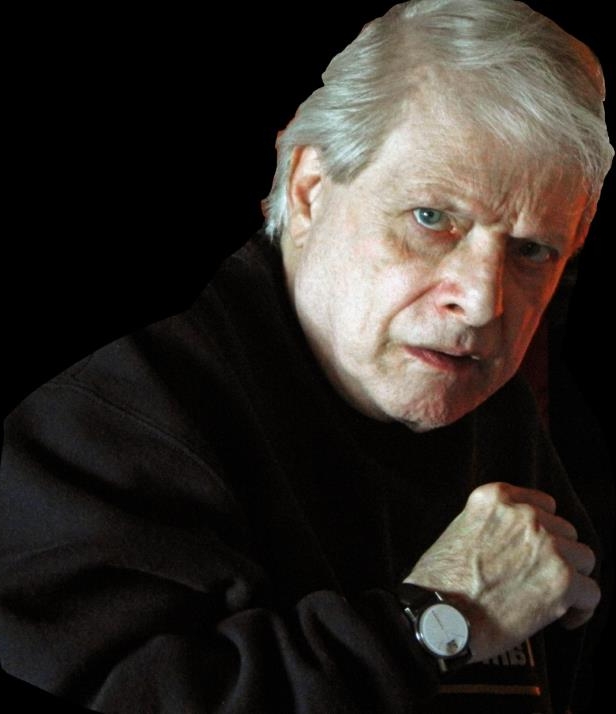
HARLAN ELLISON: THE TELEGRAPH OBITUARY AND A REMINISCENCE

I met Harlan Ellison once. It was at an sf World Con in Washington in 1973. I was working in DC at the time, and had a great time. But at one point, maybe on my way to liberate the swimming pool with Michael Gorra at some early morning hour, I walked into an elevator containing Ellison and two young women. I was a fan of his, and I smiled and said hi, but something in my smile, or maybe just my size, irritated him, and he started in on some riff about a goofy mid-western farmboy. The women giggled, I just smiled and said see ya when the elevator reached the ground. I thought it was a little strange, but I'd heard he was aggressive and combative and I just wrote it off to a severe case of Little Man Disease. And he had a pipe, which was a sort of 50s 'longhair' thing--think Hef at the Mansion.

Early this July, 45 years later, I did a brief write-though for the Daily Telegraph of their obituary of Harlan Ellison, adding some details I thought pertinent, some slight interpretation, and a little bit of redirection of the original. It took a long while for the version to reach print (in fact, it came while I was on holiday in Iceland), which I just discovered a few days ago when I checked online. You can link to that obit here, (the online version is behind a paywall).

One of the things I concentrated on for the Telegraph was trying to explain why Ellison's primary work was in the short-story, and this was what I came up with:

      "The short story was his métier...they reflected the bright flame of his angry personality, an emotional  impact that was hard to sustain over greater lengths".

That was my experience reading him. When I first came to his work as a teenager, through those mid-60 short story collections, I found them powerful. Yes, some were derivative of mainstream writing, especially Nelson Algren, some others of the same genre people were all read growing up. But they were also, in a sense adolescent, in their rage against the way the world was: his characters were often losing in battle to forces beyond their control.

While I was looking for the Telegraph piece, I followed a link to an interview Ellison did with The Comics Journal back in 1979. It's a long rambling airing of insults and feuds, and many of his opinions and rants read like stuff you would have found in some fanzines back in the days when I was reading them. Obviously when he wrote he exercised more control. But one quote jumped out at me:

     "I swear to God just one day I'd like to get up and not be angry. Just one Goddamn day in this life I'd like to arise and not be fucking pissed off at the world."

I didn't need the confirmation, but it was striking to see it out there so plainly. I thought back to that encounter and breathed a sigh of relief I hadn't made anything of the bluster I'd received. I also thought how important that anger was to the energy of his stories and the physical power of his best writing.

Some of my adds for the paper were also about 'speculative fiction' and Dangerous Visions: those two anthologies were central to my own sf reading. I noted in the obit that by the time Again, Dangerous Visions appeared, five years after the first volume, its innovations had already become commonplace in the genre. The paper left out mention of Christopher Priest's book about his story which Ellison bought for The Last Dangerous Visions but wouldn't allow him to use when that book failed to appear (one interesting question: will it appear now, courtesy of his estate?). I would assume some of the introductions are missing; Ellison was a fascinating editor (including of himself) in the sense that his intros to stories are often as interesting, if not more so, than the stories themselves.

I filled in details about the famous Star Trek feud. It may be that work in forgettable serial television used up all of Ellison's 'long form' fiction, but I may in a minority in finding 'The City On The Edge Of Forever' good for Star Trek but less than monumental. Most of his other episodic work I don't remember; I was young and they were mostly fluff. The film of A Boy And His Dog remains excellent, and deserving of more attention.

I'd still recommend those story collections, including and perhaps especially the non-sf Love Ain't Nothing But Sex Misspelled (a title much less daring nowadays) which had a beautiful cover by Leo and Diane Dillon, who also did the covers and illos for the two Dangerous Visions volumes. You'll like I Have No Mouth But I Must Scream or The Beast That Shouted Love At The Heart Of The World or Paingod And Other Delusions, and you may wonder why you hadn't read him before.

By coincidence, I had picked up a copy of Ellison Wonderland, which I'd never read, a few months before Ellison died. This was lucky because it provided some explanation about the import of Dorothy Parker's review of Gentleman Junkie to his career, but I didn't get very far through the stories. They vary in quality, sometimes seeming like drafts of Twilight Zone episodes, sometimes seeming like sharp allegories of the society and mores of my youth, sometimes hitting real emotional nails directly on their hearts.

For me, Ellison opened up doors toward writing that challenged me just at the point I was discovering sf. He wouldn't quite move past that with me, but I would dip in and out of his writing for decades. The thing that does stay with me is the wonderful ease and conversational style he was able to maintain in his essays, and the way that flows into his fiction, though forged very much through anger. I truly hope he rests in peace.  

Friday, 29 December 2017

REFERENCE BACK: LARKIN AND JAZZ

I wrote this piece for the Daily Telegraph back in 1999. 'Not Jazzy Phil' their photo caption ran. This morning Kevin Jackson was having a bit of a discussion about the modernists and their reactions to jazz music, so I decided to dig it out and republish it here.  I use the Telegraph's title below:

THE MUSIC THAT CAME BEFORE THE CHATTERLY BAN

Philip Larkin may or may not have believed that ‘sex began in 1963’, but he certainly believed jazz had already died long before the Beatles issued their first LP.  In his words it was “as dead as Elizabethan madrigal singing.” This collection seeks to rebut the received view of Larkin as musical arch-conservative, but actually manages to reinforce strongly that judgement, thus suggesting a terrible paradox. How does a man who feels music so deeply and writes about it so well become so tone deaf?

Larkin discovered jazz through dance music, the pop of his youth. It became part of his “private joke of existence”. He relished the escape it provided. “I can live a week without poetry but not a day without jazz,” he said. He disliked anything that took jazz away from its roots in American folk blues, as if he begrudged jazz musicians their own aspirations to more self-conscious art. There is of course a racial element; but Larkin has been attacked enough for his retroactive affronts to political correctness. Yet while it would be churlish to use these reviews as further ammunition against his prejudice, it’s impossible to see this collection as in any way disproving it.

His complaints about be-bop taking jazz out of the realms of popular music echo those of rock fans who complain the music hasn’t been the same since Buddy Holly died. He never realised that pop music was already moving away from his sort of jazz by the time he became a fan, and it was inevitable that jazz itself would change. One may prefer Johnny Hodges to Charlie Parker, Henry Allen to Miles Davis, but would you feel comfortable asserting Hodges and Allen blew the others “out of the room”? When, eventually, he acknowledges Ornette Coleman and John Coltrane in his “year’s best” choices, he does it only out of a grudging sense of responsibility to reality. 

Larkin writes precisely, so it’s hard to grant him leeway. He even has the chutzpah to criticize others for “dragging in culture references”, while himself using the adjective “Henchardian". Amusingly, the editors have culled Larkin’s poetic phrases and listed them in the book’s introduction. This has the effect, like a well-produced trailer for a bad movie, of suggesting that’s all there is on offer. Fortunately, that isn’t the case. 

While not revealing a kinder, gentler Jazzy Phil, this is still a valuable collection. Yet it's most revealing when Larkin reviews, not music, but a fellow writer, the New Yorker's jazz critic Whitney Balliett. He admires Balliet, but is also almost haughtily suspicious of his catholic enthusiasms. And there is the crux of the matter. Larkin’s inability to gain pleasure from anything but the music that first gave him that exciting release when he was young is the very definition of a fetishist, and reveals him as someone more intent on recapitulating that pleasure than making a fan's progress through the seasons of jazz.

Balliett once wrote “it is a compliment to jazz that nine-tenths of the writing about it is bad.” Larkin’s writing falls into that precious one-tenth. If only he could have shared one-tenth of Balliett’s eclectic enthusiasm.

REFERENCE BACK: Philip Larkin’s Uncollected Jazz Writings 1940-84

Edited by Richard Palmer and John White

University of Hull Press, 191pp, 19.99

Saturday, 11 June 2016

GORDIE HOWE: THE TELEGRAPH OBITUARY

My obit of Gordie Howe, Canada's 'Mr. Hockey', is in the Daily Telegraph today, with a lovely photo; you can also link to it online here. Because it's considerably curtailed from what I originally wrote for them, back in 2014 when it looked as if Gordie was going to die, I am posting my original copy below; you can read that instead. I changed the line about Bobby Hull to 'next great winger' because he did play the left side.

When I saw Gordie had died I contacted The Daily Telegraph because I'd done his obit for their stock about 18 months ago. The Daily Telegraph had apparently done an edit of it back then, but got all twisted trying to explain ice hockey as if it were quantum physics. They asked me a number of questions and then asked me to do an edit of their rewrite, which was awkward as I haven't done anything for the Daily Telegraph for a year now. This was because they eventually spiked a couple of obituaries they had commissioned from me (the poet Mark Strand, which you can find here; and the football great Chuck Bednarik; I did a longer, more complete version of that for my nfluk.com column, here). In both cases, they went to the spike because they hadn't been used in a timely fashion; in both cases the Daily Telegraph decided to not deign to honour me with payment for the work they had commissioned. So I stopped working for them. But they had paid me for Gordie's obit for stock, and unlike them, I felt I should live up to my part of the bargain, and rather than refuse until they compensated me for what they owed me, I said I would I did the edit. Since no good gesture goes unpunished, they flipped much of the my rewrite back anyway.

Howe's refusal to quit life eighteen months ago was a mark of his indomitable strength, and it was sad that he passed away only to be overshadowed by Muhammad Ali's funeral. I was in the BBC World Service studios doing commentary on Ali's memorial last night, for four and a half hours, and during that time I mentioned Howe, and how although he represented the Canadian ideal: hockey's mix of graft, hard work, and toughness,along with some grace, innate modesty, a sense of doing the right thing and exceptionally sharp elbows. He was arguably the greatest in his sport, certainly during the pre-Gretzky era, but his impact was not worldwide, transcendent, the way Ali's was. Of course neither is hockey, and no team sport exposes a man's inner self the way boxing does. This is not to take anything away from Gordie Howe. Look at Keith Olberman's personal reflection of Howe here. It tells you a lot about Howe the man; it's heartfelt, and I understand why it is.

Because, as I said in the obituary, after he finally retired from hockey Howe worked for a while for Howard Baldwin's film company. So did my old friend Steve Berman. But I didn't know that until one night in London sometime in the 80s, I think, when my phone rang and it was Berman calling from LA, in the days when trans Atlantic calls were still a Big Deal. 'Guess who was in my office today?' he said, with no preamble. 'Clint Eastwood?' I guessed. 'Better than that.' 'Sigourney Weaver?' Rae Dawn Chong?' 'Nastassja Kinski?' 'Nope better than that....Gordie Howe!" And Berms proceeded to tell me about Howe's visit, either coming to or from the golf course, with exactly the same tone of awe you hear in Keith Olberman.


A few notes. I actually coined 'The Howes That Gordie Built' myself, when I wrote an article for one of the Advocate papers about the family's coming to Hartford, but the Daily Telegraph attributed it to 'the press'. Who knows, someone in Houston might have done it years before me. I would have liked to mention that just as Gordie suffered a near-fatal injury playing hockey, so too did his son Mark, the best of the Howe sons on ice. Howe's near-miss resulted in the NHL's adoption of the quick release goals that get dislodged so often in modern games. I would have liked to write a little about Howe's appearance honouring Jean Beliveau: in the piece I mention Maurice Richard and Howe being Canadian 'fire and ice', but Howe and Beliveau were in many ways two of a kind. The NHL certainly thought so: when they retired after the 1971 season, the league waived the normal waiting period, and they were inducted together into the Hockey Hall Of Fame in 1972.

There was another parallel to be drawn to English sport with Howe, which thinking of Richard brought to mind. The French Canadian player in those days was supposed to be more full of finesse, more fiery, less steady and predictable, maybe not as good at the graft of hockey. It reminded me of the way English commentators would describe Gallic flair and temperament in rugby and even football commentary, which also reminded me that, in English football where flashy 'skill' (pronounced 'skeh-ull') was regarded with great suspicion, and things like 'work-rate' and 'bottle' (pronounced 'baht-oohl') were what won matches. I'm reminded of Conn Smythe's famous dictum in hockey: 'if you can't beat them in the alley, you can't beat them on the ice.'

I also went and looked up the Gordie Howe hat-trick (a goal, assist, and fight in the same game). Gordie himself registered exactly two of those in his career, according to official stats (Brendan Shanahan is the leader with 17, though Rick Tocchet had 18 if you count playoff games). But I suspect Howe did a lot of mixing up that was never actually whistled a penalty, or maybe called as a roughing minor, not a fighting major. I recall a Bugsy Watson story about checking Howe in his rookie year, taking the puck from him and skating the other way thinking 'that wasn't so hard'. Until he realised Howe was skating right behind him, and the blade of Howe's stick was right under his nose. I write about Howe's wrists below (the Telegraph had a deucedly difficult time figuring out what a wrist shot was) but Watson knew all about them, and knew a broken nose was just a flick of the wrists away. He 'lost' the puck back to Gordie. 

Gordie is of course, as I said, in the Hockey Hall of Fame and also the Canadian Sports Hall of Fame. He was awarded the Order Of Canada by the Queen. And when the new bridge between Detroit and Windsor, Ontario is opened in 2020, it will be called the Gordie Howe International Bridge. RIP...

GORDIE HOWE: CANADA'S 'MR. HOCKEY'
 
The ice-hockey legend, Gordie Howe, who has died aged 88 was Canada's version of Stanley Matthews. That is assuming Matthews had been lucky enough to play with two of his sons, and dominant enough to be nicknamed 'Mr. Football'. Howe was 'Mr. Hockey'; arguably the greatest right-winger of all-time. Generations of Canadians idolised him; Wayne Gretzky, who grew up to break Howe's scoring records, treasured a picture taken when he was a 12 year old pee-wee star alongside the great man. Howe trumped all other greats with his longevity, playing in five decades; debuting in the National Hockey League aged 18 in 1946, and playing final match in 1980, aged 52, on a team with his sons.

More importantly, Howe epitomised the values Canadians see in their national game. A smooth but not flashy skater, Howe applied himself fearlessly to hockey's relentless physical grind. His graft was rewarded by goals scored by quick-snapping hockey's finest wrist shot, faster then many players' slapshots, but without the windup slapshots require. He was ambidextrous, and using a flat-bladed stick, was equally effective with either backhand.

Born on a farm in Floral, Saskatchewan, Howe grew up in Saskatoon where his father was a day labourer. When he was five, his mother gave him a pair of hand-me-down skates and hockey became his obsession. He played on ponds all winter and shot on dry land the rest of the year. His family was poor, and he suffered from malnutrition; when his growth spurts began doctors recommended chin-ups to counter a calcium deficiency. The exercise, coupled with what he called 'tossing concrete' on building sites with his father, gave Howe a distinctive build: narrow sloping shoulders leading to powerful forearms and steel-band wrists. In juniors he was so dominant he got a try-out with the New York Rangers at 15, but he signed at 16 with Detroit Red Wings, playing with their junior team in Galt before making his professional debut at 17 with their minor league affiliate in Omaha, Nebraska.

The following year, 1946, he arrived in Detroit, assigned jersey number 17. He fought so often fans created the 'Gordie Howe hat trick', meaning a goal, assist, and fight in the same game. Howe actually did this only twice in his career; but his reputation prevented most players from even challenging him. The next season, Howe switched to number 9, because the lower number guaranteed him a bottom berth on Pullman trains. Coincidentally 9 was also worn by Maurice 'Rocket' Richard of Montreal's Canadiens, already the league's best right wing. For a decade Richard and Howe were Canadian fire and ice; a rivalry begun in Howe's rookie season when he knocked out the French-Canadian star with a single punch.

Howe teamed with centre Sid Abel and left wing Ted Lindsay on what became known, in tribute to Detroit's car industry, as 'The Production Line'. In the 1949-50 season, they were the league's top three scorers, but in the Stanley Cup playoffs Howe's career was nearly ended when he fractured his skull crashing into the rink's dasher boards. Emergency surgery drained liquid to relieve the pressure on his brain; doctors warned he might be permanently impaired. But Howe recovered quickly enough to appear at the match in Detroit when the Red Wings won the Stanley Cup title. They won three more in the next five seasons, with Howe winning four consecutive most valuable player trophies. He won six in all, led the league in scoring six times, and was named its best right wing 12 times.

Howe played his last season for Detroit in 1970-71, moving to the front office after a contract battle with owner Bruce Norris, who accused Gordie's wife Colleen of manipulating Howe's demands. Colleen had got Gordie more money in his last contract, but a wrist injury limited his effectiveness and he was  finally convinced to retire. Colleen was a force in her own right; she started a junior team in Detroit so her sons could get top-level training. In 1973, when the upstart World Hockey Association arrived to compete with the NHL, the Houston Aeros shocked hockey by signing Mark and Marty Howe straight out of juniors, and bringing Gordie out of retirement to join them.

The Howes That Gordie Built won the WHA title in each of their first two seasons. In 1974 all three Howes played on a WHA select team against the Soviet nationals. Bobby Hull, arguably hockey's next great winger, gave up the 9 jersey in a show of respect; he wore 9 because as a kid he'd idolised Howe.  Howe was the leading scorer in the contentious series which the Soviets won; before it began Soviet coach Victor Kulagin complained publicly that Howe's selection, aged 46, was an 'embarrassment' to the game. Early on, Howe set up a goal for son Mark, then retrieved the puck from the net and flipped it with his stick over the Soviet bench to Kulagin. Later in the series, when a Russian defenseman slashed open Mark's ear, Howe sent a puck into the corner for him to chase, then checked him so hard he fractured his arm.

Howe ended his career with the Hartford (Connecticut) Whalers, one of the WHA teams absorbed into the NHL when the leagues merged in 1979. His last goal came in the 1980 Stanley Cup playoffs against Montreal. Fittingly, it was a backhanded wrist shot. He retired the league's all-time leading scorer, even without counting his years in the WHA.

In retirement he worked for Whalers' owner Howard Baldwin's film business, and as a popular spokesman. Colleen ran the family's business, trademarking 'Mr. Hockey', 'Mrs. Hockey' for herself, and even the name 'Gordie Howe'. In 1997, Howe took a shift with the minor-league Detroit Vipers, marking his sixth decade in professional hockey. Coleen Howe died in 2009. Howe began showing signs of dementia, and suffered a series of strokes. He spent his last years moving between his children's homes. 

Gordon 'Gordie' Howe born 31 March 1928 Floral, Sask.
Died 10 June 2016, Toledo, Ohio
Wife Coleen Joffa m. 1953 d. 2009
Survived by four children: sons Mark, Marty, Murray daughter Cathy

Monday, 17 August 2015

ROWDY RODDY PIPER: THE TELEGRAPH OBITUARY

My obituary of Roddy Piper, the wrestler and actor, is in today's Daily Telegraph; you can link to it online here. As you'll see, the last few grafs were mostly lost, in the time-honoured tradition of cutting from the bottom, but a few small points were lost along the way: I've expanded my original copy slightly to give slightly more detail than I imagined the Telegraph's audience would expect.

There is a danger in doing wrestling obits, trying to decide which pieces of biography are real and which are 'works', because the wrestling business is itself a work. Yet its denizens do come to believe in it: in a sense they are marks for their own work, and Piper no less than many others.

I also ignored the drug scene. Piper never had the genetics to become a muscle-freak, but I would not doubt that he used steroids. His recreational drug use became a matter of public record, and controversy, at least twice. I don't know if I'd add him to the long list of stars of the 80s and early 90s who've died young, but he's close. He gave an interview a few years ago in which he said he did not expect to reach 65--it was why he continued working, because he worried he would never be able to collect his WWF pension. I included that in my first, but then edited it out. It resonates with me still.

As it happened, I had shown my 11 year old son They Live just a couple of weeks before Piper's death. Nate was surprised; he'd liked the movie and liked Piper. I found him less convincing than I remembered (I hadn't seen it since it was released) but thought the movie might be even more relevant today. I also would have liked to have mentioned the incredible marathon fight scene with Keith David, which remains awesome but seemed more of a distraction thirty years on!


I think I was just about 11 when I first got into wrestling, the old WWWF from New York and Washington. It's a shame there's nothing as comparatively straight-forward for Nate to come to now. But Piper was one of the men who enabled that change of direction.

Here's the copy I filed to the Telegraph, slightly amended:

ROWDY RODDY PIPER:


'Rowdy' Roddy Piper, who has died aged 61, was a key performer during the explosion of the World Wrestling Federation (WWF—now known as WWE) to massive popularity in the 1980s. Considered by many the greatest 'heel' (or villain) wrestler ever, Piper sold his 'beserker' persona, capable of anything in or out of the ring, to gain credibility in an age dominated by steroid-fuelled muscle-men. More importantly, his ability to perform on microphone and camera meant he could create instant hatred with opponents and audiences alike, thus stoking the flames of money-making feuds. He was equally successful as a 'babyface' (or good-guy), often billed as hailing from Scotland, and entering the ring wearing a kilt and playing bagpipes. 'Only people who can't draw money need belts (ie: championship titles)', he said. 'The only thing I need is a great opponent'.

His talent led to a second career on screen, though he never matched the success of his second leading role, in John Carpenter's excellent science fiction B movie, They Live (1988). Equipped with glasses that reveal aliens who have taken control of earth, Piper, armed with a shotgun, enters a busy bank and announces, 'I have come here to chew bubblegum and kick ass...and I'm all out of bubblegum!'

Born Roderick Frederick Coombs April 17, 1954 in Saskatoon, Saskatchewan, and descended from the secretary of state of the Confederate States of America, Piper had a fractious relationship with his father, at one time a member of the RCMP. He was expelled from junior high school for carrying a switchblade, and eventually ran away from home. He was only 15 when he made his wrestling debut in Winnipeg, against Larry 'the Axe' Henning. He made his entrance playing bagpipes, as 'Roddy the Piper', which quickly was shortened into his ring name.

At 19 he was wrestling full-time in California. NWA Hollywood promoter Gene LeBell taught him judo, and recognising his heel ability staged a feud with Mexican-American Chavo Guerrero and the entire Guerrero wrestling clan which, with its racial stereotyping, did huge business. At its peak Piper lost his hair versus a hair match to Chavo, and had his head shaved. This was followed by a 'loser leaves town' match, ith Piper leaving LA. But he returned, in disguise under a mask, as 'The Masked Canadian', wrestling as Chavo's tag-team partner, until he double-crossed the Mexican and started the feud again.

He moved to Don Owen's Pacific Northwest promotion, and eventually settled in Portland, Oregon. He feuded with 'Nature Boy' Ric Flair in Mid-Atlantic before joining the fledgling World Championship Wrestling, Ted Turner's cable-television showpiece, in 1983. For the first time he played face when two heel wrestlers he managed turned on announcer Gordie Solie. He then reunited with Flair at Jim Crockett Promotions, turning villain again before leaving for the WWF. In his final match for Crockett, at Starrcade, wrestling's first pay-per-view broadcast, Greg 'The Hammer' Valentine broke Piper's eardrum during a dog-collar match, causing a permanent loss of hearing.

The WWF was going national, and supremo Vince McMahon gave Piper an television interview segment, Piper's Pit, where he smashed a coconut over the head of 'Superfly' Jimmy Snuka, mocking his Polynesian heritage, and starting another huge feud. But nothing matched 1985's 'War To Settle The Score', which saw Piper take on Hulk Hogan in a special aired on MTV, with Cyndi Lauper, Capt. Lou Albano, and the A-Team star Mr. T in Hogan's corner. This set up a tag-team at the first Wrestlemania, with Piper and 'Mr. Wonderful' Paul Orndorff against Hogan and Mr. T. Which led to Piper and Mr. T's boxing match as part of Wrestlemania II; Piper lost patience and body-slammed Mr. T senseless; losing the match by disqualification.

Piper established a unique role, able to take long absences, yet return to big events successfully, often interacting with mainstream celebrities, most notably when he hosed down right-ring talk-show host Morton Downey Jr at Wrestlemania V. This helped his burgeoning film career, which saw his first leading role in Hell Comes To Frogtown (1988) another sf film in which he needs to rescue (and impregnate) some of the women who now run the earth but have been captured by mutant frogs. His later career was mostly confined to straight-to-video action films, but in recent years he'd played in the two Canadian Billy Owens fantasy films, a nostalgic wrestling film, Fancypants (2012), and the self-explanatory Pro Wrestlers Versus Zombies (2013).

Meanwhile he moved between promotions, including independents, capitalising on nostalgia. In 2005 he was inducted into the WWE's Hall Of Fame. He was treated successfully for Hodgkins Lymphoma in 2006, but resumed wrestling. He had predicted in a 2003 interview he would not reach age 65, blaming his lifestyle, and needed to continue earning. In 2009 he, Snuka, and Ricky 'The Dragon' Steamboat lost a handicap match to Chris Jericho at Wrestlemania XXV, and at Wrestlemania XXX, in 2014, Piper, Orndorff, Hogan, and Mr. T came together to bury the hatchet. He recently started a revival of the Portland Wrestling show, featuring his son Colt, whom he trained.

In 2013, Piper he and Kitty appeared on Celebrity Wife Swap with Flair and his girlfriend; Piper had been best-man for the first of Flair's four marriages. The programme featured his Oregon home, though he also lived in Hollywood. Piper died after a heart attack, in Hollywood, 31 July 2015. He is survived by Kitty, Colt, and four daughters. Ric Flair called him 'the most gifted entertainer in the history of pro wrestling'.

Monday, 20 July 2015

MARK STRAND: THE LOST TELEGRAPH OBITUARY

I wrote the following piece in early December for the Daily Telegraph, but for some reason it didn't appear in the paper immediately, and then it just drifted onto the spike. I was never taken with Strand's poetry, though I did enjoy his book on Hopper. But researching his obit made me appreciate some of the convergences between his life and his work. I was particularly fascinated with the idea he studied with Josef Albers, and then moved from art to poetry via Wallace Stevens: as if placing a cube in Tennessee...

Mark Strand, who has died aged 80, once said 'Poetry tries to lead us to relocate ourselves in the self.' Relocate seemed to be the key word for Strand, who has died aged 80. In his often spare but always elegant poetry, Strand seems to be looking at the world, and at himself, from the outside. 'The poet provides the reader with a surrogate world through which he reads this world,' Strand said, and at his best he achieved the paradoxical success of bringing readers closer to the very worlds from which he felt distanced and alienated.

That sense of dislocation may have begun in childhood. Strand was born in Summerside, Prince Edward Island 11 April 1934. His father's work took the family to Halifax, Nova Scotia and Montreal before moving to Philadelphia, where Strand started school as an outsider, speaking English with a heavy French-Canadian accent. His father's new job with Pepsi-Cola took the family to Cuba, Colombia, Peru, and Mexico, but the young Mark returned each summer with his mother to St Margaret's Bay, Nova Scotia, and memories of that seacoast and its pine forests reverberate through his work. Still feeling less than comfortable with English, he intended to become an artist. While earning a BA from Antioch College (Ohio) he spent a summer an assistant to the Mexican muralist David Siquieros, painting 'the kind of art I learned to despise while I was working at it.' He moved to Yale, taking a Bachelor of Fine Arts degree studying under the painter Josef Albers. The contrast between Siquieros' social realism and Albers' abstract focus on the language of paint itself might be seen as template for Strand's later poetry.

While at Yale he immersed himself in the poetry of Wallace Stevens, and began to move away from painting, placing poems in the New Yorker. A Fulbright grant took him to Italy to study 19th century poetry; when he returned he took a creative writing MFA at the University of Iowa, America's most prestigious programme. In 1965 he received another Fulbright, to teach in Brazil. His first collection, Sleeping With One Eye Open (1964) was published by a small press in Iowa, but in 1968 the influential editor Harry Ford at Athaneum published Reasons For Moving, establishing Strand as a major voice. He moved to New York and taught at Columbia, Brooklyn College, Yale and Princeton. There he became close to Richard Howard, Charles Wright, and Charles Simic, poets whose work incorporated elements of surrealism, what Wright and Robert Bly labelled 'leaping poetry'. But Strand's closest affinity might be with John Ashbery, particularly in their shared roots in painting.

He published three more collections whose titles are revealing: Darker (1970), The Story Of Our Lives (1973) and The Late Hour (1978), as well a long prose poem about immortality, The Monument (1978) and translations of the Spanish poet Rafael Alberti and the Brazilian Carlos Drummond de Andrade. But following publication of his Selected Poems (1980) he gave up writing poetry for a decade. 'I didn't like what I was writing; I didn't believe in my autobiographical poems,' he said. He moved to the University of Utah to teach and wrote three childrens books, a collection of essays on art, The Art Of The Real (1983) and a monograph on the artist William Bailey (1987). That year he also received a MacArthur Foundation 'genius grant'.

Strand marked his return to poetry with the 1990 collection A Continuous Life, and spent a year as America's Poet Laureate at the Library of Congress. His new publisher was Alfred Knopf, a relationship which survived an argument over reissuing The Monument labelled as prose. Dark Harbor (1993) received the Bollingen Prize, and in 1994 his monograph on Edward Hopper was a magnificent exercise in affinity, as Strand's minute breakdown of Hopper's paintings speaks of the waiting, the sense of time, and the position as observer of the poet in his own poems.

His 1998 collection, Blizzard Of One, received the Pulitzer Prize, deservedly so as it was perhaps his finest work. It includes the long meditation 'Delerium Waltz', reflecting on life as a waltz 'we think will never end'. He followed with the surprisingly brighter Man and Camel (2006), New Selected Poems (2007) and this year his Collected Poems, which was nominated for the National Book Award.

Strand died 29 November 2014, of liposarcoma, at his daughter's home in Brooklyn, to which he was moving back after living in Madrid. His two marriages ended in divorce, and he is survived by his partner Maricruz Bilbao, his daughter Jessica and son Thomas.
'Poetry tries to lead us to relocate ourselves in the self,' Mark Strand once told an interviewer. Relocate seemed to be the key word for Strand, who has died aged XX. In his often spare but always elegant poetry, Strand seems to be looking from the outside, at the world and at himself. 'The poet provides the reader with a surrogate world through which he reads this world,' he said, and at his best Strand achieved the paradoxical success of bringing readers closer to the very worlds from which he felt distanced and alienated.

That sense of dislocation may have begun in childhood. Strand was born in Summerside, Prince Edward Island 11 April 1934. His father's work took the family to Halifax, Nova Scotia and Montreal before moving to Philadelphia, where Strand started school as an outsider, speaking English with a heavy French-Canadian accent. His father's new job with Pepsi-Cola took the family to Cuba, Colombia, Peru, and Mexico, but the young Mark returned each summer with his mother to St Margaret's Bay, Nova Scotia, and memories of that seacoast and its pine forests reverberate through his work. Still feeling less than comfortable with English, he intended to become an artist. While earning a BA from Antioch College (Ohio) he spent a summer an assistant to the Mexican muralist David Siquieros, painting 'the kind of art I learned to despise while I was working at it.' He moved to Yale, taking a Bachelor of Fine Arts degree studying under the painter Josef Albers. The contrast between Siquieros' social realism and Albers' abstract focus on the language of paint itself might be seen as template for Strand's later poetry.

While at Yale he immersed himself in the poetry of Wallace Stevens, and began to move away from painting, placing poems in the New Yorker. A Fulbright grant took him to Italy to study 19th century poetry; when he returned he took a creative writing MFA at the University of Iowa, America's most prestigious programme. In 1965 he received another Fulbright, to teach in Brazil. His first collection, Sleeping With One Eye Open (1964) was published by a small press in Iowa, but in 1968 the influential editor Harry Ford at Athaneum published Reasons For Moving, establishing Strand as a major voice. He moved to New York and taught at Columbia, Brooklyn College, Yale and Princeton. There he became close to Richard Howard, Charles Wright, and Charles Simic, poets whose work incorporated elements of surrealism, what Wright and Robert Bly labelled 'leaping poetry'. But Strand's closest affinity might be with John Ashbery, particularly in their shared roots in painting.

He published three more collections whose titles are revealing: Darker (1970), The Story Of Our Lives (1973) and The Late Hour (1978), as well a long prose poem about immortality, The Monument (1978) and translations of the Spanish poet Rafael Alberti and the Brazilian Carlos Drummond de Andrade. But following publication of his Selected Poems (1980) he gave up writing poetry for a decade. 'I didn't like what I was writing; I didn't believe in my autobiographical poems,' he said. He moved to the University of Utah to teach and wrote three childrens books, a collection of essays on art, The Art Of The Real (1983) and a monograph on the artist William Bailey (1987). That year he also received a MacArthur Foundation 'genius grant'.

Strand marked his return to poetry with the 1990 collection A Continuous Life, and spent a year as America's Poet Laureate at the Library of Congress. His new publisher was Alfred Knopf, a relationship which survived an argument over reissuing The Monument labelled as prose. Dark Harbor (1993) received the Bollingen Prize, and in 1994 his monograph on Edward Hopper was a magnificent exercise in affinity, as Strand's minute breakdown of Hopper's paintings speaks of the waiting, the sense of time, and the position as observer of the poet in his own poems.

His 1998 collection, Blizzard Of One, received the Pulitzer Prize, deservedly so as it was perhaps his finest work. It includes the long meditation 'Delerium Waltz', reflecting on life as a waltz 'we think will never end'. He followed with the surprisingly brighter Man and Camel (2006), New Selected Poems (2007) and this year his Collected Poems, which was nominated for the National Book Award.

Strand died 29 November 2014, of liposarcoma, at his daughter's home in Brooklyn, to which he was moving back after living in Madrid. His two marriages ended in divorce, and he is survived by his partner Maricruz Bilbao, his daughter Jessica and son Thomas. As he wrote in Blizzard Of One, in the poem 'A Piece Of The Storm':

A snowflake, a blizzard of one, weightless, entered your room
And made its way to the arm of the chair where you, looking up
From your book, saw it the moment it landed.
That's all there was to it. No more than a solemn waking
To brevity, to the lifting and falling away of attention, swiftly,
A time between times, a flowerless funeral.

Saturday, 2 May 2015

CALVIN PEETE: THE TELEGRAPH OBITUARY

My obit of Calvin Peete is in the Daily Telegraph today, you can link to it here. It's a bit different to the way I wrote it. Usually, when dealing with sports, desks are worried their audience won't understand what's being talked about, but golf, particularly for Telegraph readers, was something I'd thought immune to that. So there was a bit of the technical stuff about golf, and even about the Ryder Cup, which was lost. And interestingly, the idea of a high school equivalency diploma was something of which they'd never conceived.

What was lost was my second paragraph, going into more detail about how Peete was the final bit of the bridge of the post-war struggle for black golfers to compete with whites on the PGA tour. It was lost for space reasons, and here is what I wrote:

Peete also stands as the final link uniting Woods, who joined the PGA tour in 1996, and the half-century of struggle for racial equality in the sport. Competitors in PGA events were, by rule, exclusively Caucasian. When Bill Spiller was barred from an event in California, he and Ted Rhodes, the 1948 US Open winner generally regarded as the first full-time black professional, sued the Association, arguing the denial of work on racial grounds violated the US constitution. The golfers settled out of court, but a verbal promise from PGA president Horton Smith to lift the colour bar was ignored. Not until 1961, under threat from California and other state governments to bar the PGA from public courses, did Charlie Sifford became the first black player on the tour; it was Sifford who taught Tiger Woods' father Earl to play. Pete Brown was the first black man to win a tournament in 1964 but not until 1975 would Lee Elder break the segregation of the Masters; Elder actually played in apartheid South Africa's PGA Championship, invited by Gary Player, four years before he stepped on the course at Augusta.


Peete grew up unaware of this history.

Peete didn't encounter the blatant discrimination even his immediate forebears like Elder did (having to change in car parks rather than clubhouses at some tournaments) but that didn't mean he was fully accepted the way Woods was. But the concentration on Augusta and the Masters was indeed the Telegraph's preference, and part of the description is theirs (the 'genteel racism' is mine).

But Peete's story is really two parallel arcs: the personal struggle and the golfing struggle. There's a movie in that, which might encapsulate some of the changes in American society. And one thing I wanted to mention, but couldn't think of a serious way to do it, was just how perfectly 70s Calvin Peete, and his kangols, always looked on the course. 

Friday, 13 February 2015

BILLY CASPER: THE TELEGRAPH OBITUARY

My obituary of Billy Casper is in today's Daily Telegraph; you can link to the digital version here. It's pretty much as written; there were a number of stories about Casper's great personal kindnesses with other golfers that I left out for reasons of space, but her seemed a truly admirable character, the very definition of what we seem to expect sportsmen to be.

I remember Casper convincing me you didn't need to be a freak of nature to be a great athlete (though you might argue his temperament, concentration, and hand/eye coordination were all pretty freaky). In episode 4 of Bosch, Harry tells Jerry Edgar that 'any sport you can play while smoking or drinking isn't a sport', but watching Billy Casper beat the Big Three gave the average guy great hope....

Wednesday, 4 February 2015

FRANCESCO ROSI: THE TELEGRAPH OBITUARY

My obituary of the great Italian director Francesco Rosi, appeared in the Daily Telegraph on 30 January. Because of the pressures of moving house, I missed it that day, but it is available online, and you can link to it here.

I remember seeing The Mattei Affair at the NFT, and being immediately enthralled. The sense of paranoia and conspiracy appealed to my own sense of politics, and the way the film moved through an ambigous area between documentary and drama was thrilling. Chasing down his films was difficult in those days, but I tried, while relishing the contrast with my other favourite Italian director, Sergio Leone. I made a comparison of the two, which isn't in the piece as printed, about their both making films with Rod Steiger. I'm sure it was Steiger's characteristically over the top performance as Al Capone in Richard Wilson's 1959 film that drew both directors to him.

After Hands Over The City, Rosi had made three features in seven years. None achieved wider wider success, though having just in 2018 finally watched the third of those, Many Wars Ago, he certainly deserved it. After that excellent World war I drama, which was seen as somewhat derivative of Paths Of Glory, Rosi returned to his metier, corruption, conspiracy, and greed, and his next three films, Mattei, Lucky Luciano, and Illustrious Corpses, may be his gritty best. I loved the contrast of Lino Ventura in Illustrious Corpses with Gian Maria Volonte, and Volonte would later draw on the sense of exhuastion and frustration Ventura projected. The film was based on the novel Equal Danger, by
the Sicilian Leonardo Sciacsia, whose affinities to Rosi are obvious. There was a separate essay to be written there, but I could indulge my favourite discoveries of the late Seventies, after I arrived in London, so far.

The films Rosi made after Christ Stopped At Eboli tend to be underrated, or dismissed as playing to the art house market internationally. But they all have remarkable virtues, and I specially had singled out Philippe Noiret in Three Brothers in my original copy. Adapting Gabriel Garcia Marquez has been problematic for directors, but Chronicle Of A Death Foretold may be the best, even if I'm not as convinced by Rupert Everett as the Telegraph was. In The Palermo Affair, whose script was part written by Gore Vidal but is not very tight, the acting can't carry the film. But The Truce is a loving adaptation of Primo Levi, with John Turturro bringing, oddly enough, a little Rod Steiger to the role.

Tony Servillo in Il Diva could be channeling Gian Maria Volonte, and I also mentioned Marco Bellochio's Good Morning Night as another recent Italian film influenced by Rosi. But go back to the Mattei Affair. It's available, in not great quality, on You Tube, but its themes resonate with today's world..