I didn't pay much
attention to DC Comics 'New 52' promotion last year, in which they
relaunched and reinvented 52 of their titles. It seemed too much like
an exercise in forced marketing, like a soccer team creating a new
jersey for its supporters to have to buy. But Barry Forshaw
remembered that I had once written fondly of Blackhawk, so he
forwarded the first two issues of its reincarnation—I read them and
didn't like them very much, so I didn't bother to write about them
then. But I was reminded of the new Blackhawk when I recently read
Howard Chaykin's
Avengers 1959, which seems to be a new concept
design from Marvel, called The Heroic Avengers, very much like the DC
idea of reinvention. In a nutshell, it seems more a marketing tactic,
designed to use existing 'brand names' to sell new stories, rather
than create new characters for their own stories.
The connection, of
course, is that Chaykin was responsible for a remake of Blackhawk as
a mini-series in the mid 1980s (which itself followed a similar sort
of revival by Mark Evanier) which succeeded in the sense of
establishing a slightly different background for Blackhawk himself
and a more up-to-date approach to the ethnic melting pot that was his
squadron, with the

1940s stereotyping disappearing--Chop Chop in particular had to be recast as something more than a comedy figure.
The New 52 Blackhawk
has literally nothing to do with its namesake, apart from the idea of
a muilti-national group. Oddly enough, although we are supposed to
have moved on from those days of ethnic stereotyping, the group
features The Irishman, who seems to be a red-headed, cloth-capped
cross between Wolverine, a leprechaun, and Colin Farrell. Their eyrie
seems to be sponsored by the UN, more Tracy Island than Blackhawk
Island, and the group includes Canada, Ukraine, Japanese, Hungarian
(or at least Hun) and so on. There isn't a lot of character-building
done in the first two issues; it's primarily action-oriented, as
you'd expect, and Graham Nolan and Ken Lashley's art, reminiscent of
Gil Kane, is perfectly suited for that. Oddly enough, Lashley's cover
for issue 1 has a Chaykin-esque Lady Blackhawk, complete with
eyepatch. The original Blackhawk, from its Will Eisner-Bob Powell
days and through Reed Crandall, benefited from great art which helped
make up for its lack of super-heroes.
It made me long for the
old days. Realistically, the Blackhawks make more sense as a World
War II outfit, and indeed Chaykin's speciality seemed to be period
pieces (his Shadow, of course, being the best example, and note the pose with the twin .45s, in the Chaykin cover pictured on the right) and proof they
could work. But it would not be impossible to revive the storyline in
a modern context;

it's just that this high-tech Mission Impossible
version is lacking in the character development, even in caricature,
which made Blackhawk work.
Here is what I would
have suggested, had not this remake been killed almost immediately.
The group should be fighting, primarily on the ground, but with some
air (or helicopter) element, as an anti-terrorist outfit. It should
be made up of soldiers who are refugees themselves from the ethnic
and religious conflicts of the past two decades: Russian, Chechnian,
Bosnian, Serb, Kurd, Yemeni, Sudanese, South African, Sri Lankan,
whatever, which would open the opportunity for plenty of internal
conflict, and they should be engaged in missions which raise ethical
as well as tactical questions on the ground. They could battle
pirates and kidnappers as well as terrorists, drug barons and corrupt
oil companies as well as fundamentalist tribesmen. The stories would
need to have some edge, and with any luck the Army would not want to
advertise in them. It's a thought.
As I said, I went back
to the New 52 Blackhawk because I came across Chaykin's
Avengers
1959, which is supposedly a period piece itself, though it doesn

't
really create much of a Fifties feel. The choice of time-frame is
interesting in comic book terms, because the new-style Marvel
superheroes come along only a couple of years later, and I was really
surprised we didn't get a more mundane sort of 50s setting, rather
than one that could just as easily be today.
Nick Fury is head of
the group, which might reflect his presence in the Avengers' movie,
which obviously is the springboard for all this brand-recognition
business. The group of heroes first appeared, apparently, in the New Avengers, battling The Red Skull, and in this collection they seem to be fighting against the remnants of the Skull's Nazi crowd, but also against the nascent Hydra, which was Fury's nemesis in the old Agent of Shield series. This group of heroes isn't particularly interesting; it's
hard to tell what their skills or powers might be, and Chaykin's
storyline, which is an interesting one involving former-Nazis
harnessing mystical powers, gets lost within its own confines, while trying to both delineate his characters and two separate
groups of villains, who are each time given their introductions and
then promptly disposed of. It all begs for more time, and perhaps it
might have been condensed, and characters drawn more fully. This
applies especially to the lead henchman, General Dieter Skul. While he's not the Red Skull, and there's no Captain America breaking out of the ice ahead of skulledule for another epic
confrontation, more could have been made of him. There's also the sense that the most interesting story-line, of treacherous elements within the US government, has been left for a sequel which may never appear..
There's the core of a
fascinating graphic novel in Chaykin's idea, but it begs for more
development and a more continuous battle between Fury's new Avengers
and the Nazis.

Since this group seems more like a prototype for
Fury's SHIELD, and indeed, since that is what the new DC Blackhawks
actually amount to, SHIELD with a nicer logo, I might be missing the point of both. But what I feel I'm missing is the depth of the
originals (and in the case of Blackhawk, that may seem strange, but
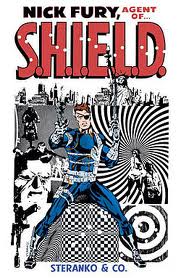
re-read the Chaykin series), the Steranko SHIELD (even though it was obviously a rip-off of
The Man From UNCLE), the early Avengers,
even when Don Heck took over drawing. The difference lay in the sense
of taking their own storylines seriously and not relying on
pyrotechnics. Perhaps the video game generation has different needs.
Perhaps the marketing guys who came up the concepts insist.
Blackhawks, issue 1-2 (the New 52!) DC Comics Nov, Dec 2011
written by Mike Costa, art by Graham Nolan and Ken Lashley
Avengers 1959 written and drawn by Howard Chaykin
Marvel 2012 $16.99 ISBN 9780785160724
collects issues 1-5, published 2011
NOTE: This review will also appear at Crime Time www.crimetime.co.uk
 My obituary of Joe Kubert, the great comic book artist, is in today's Independent; you can link to it here. Kubert would be remarkable simply for the length of his working career, from the age of 13 or so to just before his death at 85. It saw him work for the best studios, of Harry Chesler and Will Eisner, for DC during the both the Golden and Silver Ages, pioneer 3-D, work on the classic EC war comics, and, late in his career, excel with the added freedom the mini-series and graphic novel formats provided.
 on their experience growing up as first-generation Jewish Americans, both delved into their Jewish roots, and both were able to wring great emotion from their art while doing it. The one parallel I
 felt compelled to make was between Kubert and those Korean War films I mentioned: there is more than a little of Mann and Fuller and their sensibilities in his war work.
 Adams, working with Denny O'Neil, famously changed the perceptions of DC, but Kubert received far too little credit at the time (though he has received it since) for the quality of his work--and Bob Kanigher probably deserves more too for bringing more adult themes into DC. Enemy Ace was one, and Ragman, memorably another.