 The reasons why James
M. Cain was more successful than Raymond Chandler or Dashiell Hammett
during their lifetimes, and the reasons why he is the least read of
the three today are connected, and they have to do with morality.
This was a point reinforced for me by The Cocktail Waitress, Cain's
lost last novel, written in 1975 when he was 83, and tracked down and
then edited together from various versions by Charles Ardai of Hard
Case Crime.
The reasons why James
M. Cain was more successful than Raymond Chandler or Dashiell Hammett
during their lifetimes, and the reasons why he is the least read of
the three today are connected, and they have to do with morality.
This was a point reinforced for me by The Cocktail Waitress, Cain's
lost last novel, written in 1975 when he was 83, and tracked down and
then edited together from various versions by Charles Ardai of Hard
Case Crime.
Cain's writing sold
more to his contemporary audience partly because it escaped the
confines of the genre ghetto of 'mystery' –his stories usually have
crime within them (though the killing of Monte Beragon in Mildred
Pierce, for example, is something added by the movies), but not
detective heroes, so they could play to the somewhat higher-brow
audience who looked down on the pulp magazines that spawned Sam Spade
and Philip Marlowe. More important, though, was the world of steamy,
obsessive, noirish sex which Cain's characters inhabited. He wrote
material that the highbrow critics hated, but which the middle brow
audiences ate up, a form of sexual slumming which inspired a slew of
followers, of whom Erskine Caldwell may be the most notable. And
though today he's remembered for the films his novels inspired, it's
worth noting that it took Hollywood 12 years to work up the gumption
to produce a diluted version of The Postman Always Rings Twice.
Of course, what was hot
stuff to my parents' generation, and when I was a kid in the Fifties,
is pretty tame nowadays. Which is one of the reasons Cain fell
somewhat to the wayside. Another was that, as his late-blooming
career went on, his work dealt more and more with his obsessions, and
his stories became less and less compulsive.
But what made his
stories compulsive is also what made them acceptable in the  Thirties
and Forties, and what makes them less compelling today. They are
underpinned by a powerful sense of morality, a morality which insists
that sin, inevitably, be punished, while simultaneously portraying
the intoxicating delights it offers before the punishment comes due.
Cain's stories are about people caught up by forces they cannot
control, forces which will inevitably destroy them. It is a world
created by an Old Testament God, and if that makes the original Cain,
or Job, or David, the first noir protagonist, so be it. It's not like
this is a secret, among Cain's later novels are titles like Sinful
Woman and The Root Of His Evil. His God may well have departed the
scene; not for nothing did Albert Camus call Cain 'America's greatest
writer', but that sense of retribution is never far away, and often
his characters see it coming.
Thirties
and Forties, and what makes them less compelling today. They are
underpinned by a powerful sense of morality, a morality which insists
that sin, inevitably, be punished, while simultaneously portraying
the intoxicating delights it offers before the punishment comes due.
Cain's stories are about people caught up by forces they cannot
control, forces which will inevitably destroy them. It is a world
created by an Old Testament God, and if that makes the original Cain,
or Job, or David, the first noir protagonist, so be it. It's not like
this is a secret, among Cain's later novels are titles like Sinful
Woman and The Root Of His Evil. His God may well have departed the
scene; not for nothing did Albert Camus call Cain 'America's greatest
writer', but that sense of retribution is never far away, and often
his characters see it coming.
 Thirties
and Forties, and what makes them less compelling today. They are
underpinned by a powerful sense of morality, a morality which insists
that sin, inevitably, be punished, while simultaneously portraying
the intoxicating delights it offers before the punishment comes due.
Cain's stories are about people caught up by forces they cannot
control, forces which will inevitably destroy them. It is a world
created by an Old Testament God, and if that makes the original Cain,
or Job, or David, the first noir protagonist, so be it. It's not like
this is a secret, among Cain's later novels are titles like Sinful
Woman and The Root Of His Evil. His God may well have departed the
scene; not for nothing did Albert Camus call Cain 'America's greatest
writer', but that sense of retribution is never far away, and often
his characters see it coming.
Thirties
and Forties, and what makes them less compelling today. They are
underpinned by a powerful sense of morality, a morality which insists
that sin, inevitably, be punished, while simultaneously portraying
the intoxicating delights it offers before the punishment comes due.
Cain's stories are about people caught up by forces they cannot
control, forces which will inevitably destroy them. It is a world
created by an Old Testament God, and if that makes the original Cain,
or Job, or David, the first noir protagonist, so be it. It's not like
this is a secret, among Cain's later novels are titles like Sinful
Woman and The Root Of His Evil. His God may well have departed the
scene; not for nothing did Albert Camus call Cain 'America's greatest
writer', but that sense of retribution is never far away, and often
his characters see it coming.
Hammett's protagonists
resonate with modern audiences because they are almost anti-heroes;
they know the world has its sins, that people are corrupted, and they
function within that world, partaking of it but never succumbing to
it, never letting it take control of them, living by their own code
of what demands punishment. Chandler's Marlowe also knows the world
is corrupt, but he copes with it like an idealist who's become, as
idealists do, a cynic. He constructs a facade of not caring, defined
by cracking wise, to protect him from the corruption. What makes
Elliott Gould's Marlowe so accurate in Robert Altman's The Long
Goodbye, the reason by it's generally either loved or hated by
Chander fans, is the understanding of this character, which Leigh
Brackett and Altman nail perfectly. Their Marlowe is the most
accurate depiction of what's REALLY going on underneath the facade,
as opposed to the what the readers (and perhaps author) really thinks
is going on, since Robert Aldrich and Buzz Bezzerides' deconstruction
of Mike Hammer in Kiss Me Deadly.
What makes
Elliott Gould's Marlowe so accurate in Robert Altman's The Long
Goodbye, the reason by it's generally either loved or hated by
Chander fans, is the understanding of this character, which Leigh
Brackett and Altman nail perfectly. Their Marlowe is the most
accurate depiction of what's REALLY going on underneath the facade,
as opposed to the what the readers (and perhaps author) really thinks
is going on, since Robert Aldrich and Buzz Bezzerides' deconstruction
of Mike Hammer in Kiss Me Deadly.
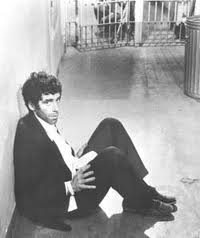 What makes
Elliott Gould's Marlowe so accurate in Robert Altman's The Long
Goodbye, the reason by it's generally either loved or hated by
Chander fans, is the understanding of this character, which Leigh
Brackett and Altman nail perfectly. Their Marlowe is the most
accurate depiction of what's REALLY going on underneath the facade,
as opposed to the what the readers (and perhaps author) really thinks
is going on, since Robert Aldrich and Buzz Bezzerides' deconstruction
of Mike Hammer in Kiss Me Deadly.
What makes
Elliott Gould's Marlowe so accurate in Robert Altman's The Long
Goodbye, the reason by it's generally either loved or hated by
Chander fans, is the understanding of this character, which Leigh
Brackett and Altman nail perfectly. Their Marlowe is the most
accurate depiction of what's REALLY going on underneath the facade,
as opposed to the what the readers (and perhaps author) really thinks
is going on, since Robert Aldrich and Buzz Bezzerides' deconstruction
of Mike Hammer in Kiss Me Deadly.
In this sense, The
Cocktail Waitress is a veritable cocktail of Cain's Old Testament
themes, a small masterpiece of self-deconstruction. Joan Medford, the
eponymous waitress, narrates the tale, and when it opens her abusive
husband has just died in a drunken car crash, which at least one cop
still suspects her of somehow having caused. Her son is in the care
of her in-laws, and her sister-in-law Ethel, who can't have children
of her own, desperately wants to keep him. Joan is simply trying to
make ends meet, but needs to prove she can support herself and her
son, so she takes a job as a cocktail waitress at the Garden of
Roses. She catches the eye of an older millionaire, Earl K. White
III, and of a younger man with big plans, Tom Barclay, who says he
drove her home from her husband's funeral, and claims she blew him a
kiss when he left.
The set-up is
brilliant, and you can see where it's going. Joan is obsessive about
making a success, and enough money to get back her son. Her need
becomes overwhelming. Earl quickly becomes obsessed with Joan, and
offers to marry her, but with a catch—he has a heart condition, and
has been told by his doctors that he could never stand the strain of
sex. His passion could literally kill him. Joan quickly becomes
obsessed with Tom—even though on their first 'date' he takes her to
a topless bar cum whorehouse. But her passion is just as dangerous to
her need as Earl's is to him.  It's like a condensed version of Cain's
classic characters and themes rolled into one: Postman crossed with
Mildred Pierce crossed with Double Indemnity (you wonder if the
character is called Joan in reference to Crawford) with a bit of Cain
himself thrown in: he was suffering from angina as he wrote the book,
and was 83, (I wondered reading the strip club scene if he'd seen The
Graduate and been inspired). Tom is Walter Neff crossed with Beragon,
Earl is partly Nick, partly Mr Dietrichson. But the real question is
who Joan is, and that's where the beauty of this novel lies.
It's like a condensed version of Cain's
classic characters and themes rolled into one: Postman crossed with
Mildred Pierce crossed with Double Indemnity (you wonder if the
character is called Joan in reference to Crawford) with a bit of Cain
himself thrown in: he was suffering from angina as he wrote the book,
and was 83, (I wondered reading the strip club scene if he'd seen The
Graduate and been inspired). Tom is Walter Neff crossed with Beragon,
Earl is partly Nick, partly Mr Dietrichson. But the real question is
who Joan is, and that's where the beauty of this novel lies.
 It's like a condensed version of Cain's
classic characters and themes rolled into one: Postman crossed with
Mildred Pierce crossed with Double Indemnity (you wonder if the
character is called Joan in reference to Crawford) with a bit of Cain
himself thrown in: he was suffering from angina as he wrote the book,
and was 83, (I wondered reading the strip club scene if he'd seen The
Graduate and been inspired). Tom is Walter Neff crossed with Beragon,
Earl is partly Nick, partly Mr Dietrichson. But the real question is
who Joan is, and that's where the beauty of this novel lies.
It's like a condensed version of Cain's
classic characters and themes rolled into one: Postman crossed with
Mildred Pierce crossed with Double Indemnity (you wonder if the
character is called Joan in reference to Crawford) with a bit of Cain
himself thrown in: he was suffering from angina as he wrote the book,
and was 83, (I wondered reading the strip club scene if he'd seen The
Graduate and been inspired). Tom is Walter Neff crossed with Beragon,
Earl is partly Nick, partly Mr Dietrichson. But the real question is
who Joan is, and that's where the beauty of this novel lies.
As you might expect,
things get complicated, and then go wrong, and eventually one
accident is followed by another death, and coincidence begins to
mount. There's a trial scene, and then a vicious twist at the end
which clever readers will have seen coming, but which, in terms of
Old Testament justice, is cruel and unusual, and which makes clear
what Cain has been doing all along: setting us, the readers, up for a
fall, just as he did so brilliantly in Postman. But here, he's done
it with the female first-person narration (remember, Mildred Pierce
is told in third person; Postman in the first by Frank Chambers).
Cain's sense of Joan's voice, which seems believable at first, now is
revealed to be downright compelling: we have watched the story
through her eyes, and we are forced to re-evaluate the entire story,
and our own preconceptions and sympathies, as a result. Although we
have the sense of impending doom, Joan never shares it, and this
creates a wonderful tension, because we, as readers, accept her
voice.
The Cocktail Waitress
is not a 'great' novel, and it will carry less impact to
a modern audience unfamiliar with Cain; in fact, judging by some of
the reviews it appears that is the case. But its publication at this
time makes it a perfect coda to Cain's career; he is remembered now
mostly for the movies he inspired. I'd love to see it turned into a
film; after all even Mildred Pierce with Kate Winslett was a success (Guy Pearce's Beragon stole that show--though the HBO adaptation did return Lucy Gessler, as Mildred's friend, to a larger role, giving Melissa Leo a chance to shine; there is an equivalent character in The Cocktail Waitress too). The question would be whether you use the late Fifties/early
Sixties period (the end of the era of morality: pre-Beatles and the
rest) or go contemporary, because we are currently mired in an age
that combines both licentiousness and prudery in ways that make the
Roaring Twenties/Depression Thirties seem balanced. With the
popularity of Mad Men, and copies of it like The Hour, and the success of Mildred Pierce, period might
work better; this I think could be the breakthrough role for Jessica
Chastain.
I'd love to see it turned into a
film; after all even Mildred Pierce with Kate Winslett was a success (Guy Pearce's Beragon stole that show--though the HBO adaptation did return Lucy Gessler, as Mildred's friend, to a larger role, giving Melissa Leo a chance to shine; there is an equivalent character in The Cocktail Waitress too). The question would be whether you use the late Fifties/early
Sixties period (the end of the era of morality: pre-Beatles and the
rest) or go contemporary, because we are currently mired in an age
that combines both licentiousness and prudery in ways that make the
Roaring Twenties/Depression Thirties seem balanced. With the
popularity of Mad Men, and copies of it like The Hour, and the success of Mildred Pierce, period might
work better; this I think could be the breakthrough role for Jessica
Chastain.
 I'd love to see it turned into a
film; after all even Mildred Pierce with Kate Winslett was a success (Guy Pearce's Beragon stole that show--though the HBO adaptation did return Lucy Gessler, as Mildred's friend, to a larger role, giving Melissa Leo a chance to shine; there is an equivalent character in The Cocktail Waitress too). The question would be whether you use the late Fifties/early
Sixties period (the end of the era of morality: pre-Beatles and the
rest) or go contemporary, because we are currently mired in an age
that combines both licentiousness and prudery in ways that make the
Roaring Twenties/Depression Thirties seem balanced. With the
popularity of Mad Men, and copies of it like The Hour, and the success of Mildred Pierce, period might
work better; this I think could be the breakthrough role for Jessica
Chastain.
I'd love to see it turned into a
film; after all even Mildred Pierce with Kate Winslett was a success (Guy Pearce's Beragon stole that show--though the HBO adaptation did return Lucy Gessler, as Mildred's friend, to a larger role, giving Melissa Leo a chance to shine; there is an equivalent character in The Cocktail Waitress too). The question would be whether you use the late Fifties/early
Sixties period (the end of the era of morality: pre-Beatles and the
rest) or go contemporary, because we are currently mired in an age
that combines both licentiousness and prudery in ways that make the
Roaring Twenties/Depression Thirties seem balanced. With the
popularity of Mad Men, and copies of it like The Hour, and the success of Mildred Pierce, period might
work better; this I think could be the breakthrough role for Jessica
Chastain.
There has been huge
re-evaluation of Cain in recent years.  Postman was picked for the
Modern Library's 100 Best Novels list; Double Indemnity is one of the
AFI's 100 best American films. This novel is a moving reminder of
what made Cain so compelling in his time, and what makes him so
today. It may not be the place to begin reading him, but once you've
started to move beyond the classics, to the more obsessive works (The
Butterfly, Galatea, Serenade and Past All Dishonor, for example),
it's a good place to see clearly what he's up to, and what he's
capable of doing with his writing.
Postman was picked for the
Modern Library's 100 Best Novels list; Double Indemnity is one of the
AFI's 100 best American films. This novel is a moving reminder of
what made Cain so compelling in his time, and what makes him so
today. It may not be the place to begin reading him, but once you've
started to move beyond the classics, to the more obsessive works (The
Butterfly, Galatea, Serenade and Past All Dishonor, for example),
it's a good place to see clearly what he's up to, and what he's
capable of doing with his writing.
Postman was picked for the
Modern Library's 100 Best Novels list; Double Indemnity is one of the
AFI's 100 best American films. This novel is a moving reminder of
what made Cain so compelling in his time, and what makes him so
today. It may not be the place to begin reading him, but once you've
started to move beyond the classics, to the more obsessive works (The
Butterfly, Galatea, Serenade and Past All Dishonor, for example),
it's a good place to see clearly what he's up to, and what he's
capable of doing with his writing.
The Cocktail Waitress
by James M Cain
Hard Case Crime/Titan
Books £16.99 ISBN 9781781160329
This essay will also
appear at Crime Time (www.crimetrime.co.uk)


