A couple of days after
Elmore Leonard died, I was flying to Los Angeles, and then to New
Zealand, and I happened to read a piece by Bob Greene about him,
about how after he heard the news the went to a library, because
that's where you'd find Elmore, and how he pulled a book at random
from the shelves, and it was Pronto, and here's the opening line:
A couple of days after
Elmore Leonard died, I was flying to Los Angeles, and then to New
Zealand, and I happened to read a piece by Bob Greene about him,
about how after he heard the news the went to a library, because
that's where you'd find Elmore, and how he pulled a book at random
from the shelves, and it was Pronto, and here's the opening line:
One evening, it was
toward the end of October, Harry Arno said to the woman he'd been
seeing on and off the past few years, “I've made a decision. I'm
going to tell you something I've never told anyone before in my
life.”
Pronto,
it occurred to me, was one of few Leonards I hadn't read, but I'd
been meaning to, because it features Raylan Givens, of Justified
fame, and I wanted to see how the TV character evolved from the one
Leonard wrote.
So
a couple of days later I found myself in a ski lodge on Mt. Ruapehu,
and there on the bookshelf was a copy of Pronto. I started reading it
immediately, and, as is usual with Leonard's novels, finished it that
night when I woke up jet-lagged and couldn't get back to sleep.
What's interesting is that Pronto was published in 1993, so this is
its twentieth anniversary, and the pleasure I took in reading it make
it seem to me both an anniversary celebration and a memorial to a
great writer.
Pronto
ends with the scene with which Justified begins—the Miami show
down, but it goes in some unexpected directions before it gets there,
primarily Italy, but more surprisingly, the Italy of Ezra Pound.
Toward the end of World War II when Pound was imprisoned, one of his
guards was Harry Arno, now a successful bookie in Miami, looking to
get out. If Pound seems an odd touchstone for a Miami bookie, it
gives him a town, Rapallo, where he can flee when he's set up by feds
looking to get him to turn on the local mob guy Jimmy Capoto. All
their threats do is get Arno arrested for murder and make him the
target of a contract. What makes it interesting is that Arno has
history with Raylan Givens, having given him the slip once before,
and pretty soon Arno, his ex-stripper girlfriend, Raylan, and Jimmy
Cap's Italian-born 'Zip', aka Tommy Bucks, are all in Rapallo.
Orchestration by Elmore Leonard, and the eccentricity of the set-up
simply reinforces the brilliant melody of the dialogues of betrayal
and confrontation.
Pronto
was mined for another of Justified classic scenes, the two on one
shoot out where Raylan warns the pro not to take another step or he
will shoot him, and does when he does, while the amateur stands
frozen. Raylan then tells the schlub to use the gun or drop it, and in the
series he pretends to dro it but tries to shoot, and Raylan kills him too. In the novel, Leonard has Raylan,
understanding decisions are hard for this kind of guy, making the
choice for for him, then saying 'drop it,' which he does. They get
to different ends,  but the written version tells you so much more about
Raylan in the getting there.
but the written version tells you so much more about
Raylan in the getting there.
but the written version tells you so much more about
Raylan in the getting there.
But
then, they are different Raylans, Elmore's character and the one
played by Timothy Olyphant. Reading helps you appreciate how Olyphant
has caught the sense in which Raylan is playing a character he has in
his mind as much as the one his experience has made him; the way his
sureness in his self is allied to his ability to almost seem to be
amusing himself. Olyphant isn't as physically dramatic as Leonard's
Givens; you envision someone just a little bit bigger and more worn,
which in a way was Olyphant's difficulty in Deadwood, which he
overcame by giving Bullock an overwhelming, self-contradictory,
righteousness.
But
Justified has stayed true to the essence of Elmore, somewhat slicker,
certainly aware of the gold mine it is for its actors, but at heart
all about loyalty, betrayal, and most of all the way we use words to
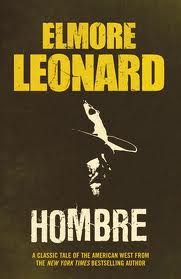
fool ourselves as much as others. It's also important to remember Leonard's westerns--they get Timothy Olyphant's hat wrong, but the use of the hat, to play with the image of the west when  Raylan isn't totally a cowboy, is important. Interestingly, Leonard thought that Richard Boone, who played in two films based on his writing (The Tall T and Hombre) was the actor who best got the sound he was trying to write.
Raylan isn't totally a cowboy, is important. Interestingly, Leonard thought that Richard Boone, who played in two films based on his writing (The Tall T and Hombre) was the actor who best got the sound he was trying to write.
When you read Leonard's early
Western stories, you can feel palpably the influence of Hemingway,
which I've mentioned before—not a copying of his style, but an
awareness of how to tell the story through what is said, and unsaid,
in the moments between the actions, or around the smallest and
seemingly inconsequential actions. That's what happens here. You have
to pay attention because a throwaway line may be carrying all the
meaning of the entire story, and it is easy to miss, just as it is so
easy to miss in life, and we miss it all the time. That's the genius
of Elmore Leonard. He lets us see what we so often miss.