Showing posts with label Robert Crais. Show all posts

Monday, 29 July 2019

ROBERT CRAIS' DANGEROUS MAN

Isabel Roland is a bank teller, and one of her customers is Joe Pike. Pike, as ever, is a quiet enigma, but Isabel and especially her colleague Dana both think he's hot. After Pike leaves, Isabel goes to lunch, and as she hits the sidewalk, she's forced into a car and two men drive away with her. But Joe Pike had just got into his car across the street, and he's seen what happened. It was quick, but it didn't feel right. A few blocks later, at a light, Pike disables the men and rescues Isabel. Before he did, the men had told her 'we know your secret.' Which is more than she does, but it's enough to get Pike and Elvis Cole involved with some ruthless killers

Last year when I reviewed Robert Crais' The Wanted, I concentrated on the personal stories underneath the fast-paced thriller; contrasting stories of parents and children as well as two entertaining if cold-blooded killers. Dangerous Man is even faster-paced, a relentless series of track-downs and races against time which meant I was able to literally recapitulate the 'page-turner' and 'unputdownable' critics' cliches, because I read the book the day it arrived.

It's different from The Wanted, except perhaps for the beachside gunfight that climaxes the chase. Again there is a parental angle, but it's simply background. The villains don't have much in the way of personality, it's a bigger crew working for a second crew working for an anonymous villain off-stage. But after I finished Dangerous Man, I happened to watch the pilot episode of the overlooked Stephen J Cannell TV show Wise Guy. Elvis Cole had referenced himself to Jim Rockford (perhaps Cannell's best, see my obit in the Independent) at one point in the novel, and it occurred to me that Crais, who started writing TV crime shows during the Rockford era, had written this scene by scene, in what would have been an epic Rockford episode, if Rockford had come up with a partner like Joe Pike. The movement between the scenes, which buffers the fast pace, the relaxed dialogue even as the pressure intensifies, and the now-expected confrontation with federal marshals who are looking for the same killers, who tortured one of their retired colleagues at the start of their quest that roped in Roland.

You'd think Joe Pike is a bit too old for Isabel Roland, and she's a bit too much of an innocent civilian for him, but the strange prospect is also fun to consider, jarring as it is to hear the young tellers refer to Joe as a 'studburger' or 'manmeat on a stick'. With the right casting, this would be a hell of pilot for the Elvis and Joe Show. But I am more than content to have the story between covers, because how these days how many books do I simply sit down and read to the end before getting up? Not too many.

Dangerous Man by Robert Crais
Simon & Shuster, £16.99, ISBN 9781471157615

Note: This review will also appear at Crime Time (www.crimetime.co.uk)

Friday, 17 August 2018

ROBERT CRAIS' THE WANTED

Devon Connor hires Elvis Cole because she's found a Rolex and wads of cash under her teenaged son's bed. Tyson Connor goes to a special school, has troubler socializing, is a gamer. But checking into the watch, Elvis soon discovers Tyson is part of a trio of kids robbing houses in wealthy LA neighbourhoods. Kids who aren't too sharp about keeping their identities hidden. Which is a shame, because there are two other men after them, who want back something they've stolen. And these guys are not as kind nor gentle as Elvis Cole.

With The Wanted Robert Crais has written a pretty straight-forward thriller, with Elvis and Joe Pike working in a deadly race against a pair of cold-blooded killers, with the LAPD lurking somewhere off the pace as well. It's fast-moving and beautifully constructed, and it works perfectly as a race against time and against villains.

But because it's Crais, the novel is far more than that. Take the title. Yes, these kids are wanted, by the police, by Cole, by the criminals hunting them. But it's also a story about kids and their parents, the kids who are wanted, like Tyson, and those who aren't, like Amber, the would-be glamour girl who's part of the burglary trio.

And because it's Crais, the characters become people who involve the reader. It's easy to take sides, to identify with the kids under pursuit, even with their flaws. It's easy because Elvis Cole's point of view has always been one of empathy, of compassion, of understanding, even when his understanding is incomplete. It's where he differs somewhat from the police, and where he differs from the villains.

Though in this case, the pair of Harvey and Stemms are two of Crais's most entertaining creations. They have the kind of insouciance and sarcastic world view that we remember from Elvis in his very early days, only the way it's directed into the off-hand horrific is absolutely chilling.

A watch-craft plot moving smoothly on its gears. A tense chase and finish. Characters who make you care. And a pair of villains actors would metaphorically kill to play. Crais has not yet been served well by Hollywood, but if there were ever a novel that cries to be turned into a screenplay (and then have the producers butcher little things like character) this one is it. It reminds you just how good Robert Crais has been for how long. How good? One of the very best.

The Wanted by Robert Crais
Simon & Schuster £14.99 ISBN 9781471157486

note: this review will also appear at Crime Time (www.crimetime.co.uk)

Friday, 6 January 2017

IRRESISTIBLE TARGETS BOOKS OF THE PAST YEAR

This is an odd Books of the Year list, because it basically includes only those books I wrote about on Irresistible Targets, or reviewed on The Crime Vault Live, and the books I read and wrote about were not necessarily written in 2016. And of course, some I haven't yet written about, which means a number of my favourite books of 2016 will, I hope, get mentioned here soon, including Paul Hendrickson's Hemingway's Boat, Reza Aslan's Zealot, Henning Mankell's Quicksand and David Talbot's The Devil's Chessboard. 

I admit I probably should have written about the books I reviewed on The Crime Vault, but once I'd done the podcast, reviewing them in some detail, I had pretty much said what I wanted to say. You can find links to all five of the the CVL podcasts here at IT, just use the search engine.  All the other books I mention you can similarly find in the past year.

My favourite 2016 crime novels were James Sallis' Willnot and Alex Marwood's Darkest Secret (CVL). Runners up were Michael Connelly's Wrong Side Of Goodbye, Robert Crais' The Promise (CVL), Graham Hurley's The Order Of Things, Stephen King's story collection Bazaar of Bad Dreams (CVL) and Johan Theorin's Made In Sweden (CVL).

I was also a judge for the CWA Short Story Dagger award, and John Connolly's Night Music, from which two stories made the judges' (and my) short list, was exceptional. The runner-up story came from another fine collection, Crimes, by Alberto Barrera Tyszka, from Venezuela.

But my favourite crime novel of the year was Sara Gran's Dope, which for some reason I came to late. Read my review; it really is as good as I say.

The other two non-crime books that stand out from the year's reading were Kevin Jackson's study of modernism and 1922, Constellation of Genius, and Joe Abercrombie's hugely entertaining story collection, Sharp Ends, which proves not only that the whole sword and sorcery genre is not dead, but that a good writer can do wonderful things with it.  Serious writing in a not always very serious genre. But then you probably watch Game Of Thrones, right?

Sunday, 31 March 2013

ROBERT CRAIS' SUSPECT

There is a theme running through Robert Crais' work, whether it's the Elvis Cole and Joe Pike novels or not, and that is relationships. Familial, romantic, partnerships are the currency of Crais' characters, and for him character is indeed, as F. Scott Fitzgerald famously observed, action. Though his books often seem fast-paced, when you look at them closely you'll see him weave myriad plot strands together and, as befits someone who was a highly successful writer of episodic television, usually resolve them quickly. What isn't resolved quickly is whatever series of questions Crais has made his characters face about their relationships; sometimes that resolution mimics the high-speed finales, sometimes it runs parallel, and sometimes it is resolved in quite an opposite way altogether.

In Suspect, the relationship in question is between Scott James, an LA cop who lost his partner, was severely wounded himself, in a massive shootout, and his new partner, a German shepherd named Maggie who herself lost a partner and was severely wounded in Afghanistan.

It takes a brave writer to try not to have animals upstage his story, and Crais makes it work almost immediately; the prologue in Afghanistan is superbly judged. He makes Maggie a real character with some of the most touching writing I've read in the crime field in ages. Using animal point of view is equally risky, but again, Crais pulls it off, and it's necessary in the sense that we are dealing with two damaged beings, whose path to each other reflects that damage even as they heal. So Scott has to prove himself as a dog handler, in order to remain what he wants to be, a working cop, but he also has to try to solve the mystery of the shooting that killed his former partner, Stephanie, to stop his feeling he left her behind.

It works well. As Scott gets closer to the truth, he finds himself ensnared. Perhaps it would have been good to see the ultimate villain fleshed out a little more fully, or foreshadowed slightly more strongly, and perhaps Scott could have been left hanging out in the wind for a longer, more suspenseful, time. In an afterword, Crais acknowledges a certain amount of compression of time in the dog training, but it's easy to see why he wanted to maintain the pace as he does, to in effect force the new partnership to a point of crisis, to see if the bonding sticks, and to see if both partners can begin to trust the world again. It is a bravura piece of writing, and it seems a natural for a movie—after all, it's been too long since we've seen heroic dogs on our screens. 


Suspect by Robert Crais
Orion, £12.99, ISBN 9781409127703

NOTE: This review will also appear at Crime Time (www.crimetime.co.uk)

Friday, 13 April 2012

ROBERT CRAIS' TAKEN: THE 500TH POST

NOTE: This is the 500th post at Irresistible Targets. It may be worrying that it happens to be Friday 13th, but it is also auspicious that it happens to be a review of Bob Crais' latest novel, because he's one of those writers I've been following since the start, and one whom I've been fortunate enough to review frequently and meet up with regularly, but sadly less frequently.

IT will resume its more frequent service, I hope, now that I'm back from New Zealand and Nate is on the mend and on his way back soon. Sadly, on my way back via LA I just missed Bob and another of IT's favourite people, Michael Connelly, doing a joint appearance at the Santa Monica Library to discuss Raymond Chandler (see the photo bottom left).

Thanks to all of you who've followed IT so far--your comments are encouraged, and please pass the link onward if you do enjoy what you find here...


In his last novel, The Sentry, Elvis Cole protected his friend and partner Joe Pike. It didn't take long to pay the favour back. In Taken Cole is hired to find a young woman who has gone missing, and, as it turns out, she's been tkidnapped by bajadores, modern-day bandits who steal whatever the Mexican cartels are smuggling across the border. In this case, it's people, and they extort money from the families, no matter how poor, then kill their victims rather than return them. As Cole notes, it's a business dependent on quantity of kidnappings, not quality. And with Cole involved and turning over stones, the case grows to include both the cartels and the Korean mafia, the ATF, and eventually, Cole himself, when he too becomes one of the taken. But that brings Joe Pike into play.

Taken is one of Robert Crais' most ambitious novels. It begins like a classic Cole—we've almost forgotten how irreverent about hard-boiled conventions the early Elvis was, and indeed here, when he is hired, it is as the 'World's Greatest Detective'--an ironic part of his personality which has pretty much disappeared over the years. With Cole a prisoner, the novel flips, and then becomes a Joe Pike story—but not in the 50/50 mix you might expect. Because Crais does something very daring, shifting not only between multiple points of view, but also multiple timelines, moving back and forth between not only his two protagonists, but also the kidnapped girl, her boyfriend, their fellow captives and their captors. It truly is the story of all the taken.

And a brutal story it is. Last time I interviewed Bob (for Shots, on publication of The Sentry last year; you can link to it via here) we talked about Don Winslow and Savages, his exceptional and very brutal cross-border story. It seems inevitable that the excellent crime writers Los Angeles can boast would begin to focus south, and on the border, and Crais has moved adeptly into territory worked so well by Winslow and Jeff Parker. And for him, it's a difficult tightrope to walk: Pike is a character who can deal with violence and keep even huge body counts on an even keel for the reader, but Cole's character is different. Over his past few novels, Crais has brought the characters closer together, and here he's got the tone right throughout, balancing brutality with humanity. And it ends with a simple scene that is so Californian in its metaphor, yet so touching as well, that it re-validates the whole concept of the book (validate, of course, is a key Californian word).

Along the way we also see characters who seem poised to recur: Joe Pike's mercenary colleague Jon Stone and ATF bigwig Nancie Stendahl, who seems a worthy friend/foil for either Cole or Pike or both. It struck me as I raced through this compulsive story that Crais has come a long way since The Monkey's Raincoat, and so have his characters. They've grown together and the books are better for it.

TAKEN by Robert Crais
Orion £12.99 ISBN 9781409116035

Wednesday, 7 December 2011

CRIME TIME'S BEST NOVEL OF 2011

I wrote the following for Crime Time (crimetime.co.uk) who are doing a survey via tweet, and then posting the full text on their website.

I agreed with the Dagger judges for once: Crooked Letter Crooked Letter is beautifully written & says much about America, not just the South. I thought Robert Crais' The Sentry defined Joe Pike & Elvis Cole. I admire Michael Connelly's 2011 two-fer: The Drop, a fine Harry Bosch, and The Fifth Witness, the best Mickey Haller yet.

I should also mention that I was going to put Graham Hurley's Borrowed Light on my list, but went back and discovered it was published last year. But it deserved the mention.

Thursday, 10 March 2011

ROBERT CRAIS' SENTRY: THE SHOTS INTERVIEW

My latest American Eye column, an interview with Bob Crais, to mark the publication of his excellent new novel, The Sentry, is up at Shots; you can link to it here. You can also read my original review of the book, which appeared at Crime Time, elsewhere in Irresistible Targets here.

Monday, 17 January 2011

ON WATCH FOR ROBERT CRAIS' SENTRY

It was almost 25 years ago that Robert Crais' Elvis Cole made his debut, which means we (but not Crais) are getting older. So is Cole. He came along in the second-wave of neo-Chandler private eyes, full of irreverence and wise-cracking, like Fletch or Moses Wine. But as the Cole series progressed the books grew deeper and more layered, and after three exceptional Cole novels (LA Requiem, The Last Detective, and Forgotten Man) whose titles reflect their growing darkness, Crais changed gears, with his first novel making Cole's partner Joe Pike the main character. The first Pike novel, The Watchman, set the tone: its title reflecting Pike's character, but the book itself driven primarily by plot, a play by play of the relentless Pike on his quest, with most of the characterisation provided by the cast who play off Pike's stoic silences.

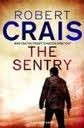
The Sentry is the third Pike novel (just published in the US, out in the UK in March), and its title reflects the first, defining Pike and his character. The story is simple: Pike interrupts what looks like a gang-banger shakedown at Wilson's Po' Boys, a touch of pre-Katrina New Orleans transplanted to a Venice cafe, and falls for something in the manner of Dru Rayne, the niece of the strangely uappreciative Wilson, who runs the cafe and whom Pike has saved from a more severe beating. Of course, it turns out there is more going on that just a small-time protection racket, and soon Dru has disappeared and Pike, who said he would protect her and her uncle, is on a mission to rescue her.

The beauty of the Pike books is that Crais can indulge in thriller writing, the kind of thing he did to an extent in television, and in Pike he has the perfect kind of hero to do that. Pike may be somewhat utilitarian as a character, but because he remains so constant, so true to that character, and because he remains almost unaffected by the way 'normal' characters interact, he provides a certain amount of freedom. Where Elvis Cole becomes the centre of every scene he was in, and we understand characters through his own, limited in some ways, perspective, with Pike the other characters become the focus, and we understand them as Pike does, and perhaps better.

That's certainly the case here, as a femme fatale shows Pike's own vulnerability, the way he is trapped within his own code of behaviour, which is almost existential apart from when it is cracked open by a woman. In that sense, Crais' take on a classic film noir situation is made even more stark by Cole's presence, as alter-ego to Pike.You would actually like to see more interaction between Pike and Dru, because she's a strong character but primarily off-stage; in fact, her most chilling scene is probably whe Pike observes her from afar, and ought to realise what the score is at that point, since we do, but may be reluctant to believe the evidence of his eyes.

It's also interesting because the story actually starts, as Wilson and Dru do, in New Orleans, and the most frightening of the book's many villains, Daniel, a self-described werewolf, is drawn with strong overtones of horror, sort of John Connolly on the bayou. But there is a twist to the werewolf's behaviour, one whose success depends on how much you sense it coming; which is why I won't mention what it is. If it works for you, it provides the book with an odd moment of sympathetic frisson. But for a full-bore, fast-paced thriller, which it most certainly is, The Sentry is a suprisingly soft-centered and sensitive story. Crais has come a long way since The Monkey's Raincoat, never boring and often surprising. Twenty-five years? Really?

The Sentry by Robert Crais

Orion Books, £12.99 ISBN 9781409116004

NOTE: This review will also appear at crimetime.co.uk

Friday, 17 December 2010

STEPHEN J CANNELL: THE INDEPENDENT OBITUARY

My obit of Stephen Cannell, who created the Rockford Files and the A Team, among other shows, is in today's Indy; you can link to it here. I wasn't a huge fan of most of his stuff, although Rockford is always pleasannt and I do have pleasant recollections of Wiseguy which, as I said was both derivative and highly influential. His career seems a pretty good reflection of the business itself, but better in the sense that he seemed to encourage good writing, particularly in letting characters have their rein, which played well in some of the lighter hearted shows. He was, it seems, genuinely admired and liked by fellow writers. Bob Crais emailed me (after I'd written the piece, and the quote didn't get added to it) that 'Steve was a genuinely good guy...with the enormity of his success, and his wealth, he didn't have to be and so many of them are not, but Steve was--a nice man.' I do wish that had been in the printed piece.

Sunday, 7 February 2010

IRRESISTIBLE TARGETS AT THE SUPER BOWL

Don't forget, for those of you in the UK of GB + NI, or who can see BBC 1, I'll be commenting on the Super Bowl tonight, live, at 2255, alongside host Jake Humphrey and Alex Smith of the San Francisco 49ers...the game, for those of you who don't know, is Indianapolis against New Orleans, and ought to be good (see my nfluk.com preview here). The halftime show is 25 minutes of The Who, or who's left of them. It's funny to think that after all these years, Ed Sullivan still books the Super Bowl halftime shows.

Plus there's a crime-writing connection. I've already had an email from that expatriate Cajun Robert Crais saying 'geaux Saints'. I wonder if Michael Z Lewin (creator of Albert Sampson) will be rooting for the Indianapolis Colts?

Monday, 7 July 2008

CHASING DARKNESS by Robert Crais

I remember talking once in LA with Robert Crais about how many of his books have exceptionally well-chosen titles, and he's done it again with Chasing Darkness, whose titular mascot indicates that this book is a change of pace of sorts for both Crais and for his detective, Elvis Cole.

Let's start with Cole. When a man is found dead, an apparent suicide, he's discovered to possess photographic souvenirs of a number of serial killings, photos only the killer could have taken. Three years before, Elvis had cleared the man when he was arrested as a suspect in one of the killings, and since then, three more women have been killed. Not only are the police hounding Cole, the family of at least one of the victims blames him as well, and wants revenge.

The only thing to do is to investigate, and see where, and if, he went wrong. It's a different thing for Elvis to be feeling he's wrong; he's made mistakes in the course of this excellent series, but by and large his instincts haven't betrayed him, and now he's forced to re-examine those instincts.

That's where this is new territory for Crais as well. He's changed the tone of the series at times by focusing on Joe Pike, but although Pike's tightly-wrapped persona provides a contrast to Elvis' outward flippancy, it also works against probing into the depths of his darkness. Here, Cole's doubts act as a catalyst for what is, for it's first two-thirds, a compelling story. The compulsion fades as it becomes clear Elvis was not wrong, and although the narrative drive remains strong, it also became obvious pretty early where the real killer was hiding.

This is something typical of Crais' books: they often start with mystery and sometimes with doubt, but they usually resolve themselves in action, as befits someone who's a great scriptwriter too. I think it was The Forgotten Man where I pointed this out first (and THAT was a great title too!). Crais' books may pull themselves up just a little short of Michael Connelly's sort of  darkness, but they are no less satisfying for that. And LA has got to be big enough for Bosch, Cole and Pike. Chasing Darkness is Crais at top form, and there aren't many better.

Chasing Darkness by Robert Crais
Orion £12.99 ISBN 9780752891590