I've written an essay, actually re-writtten it from one which appeared 17 years ago, about my friend and teammate Blake, whose personal tragedy is never far from my
thoughts. When I started editing the Northern Lights poetry pamphlets, and wrote the first one, I dedicated it to him, never dreaming this kind of an essay would ever need to be written. It's up at my Friday Morning Tight End column, an extra that
you can read without subscribing. But if you like it.... patreon.com/posts/21366316
Wednesday, 12 September 2018


PUTTING THE RACE INTO SPACE RACE: HIDDEN FIGURES (AND THE 'GO AND NO GO' CONDUNRUM)
 I finally saw Hidden Numbers, and liked it a good deal. What is best about it is the way it reinforces the pain of the world of segregation with the same under-stated sense of daily living that those who lived with it experienced. We see clearly not only the ever-present fear, of stepping out of line, the constant de-humanizing by relegating people to second-class status, but also the debilitating effect Jim Crow had on the white people imposing it on their fellow citizens, the way they take their privilege for granted, recoil at the slightest stepping over that (usually) unseen line, and at the same time think of themselves as friendly, decent Christian people.
We saw this first-hand when I was an 11-year old kid and we took our first-ever family vacation to Washington DC and encountered segregated facilities at, of all places, the Washington Monument. Washington himself was a slave-holder, of course, but I didn't make the connection then. I asked my dad to explain 'whites only', and then asked 'but that's wrong, isn't it?' and when he said, 'yes it is but that is how they do things down here' he got cold-eyed by some guy, who I guess backed down from taking his racist grievance any further.
 That is the strong point of the film, established from the start by contrasting the easy camaraderie between the three friends and the unspoken fear when a white state police officer stops to investigate their broken-down car. The power relationship is set from the start. This marks the subtly of the approach, culminating in the moment Katharine Johnson's confirmation of the figures John Glenn wants her to confirm before he will head into space are delivered, and then the door closes in her face. Glenn's character is an exemplar here: early on he extends himself to greet the Langley black women; he is the first to accept Johnson for her talent, but he's also shown as a complete team player all through his launch into space.
 All three of the leads are good, if perhaps a little too glamorous in their 60s retro looks, with Taraji P Henson exceptional as Johnson, whose math genius is essential to NASA's success. Kevin Costner's beneficent white man isn't too overdone--I wondered if his one-man integration of the ladies' rest rooms wasn't still unlawful in Virginia, and why it wasn't reported. It seems odd that neither Costner nor his scientists would have any idea of what an IBM computer was; I probably did and I was 10 years old. It was also interesting that the filmmaker's show an engineer who's a Polish-Jewish immigrant survivor of the Holocaust, but never mention Werner Von Braun, head of the space programme, whose V2 rockets were built with Nazi slave labour. But overall, it's a sort of Disneyfied version of the story, but not simplified like some of their sports films, and told, as I suggested, with restraint that parallels the restraint of its principals.
 But one non-racial flaw jumped out at me, so important it's not just a quibble. Katharine Johnson's task was to calculate the 'go/no-go' point for Glenn's Friendship 7 capsule to re-enter the earth's atmosphere. The angle of this departure from its elliptical orbit needed to be perfect: a little too much and the capsule is incinerated by the heat of re-entry, too little and it goes off into space, outside earth's gravity forever. This gets hammered into our consciousness repeated. So why then does the movie make the go/nogo moment occur long after
 Glenn has re-entered earth's atmosphere and survived the intense heat, as if it was an instant before releasing his parachute? This is such a major error, so obvious, and also loses the drama of hitting the go/no go precisely. Do they think we weren't paying attention to the science stuff? Or weren't they? Baffling.
It also appeared to me that Kevin Costner was both in the Langley labs and mission control in Florida at the same time, but movie stars can do anything. Maybe he found his own go/no go point. But what sticks out about this movie is the way it delineates the way people were forced to cope with an unjust system of institutionalized bigotry, and not just cope with it, but triumph within that broken system. That it is telling the story of these three real women makes it all the more successful.
Monday, 3 September 2018
ECHOES OF RIOTS, ECHOES OF AUGUST (1968)
The essay that follows is a sort of companion piece to one I wrote in March, 'Hey, Hey LBJ, What Did You Do 50 Years Ago Today', to which you can link here. There is, I think, much more to be said about those tumultuous years in the late Sixties, not only about how and why they succeeded or failed, or how they have been misinterpreted, but also about what they have to say to us who lived through them, and what they might say to young people today. I'm sure more essays will follow, but for now, here's a memory of that summer...
 At no point in my life did it ever occur to me to
congratulate myself for living through August 1968, but somehow I
have now I managed to 'survive', to use the more self-sensitive 21st
century term, its fiftieth anniversary. Anniversary remembrance is
symbolic, triggered by nothing more than mathematical convenience (years ending in
zeroes) which appeals to our senses of order. But August 1968 was not
about order, but chaos. As Chicago Mayor Richard Daley explained, on
29 August, after his cops had run riot through protestors at the
Democratic Party's Presidential Convention, “the policeman isn't
there to create disorder, (he) is there to preserve disorder”.
At no point in my life did it ever occur to me to
congratulate myself for living through August 1968, but somehow I
have now I managed to 'survive', to use the more self-sensitive 21st
century term, its fiftieth anniversary. Anniversary remembrance is
symbolic, triggered by nothing more than mathematical convenience (years ending in
zeroes) which appeals to our senses of order. But August 1968 was not
about order, but chaos. As Chicago Mayor Richard Daley explained, on
29 August, after his cops had run riot through protestors at the
Democratic Party's Presidential Convention, “the policeman isn't
there to create disorder, (he) is there to preserve disorder”.
 In March, on my
seventeenth birthday, anti-war candidate Eugene McCarthy came close
to defeating incumbent President Johnson in the New Hampshire
primary. On the last day of the month, Johnson realised his candidacy
would divide his party, and announced he would not stand for
re-election. My teenaged self, thinking I was now part of a
triumphant revolution, celebrated. But the celebrations were
premature, and short-lived.
In March, on my
seventeenth birthday, anti-war candidate Eugene McCarthy came close
to defeating incumbent President Johnson in the New Hampshire
primary. On the last day of the month, Johnson realised his candidacy
would divide his party, and announced he would not stand for
re-election. My teenaged self, thinking I was now part of a
triumphant revolution, celebrated. But the celebrations were
premature, and short-lived.
 Thousands flocked to
disrupt the Democratic convention, to stem the Humphrey tide that
would ensure Johnson's war continued. But this was America; concrete
action and coalition-building was subsumed into political theatre
which played better on television news. Inside the convention, the
winning of primaries proved to be less important than the wishes of
the party bosses who ran the smoky rooms; the big party chief was
John Bailey, from Connecticut, who'd given my grandad his marching
orders for one term in the state legislature. Frustration overwhelmed
those outside the convention hall, and then Daley unleashed the
police. The cops, taking out their own frustration against what they
saw as spoiled long-hairs untrue to their country, made the fatal
mistake of including the reporters covering their attack among its
targets.
Thousands flocked to
disrupt the Democratic convention, to stem the Humphrey tide that
would ensure Johnson's war continued. But this was America; concrete
action and coalition-building was subsumed into political theatre
which played better on television news. Inside the convention, the
winning of primaries proved to be less important than the wishes of
the party bosses who ran the smoky rooms; the big party chief was
John Bailey, from Connecticut, who'd given my grandad his marching
orders for one term in the state legislature. Frustration overwhelmed
those outside the convention hall, and then Daley unleashed the
police. The cops, taking out their own frustration against what they
saw as spoiled long-hairs untrue to their country, made the fatal
mistake of including the reporters covering their attack among its
targets.
 Inside the hall,
Senator Abraham Ribicoff, a Bailey protege from Connecticut, stood up
and excoriated a lack of democratic process which led to “Gestapo
tactics being used in the streets of Chicago”. Ribicoff was also
Jewish, like my mother, so we watched him with a special pride. He
had responded with great grace to a letter I'd written him when I was
12, asking about appointments to the Naval Academy. That was a much
different me, I remember thinking, just as Mayor Daley was caught on
camera cupping his hand round his mouth and shouted at Ribicoff. We
lip-read what he screamed, which wasn't difficult. At least the 'you
Jew bastard' part.
Inside the hall,
Senator Abraham Ribicoff, a Bailey protege from Connecticut, stood up
and excoriated a lack of democratic process which led to “Gestapo
tactics being used in the streets of Chicago”. Ribicoff was also
Jewish, like my mother, so we watched him with a special pride. He
had responded with great grace to a letter I'd written him when I was
12, asking about appointments to the Naval Academy. That was a much
different me, I remember thinking, just as Mayor Daley was caught on
camera cupping his hand round his mouth and shouted at Ribicoff. We
lip-read what he screamed, which wasn't difficult. At least the 'you
Jew bastard' part.
 Protest had failed.
August was over. Immediately after the Chicago riots, I was off to
university to play football. My music was changing, with LP records
and FM radio. I went off to college with the Buffalo Spingfield's final
album, with The Band's first, with Al Kooper and Mike Bloomfield's
Super Session. Those old compilations of two hits and filler which
kept pop music profitable were yesterday's news, though Otis
Redding's History, James Brown Live At The Apollo and Aretha Now had
made my cut. John Coltrane's Impressions had somehow cracked my
consciousness, which was ripe for being expanded. My hair, under the
football helmet, grew. Eventually I even managed to jump onto the running
board of the sexual revolution. But before that happened, it was now September 1968. Surely whoever
won the Presidency would hear the collective cries of so many of us
seeking an end to racial discrimination, an end to the folly of the
Vietnam war.
Protest had failed.
August was over. Immediately after the Chicago riots, I was off to
university to play football. My music was changing, with LP records
and FM radio. I went off to college with the Buffalo Spingfield's final
album, with The Band's first, with Al Kooper and Mike Bloomfield's
Super Session. Those old compilations of two hits and filler which
kept pop music profitable were yesterday's news, though Otis
Redding's History, James Brown Live At The Apollo and Aretha Now had
made my cut. John Coltrane's Impressions had somehow cracked my
consciousness, which was ripe for being expanded. My hair, under the
football helmet, grew. Eventually I even managed to jump onto the running
board of the sexual revolution. But before that happened, it was now September 1968. Surely whoever
won the Presidency would hear the collective cries of so many of us
seeking an end to racial discrimination, an end to the folly of the
Vietnam war.
 At no point in my life did it ever occur to me to
congratulate myself for living through August 1968, but somehow I
have now I managed to 'survive', to use the more self-sensitive 21st
century term, its fiftieth anniversary. Anniversary remembrance is
symbolic, triggered by nothing more than mathematical convenience (years ending in
zeroes) which appeals to our senses of order. But August 1968 was not
about order, but chaos. As Chicago Mayor Richard Daley explained, on
29 August, after his cops had run riot through protestors at the
Democratic Party's Presidential Convention, “the policeman isn't
there to create disorder, (he) is there to preserve disorder”.
At no point in my life did it ever occur to me to
congratulate myself for living through August 1968, but somehow I
have now I managed to 'survive', to use the more self-sensitive 21st
century term, its fiftieth anniversary. Anniversary remembrance is
symbolic, triggered by nothing more than mathematical convenience (years ending in
zeroes) which appeals to our senses of order. But August 1968 was not
about order, but chaos. As Chicago Mayor Richard Daley explained, on
29 August, after his cops had run riot through protestors at the
Democratic Party's Presidential Convention, “the policeman isn't
there to create disorder, (he) is there to preserve disorder”.
The Chicago
convention riots may have been the high-water mark of political
counter-culture in an America (the cultural high would come a year
later), which was built around by two great political issues: civil
rights at home and the war in Vietnam abroad. The latter was driving
a new spike through the liberal political establishment which had
already begun to re-order itself in the wake of President Lyndon
Johnson signing the Civil Rights and Voting Rights acts in 1964 and
'65. Disaffected racist Southern 'Dixiecrats' still rallied to LBJ's
waging of the war. But at the start of 1968 the Viet Cong's Tet
Offensive suggested to America that LBJ wasn't 'winning' the war, and
in February trusted news-anchor Walter Cronkite returned from Vietnam
confirming that was the case. “If I've lost Cronkite, I've lost
America,” Johnson said.
 In March, on my
seventeenth birthday, anti-war candidate Eugene McCarthy came close
to defeating incumbent President Johnson in the New Hampshire
primary. On the last day of the month, Johnson realised his candidacy
would divide his party, and announced he would not stand for
re-election. My teenaged self, thinking I was now part of a
triumphant revolution, celebrated. But the celebrations were
premature, and short-lived.
In March, on my
seventeenth birthday, anti-war candidate Eugene McCarthy came close
to defeating incumbent President Johnson in the New Hampshire
primary. On the last day of the month, Johnson realised his candidacy
would divide his party, and announced he would not stand for
re-election. My teenaged self, thinking I was now part of a
triumphant revolution, celebrated. But the celebrations were
premature, and short-lived.
Four days later,
Rev. Martin Luther King, Jr. was assassinated in Memphis, and riots
in cities across the country left 46 people dead. Protest increased.
Columbia University students occupied campus buildings; but that
paled in the face of French students sparking a general strike joined
by some 22 million workers. Meanwhile, Robert F. Kennedy was trying
to unify the opposition to LBJ's designated successor, Hubert H.
Humphrey, whom many McCarthy supporters treated as an opportunist
carpet-bagger. Yet in the same way King had, just before his murder,
specifically linked the issue of civil rights to American conduct in
Vietnam, so RFK seemed to be rallying King's constituency to anti-war
coalition. Then, on 4 June, as he celebrated winning the California
primary, he too was assassinated. Riots didn't follow immediately, but it's not unfair to see those in Chicago as a delayed by-product of that assassination, bringing white kids out on the streets the same way Rev. King's killing had brought out the black population in the cities.
August began with
Nixon winning the Republican nomination, and new Defense Secretary Clark
Clifford raising the number of US soldiers in Vietnam to its peak,
541,000. We watched again as European dissent got more real than
ours; Soviet tanks rolled into Czechoslovakia to put an end to the
Prague Spring. Surely there was something more we could do.
 Thousands flocked to
disrupt the Democratic convention, to stem the Humphrey tide that
would ensure Johnson's war continued. But this was America; concrete
action and coalition-building was subsumed into political theatre
which played better on television news. Inside the convention, the
winning of primaries proved to be less important than the wishes of
the party bosses who ran the smoky rooms; the big party chief was
John Bailey, from Connecticut, who'd given my grandad his marching
orders for one term in the state legislature. Frustration overwhelmed
those outside the convention hall, and then Daley unleashed the
police. The cops, taking out their own frustration against what they
saw as spoiled long-hairs untrue to their country, made the fatal
mistake of including the reporters covering their attack among its
targets.
Thousands flocked to
disrupt the Democratic convention, to stem the Humphrey tide that
would ensure Johnson's war continued. But this was America; concrete
action and coalition-building was subsumed into political theatre
which played better on television news. Inside the convention, the
winning of primaries proved to be less important than the wishes of
the party bosses who ran the smoky rooms; the big party chief was
John Bailey, from Connecticut, who'd given my grandad his marching
orders for one term in the state legislature. Frustration overwhelmed
those outside the convention hall, and then Daley unleashed the
police. The cops, taking out their own frustration against what they
saw as spoiled long-hairs untrue to their country, made the fatal
mistake of including the reporters covering their attack among its
targets.
 Inside the hall,
Senator Abraham Ribicoff, a Bailey protege from Connecticut, stood up
and excoriated a lack of democratic process which led to “Gestapo
tactics being used in the streets of Chicago”. Ribicoff was also
Jewish, like my mother, so we watched him with a special pride. He
had responded with great grace to a letter I'd written him when I was
12, asking about appointments to the Naval Academy. That was a much
different me, I remember thinking, just as Mayor Daley was caught on
camera cupping his hand round his mouth and shouted at Ribicoff. We
lip-read what he screamed, which wasn't difficult. At least the 'you
Jew bastard' part.
Inside the hall,
Senator Abraham Ribicoff, a Bailey protege from Connecticut, stood up
and excoriated a lack of democratic process which led to “Gestapo
tactics being used in the streets of Chicago”. Ribicoff was also
Jewish, like my mother, so we watched him with a special pride. He
had responded with great grace to a letter I'd written him when I was
12, asking about appointments to the Naval Academy. That was a much
different me, I remember thinking, just as Mayor Daley was caught on
camera cupping his hand round his mouth and shouted at Ribicoff. We
lip-read what he screamed, which wasn't difficult. At least the 'you
Jew bastard' part.
 Protest had failed.
August was over. Immediately after the Chicago riots, I was off to
university to play football. My music was changing, with LP records
and FM radio. I went off to college with the Buffalo Spingfield's final
album, with The Band's first, with Al Kooper and Mike Bloomfield's
Super Session. Those old compilations of two hits and filler which
kept pop music profitable were yesterday's news, though Otis
Redding's History, James Brown Live At The Apollo and Aretha Now had
made my cut. John Coltrane's Impressions had somehow cracked my
consciousness, which was ripe for being expanded. My hair, under the
football helmet, grew. Eventually I even managed to jump onto the running
board of the sexual revolution. But before that happened, it was now September 1968. Surely whoever
won the Presidency would hear the collective cries of so many of us
seeking an end to racial discrimination, an end to the folly of the
Vietnam war.
Protest had failed.
August was over. Immediately after the Chicago riots, I was off to
university to play football. My music was changing, with LP records
and FM radio. I went off to college with the Buffalo Spingfield's final
album, with The Band's first, with Al Kooper and Mike Bloomfield's
Super Session. Those old compilations of two hits and filler which
kept pop music profitable were yesterday's news, though Otis
Redding's History, James Brown Live At The Apollo and Aretha Now had
made my cut. John Coltrane's Impressions had somehow cracked my
consciousness, which was ripe for being expanded. My hair, under the
football helmet, grew. Eventually I even managed to jump onto the running
board of the sexual revolution. But before that happened, it was now September 1968. Surely whoever
won the Presidency would hear the collective cries of so many of us
seeking an end to racial discrimination, an end to the folly of the
Vietnam war.
History can tell you
how that turned out. The trial of the Chicago Eight protest leaders
would become America's greatest example of political theatre of the
absurd. Nixon narrowly defeated Humphrey, helped by his 'October
Surprise' which sabotaged LBJ's peace talks with North Vietnam in
Paris. The Democrats would make new rules, increasing the importance
of their presidential primaries, which would result in George McGovern,
who had led the Kennedy delegates after Bobby's killing, wiinning the nomination in 1972.  Nixon would defeat him in a landslide, despite the clues
provided by the early Watergate reports. The Vietnam war would
continue until it was lost; Nixon would continue until he was lost,
and resign. The Dixiecrats would defect full scale to the
Republicans, and a few years later Ronald Reagan would begin the
shift of America's political paradigm to the right, as prophesied
from jail by Nixon's campaign manager and Attorney General, John
Mitchell.
Nixon would defeat him in a landslide, despite the clues
provided by the early Watergate reports. The Vietnam war would
continue until it was lost; Nixon would continue until he was lost,
and resign. The Dixiecrats would defect full scale to the
Republicans, and a few years later Ronald Reagan would begin the
shift of America's political paradigm to the right, as prophesied
from jail by Nixon's campaign manager and Attorney General, John
Mitchell.
 Nixon would defeat him in a landslide, despite the clues
provided by the early Watergate reports. The Vietnam war would
continue until it was lost; Nixon would continue until he was lost,
and resign. The Dixiecrats would defect full scale to the
Republicans, and a few years later Ronald Reagan would begin the
shift of America's political paradigm to the right, as prophesied
from jail by Nixon's campaign manager and Attorney General, John
Mitchell.
Nixon would defeat him in a landslide, despite the clues
provided by the early Watergate reports. The Vietnam war would
continue until it was lost; Nixon would continue until he was lost,
and resign. The Dixiecrats would defect full scale to the
Republicans, and a few years later Ronald Reagan would begin the
shift of America's political paradigm to the right, as prophesied
from jail by Nixon's campaign manager and Attorney General, John
Mitchell.
It was still a great
time to protest, especially within the protective walls of a small
liberal arts college. Especially because even there you found chaos,
division between black and white, left and right, straight and hip.
It was obvious this would not be a French-style movement for change.
It was also a safe time to lose oneself to the cultural revolution,
but after Woodstock the following August, that too began to crumble
into what became known as the 'me' generation. By 1970 even students,
at Jackson State and Kent State, were being killed. Lives were there
to be got on with. Some of us would be lucky enough to try to
continue to protest. Eventually I would even vote for a presidential
candidate who won. But that took decades. Back in August 1968 (was it
really 50 years ago?) I would have told you change was in the air.
Almost everything still seemed possible, especially if you were 17.
Friday, 31 August 2018
BIG NFL NEWS! PREVIEWS! & SIGN UP FOR FRIDAY MORNING TIGHT END
I've been writing a Friday column on the NFL for something like 20 years, and for the past 13 on nfluk.com have picked every game of the season. Now I'm launching that column on its own on Patreon, as both a weekly chat about the NFL and of course a continuation of my pickapalooza. You can link to it here: all will be explained, including how to subscribe. First pick comes up Thursday--first column next Friday. Be a patron!
In the meantime, I did two season previews this month. First, three weeks ago, I wrote for the American magazine. It's a nice thing to subscribe to, hard copy or online, if you are a Yank here, especially a short-term expat. But because they're such nice folks, they've given me a link where you can sample the column, pound the link here. There's a section on London's International Series games too.
Then this week I did a more complete preview for Betfair, for whom I will also be writing a weekly betting column each Friday, with a best bet, value bet, and outside bet. This one's a bit more detailed on each team, slightly different from the American's version, as I changed my mind about some things, and I will change it again, just you watch! Here's the link to that one. So if you like what you read in these previews, get over to Patreon and make the Friday Morning Tight End column happen! Thanks.
In the meantime, I did two season previews this month. First, three weeks ago, I wrote for the American magazine. It's a nice thing to subscribe to, hard copy or online, if you are a Yank here, especially a short-term expat. But because they're such nice folks, they've given me a link where you can sample the column, pound the link here. There's a section on London's International Series games too.
Then this week I did a more complete preview for Betfair, for whom I will also be writing a weekly betting column each Friday, with a best bet, value bet, and outside bet. This one's a bit more detailed on each team, slightly different from the American's version, as I changed my mind about some things, and I will change it again, just you watch! Here's the link to that one. So if you like what you read in these previews, get over to Patreon and make the Friday Morning Tight End column happen! Thanks.
Wednesday, 29 August 2018
HARLAN ELLISON: THE TELEGRAPH OBITUARY AND A REMINISCENCE
 I met Harlan Ellison once. It was at an sf World Con in Washington in 1973. I was working in DC at the time, and had a great time. But at one point, maybe on my way to liberate the swimming pool with Michael Gorra at some early morning hour, I walked into an elevator containing Ellison and two young women. I was a fan of his, and I smiled and said hi, but something in my smile, or maybe just my size, irritated him, and he started in on some riff about a goofy mid-western farmboy. The women giggled, I just smiled and said see ya when the elevator reached the ground. I thought it was a little strange, but I'd heard he was aggressive and combative and I just wrote it off to a severe case of Little Man Disease. And he had a pipe, which was a sort of 50s 'longhair' thing--think Hef at the Mansion.
 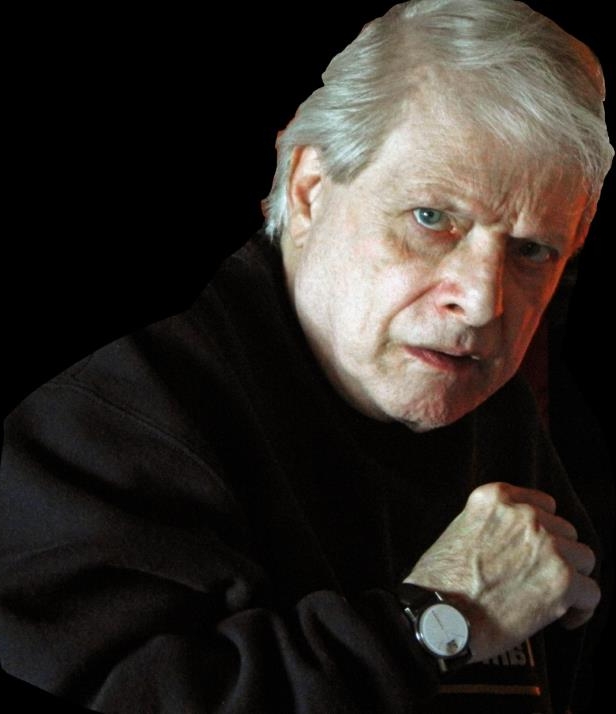 Early this July, 45 years later, I did a brief write-though for the Daily Telegraph of their obituary of Harlan Ellison, adding some details I thought pertinent, some slight interpretation, and a little bit of redirection of the original. It took a long while for the version to reach print (in fact, it came while I was on holiday in Iceland), which I just discovered a few days ago when I checked online. You can link to that obit here, (the online version is behind a paywall).
 One of the things I concentrated on for the Telegraph was trying to explain why Ellison's primary work was in the short-story, and this was what I came up with:
"The short story was his métier...they reflected the bright flame of his angry personality, an emotional impact that was hard to sustain over greater lengths".
That was my experience reading him. When I first came to his work as a teenager, through those mid-60 short story collections, I found them powerful. Yes, some were derivative of mainstream writing, especially Nelson Algren, some others of the same genre people were all read growing up. But they were also, in a sense adolescent, in their rage against the way the world was: his characters were often losing in battle to forces beyond their control.
While I was looking for the Telegraph piece, I followed a link to an interview Ellison did with The Comics Journal back in 1979. It's a long rambling airing of insults and feuds, and many of his opinions and rants read like stuff you would have found in some fanzines back in the days when I was reading them. Obviously when he wrote he exercised more control. But one quote jumped out at me:
"I swear to God just one day I'd like to get up and not be angry. Just one Goddamn day in this life I'd like to arise and not be fucking pissed off at the world."
I didn't need the confirmation, but it was striking to see it out there so plainly. I thought back to that encounter and breathed a sigh of relief I hadn't made anything of the bluster I'd received. I also thought
 how important that anger was to the energy of his stories and the physical power of his best writing.
 Some of my adds for the paper were also about 'speculative fiction' and Dangerous Visions: those two anthologies were central to my own sf reading. I noted in the obit that by the time Again, Dangerous Visions appeared, five years after the first volume, its innovations had already become commonplace in the genre. The paper left out mention of Christopher Priest's book about his story which Ellison bought for The Last Dangerous Visions but wouldn't allow him to use when that book failed to appear (one interesting question: will it appear now, courtesy of his estate?). I would assume some of the introductions are missing; Ellison was a fascinating editor (including of himself) in the sense that his intros to stories are often as interesting, if not more so, than the stories themselves.
 I filled in details about the famous Star Trek feud. It may be that work in forgettable serial television used up all of Ellison's 'long form' fiction, but I may in a minority in finding 'The City On The Edge Of Forever' good for Star Trek but less than monumental. Most of his other episodic work I don't remember; I was young and they were mostly fluff. The film of A Boy And His Dog remains excellent, and deserving of more attention.
  I'd still recommend those story collections, including and perhaps especially the non-sf Love Ain't Nothing But Sex Misspelled (a title much less daring nowadays) which had a beautiful cover by Leo and Diane Dillon, who also did the covers and illos for the two Dangerous Visions volumes. You'll like I Have No Mouth But I Must Scream or The Beast That Shouted Love At The Heart Of The World or Paingod And Other Delusions, and you may wonder why you hadn't read him before.
By coincidence, I had picked up a copy of Ellison Wonderland, which I'd never read, a few months before Ellison died. This was lucky because it provided some explanation about the import of Dorothy Parker's review of Gentleman Junkie to his career, but I didn't get very far through the stories. They vary in quality, sometimes seeming like drafts of Twilight Zone episodes, sometimes seeming like sharp allegories of the society and mores of my youth, sometimes hitting real emotional nails directly on their hearts.
 For me, Ellison opened up doors toward writing that challenged me just at the point I was discovering sf. He wouldn't quite move past that with me, but I would dip in and out of his writing for decades. The thing that does stay with me is the wonderful ease and conversational style he was able to maintain in his essays, and the way that flows into his fiction, though forged very much through anger. I truly hope he rests in peace.
 NEIL SIMON: MY FRONT ROW TRIBUTE (and MUSING ON THE MUSE)
 I went on BBC Radio 4 Front Row last night, forming part of an odd couple with Samira Ahmed to discuss Neil Simon. I am sure Samira saw me as Oscar, as played by Walter Matthau, but there are worse thing. Apparently on Today the previous morning, my old friend John Lahr had pointed out Simon was not a major playwright, in the sense of Arthur Miller, say, and there was some consternation that this issue needed to be dealt with. But overall, the brief segment was intended to pay tribute to very good comedy writer. As you can hear if you click here to find the episode on IPlayer, I compared Simon to Alan Ayckbourn; not only a very funny playwright, but one whose humor is often built on the reactions of staid, secure people to the changing mores around them.
Hence my mention of Prisoner Of 2nd Avenue, which given that it deals with recession, unemployment, crime and malfunctioning government in New York City, might be considered the socially darkest of his plays, though he tris very hard indeed to keep that darkness under control with recognisable husband/wife Jewish humour.
 It starred Peter Falk, one of the actors who did very well by Simon, and vice versa, but the film, which was directed by Mike Nichols (who could spot the darkness) starred Jack Lemmon (and Anne Bancroft, whose husband Mel Brooks also wrote for Caesar) in a role you might see as a pair with Save The Tiger. Though I always thought it should be shown in a double-feature with Death Wish.
I won't summarize the rest of my talk, have a listen. But I will mention a few things I didn't get in. One is how Simon will be remembered: if Oscar the Grouch on Sesame Street isn't a lasting legacy I don't know what is. Had we gone deeper into the relevance stakes I might have noted Larry Gelbart, another alumnus of Sid Caesar's show, got points for MASH, though its social comment was much stronger in Robert Altman's film.I didn't mention Simon's Laughter On The 23rd Floor, which came after he'd won the Pulitzer for Lost In Yonkers and is maybe his last major work. It's his reminiscence of those days writing as part of a team; it exists as a TV movie, though if you're really interested in that era the movie My Favorite Year is more entertaining.
 I might have made a comparison of The Odd Couple to Hemingway's Men Without Women - it's certainly about the difficulty of male life in a world of changed mores about divorce. I wished I had seen the original Broadway production of Barefoot In The Park, with Elizabeth Ashley opposite Robert Redford. She would have provided some necessary spark that Jane Fonda, who got the film role because her name wasn't Jane Smith, didn't. I mentioned his funny Agatha Christie parody, Murder By Death, but loved Peter Falk as The Cheap Detective. Colombo anyone? I wonder if a discussion of Simon the screenwriter as maybe being superior to Simon the playwright might be in order. Take The Goodbye Girl, which he wrote for his then-wife Marsha Mason, and re-wrote when Robert DeNiro and Nichols left, replaced by Richard Dreyfuss and Herbert Ross.
Yes much of his work is slight, some of it repetitive, lot of it centered on the inevitable struggles of Jewish New York life, especially in the wider scene, such as the Eighties trilogy, of which Biloxi Blues may be the most interesting, if somewhat cliched entry. But he could write funny, and that is not to be frowned upon. Writing funny for an entire play, or movie, as opposed to a comic sketch, is a rare talent, and Simon had it.
What was especially frustrated was to be sitting in the studio during the discussion of 'the muse' and inspiration. I was bursting because I wanted to interject--at one point Louisa Buck was talking about our image of the muse and I wanted to ask her, is there any middle ground for women between muse and femme fatale, something she said after the show she was trying to get to. Similarly, as Matt Thorne made trenchant points about the changing nature of muses in modern society, it occured to me that it was an equivalent of the death of God: our muse is now more within ourselves rather than an inspiration granted by a figure beyond us. In that area between inspiration and obsession, but perhaps no longer a muse. Or in Neil Simon's case, amuse.
Friday, 17 August 2018
ROBERT CRAIS' THE WANTED
D evon Connor hires
Elvis Cole because she's found a Rolex and wads of cash under her
teenaged son's bed. Tyson Connor goes to a special school, has
troubler socializing, is a gamer. But checking into the watch, Elvis
soon discovers Tyson is part of a trio of kids robbing houses in
wealthy LA neighbourhoods. Kids who aren't too sharp about keeping
their identities hidden. Which is a shame, because there are two
other men after them, who want back something they've stolen. And
these guys are not as kind nor gentle as Elvis Cole.
evon Connor hires
Elvis Cole because she's found a Rolex and wads of cash under her
teenaged son's bed. Tyson Connor goes to a special school, has
troubler socializing, is a gamer. But checking into the watch, Elvis
soon discovers Tyson is part of a trio of kids robbing houses in
wealthy LA neighbourhoods. Kids who aren't too sharp about keeping
their identities hidden. Which is a shame, because there are two
other men after them, who want back something they've stolen. And
these guys are not as kind nor gentle as Elvis Cole.
 evon Connor hires
Elvis Cole because she's found a Rolex and wads of cash under her
teenaged son's bed. Tyson Connor goes to a special school, has
troubler socializing, is a gamer. But checking into the watch, Elvis
soon discovers Tyson is part of a trio of kids robbing houses in
wealthy LA neighbourhoods. Kids who aren't too sharp about keeping
their identities hidden. Which is a shame, because there are two
other men after them, who want back something they've stolen. And
these guys are not as kind nor gentle as Elvis Cole.
evon Connor hires
Elvis Cole because she's found a Rolex and wads of cash under her
teenaged son's bed. Tyson Connor goes to a special school, has
troubler socializing, is a gamer. But checking into the watch, Elvis
soon discovers Tyson is part of a trio of kids robbing houses in
wealthy LA neighbourhoods. Kids who aren't too sharp about keeping
their identities hidden. Which is a shame, because there are two
other men after them, who want back something they've stolen. And
these guys are not as kind nor gentle as Elvis Cole.
With The Wanted Robert Crais has
written a pretty straight-forward thriller, with Elvis and Joe Pike
working in a deadly race against a pair of cold-blooded killers, with
the LAPD lurking somewhere off the pace as well. It's fast-moving and
beautifully constructed, and it works perfectly as a race against
time and against villains.
But because it's
Crais, the novel is far more than that. Take the title. Yes, these
kids are wanted, by the police, by Cole, by the criminals hunting
them. But it's also a story about kids and their parents, the kids
who are wanted, like Tyson, and those who aren't, like Amber, the
would-be glamour girl who's part of the burglary trio.
And because it's
Crais, the characters become people who involve the reader. It's easy
to take sides, to identify with the kids under pursuit, even with
their flaws. It's easy because Elvis Cole's point of view has always
been one of empathy, of compassion, of understanding, even when his
understanding is incomplete. It's where he differs somewhat from the
police, and where he differs from the villains.
Though in this case,
the pair of Harvey and Stemms are two of Crais's most entertaining
creations. They have the kind of insouciance and sarcastic world view
that we remember from Elvis in his very early days, only the way it's
directed into the off-hand horrific is absolutely chilling.
A watch-craft plot
moving smoothly on its gears. A tense chase and finish. Characters
who make you care. And a pair of villains actors would metaphorically
kill to play. Crais has not yet been served well by Hollywood, but if
there were ever a novel that cries to be turned into a screenplay
(and then have the producers butcher little things like character)
this one is it. It reminds you just how good Robert Crais has been
for how long. How good? One of the very best.
The Wanted by Robert
Crais
Simon &
Schuster £14.99 ISBN 9781471157486
note: this review
will also appear at Crime Time (www.crimetime.co.uk)
Thursday, 16 August 2018
ARETHA FRANKLIN: AMERICA'S NATURAL WOMAN
 It's not surprising. Aretha Franklin did one, maybe two or three, of the greatest versions of the Star Spangled Banner I'd ever heard. My memory tells me it was in Detroit, at the Cobo Arena, before the Thomas Hearns/Dennis Andries light-heavyweight title fight, which was on ABC, for whom I was working, though I think I was watching back in London. I recall our announcer Jim Lampley calling it a world record. I found a recording of it on you tube, you can listen to it here. I thought she had a piano round her neck, which she doesn't. The piano playing is almost discordant, partly the acoustics, maybe the piano, or maybe she wanted a Monk-like effect, not pretty, but jarring. It wasn't as long as I recall, and the video cuts out before I can hear Lamps. But I did find another video, Branford Marsalis and Bruce Hornsby, doing the anthem at the 1991 NBA All-Star Game; if you listen closely you can hear my Screensport commentary, saying it's the best version I've heard since Aretha's. And as I say, you can listen to several more great renditions.
I bring this up because it seems appropriate that we listen to Aretha do the National Anthem, because she did it more than justice, and she represented so much of the nation, and the fight of black people, the fight of women, the fight of almost everyone one step or more removed from the American Dream. And she was also part of our American Dream, the great singer with the string of hits, who took her place in the public eye seriously, even when it hurt her.
I remember playing Otis Blue when I first got a record player. The big attraction was his hit 'I've Been Loving You Too Long'. He covered Smokey's 'My Girl' brilliantly, some British band's 'Satisfaction', William Bell's 'You Don't Miss Your Water', BB King's 'Rock Me Baby' Solomon Burke's 'Down In The Valley', and three songs by the recently-killed Sam Cooke: 'Shake', 'Wonderful World' and 'A Change Is Gonna Come'. Some of those names meant nothing to me at the time, but they soon would. He also sang a song he'd written, called 'Respect'. I may have been a little to young to understand fully, but it was a a song of pleading by a man who was doing what he thought was everything for his woman, and all he wanted was some respect for that.
It was probably only a year later that Aretha Franklin's version burst out on the airways. It was a different song, a different point of view, a different delivery. This was a woman issuing a wake-up call, asking for something --not like Otis asking for something he was stunned and hurt he didn't get--she expected against expectation to get. It's one of those automatic choices when people ask for covers better than the original, not just because it is so powerfully sung, but because she pulls every ounce of pain and meaning from the song.
 It was her second number one R&B chart single. The first was 'I Never Loved A Man (The Way I Loved You)' which had 'Do Right Woman, Do Right Man' as the B side. Her mainstream success with producer Jerry Wexler at Atlantic records was immediate: 'Respect' was number one in the pop charts too. Look at what followed, 'Baby I Love You', '(You Make Me Feel Like ) A Natural Woman', 'Chain Of Fools', '(Sweet Sweet Baby) Since You've Been Gone' and 'Think': all but Natural Woman (no2) were number one in the R&B charts; all were Top 10 hits in the pop charts. And all before I'd finished high school. Then Atlantic started searching for other material; her biggest hits were covers, not just songs like 'Spanish Harlem' or the magnificent 'Bridge Over Troubled Water' and this was all before I'd finished college.
Her voice touched the soul, the spirit, almost like a physical presence. She sang with joy, even when she was
singing about pain, when that strength seemed directed at areas we all knew we might someday reach, but probably hoped we didn't. And then she would revive us with that incredible sense of life that speaks back to gospel and speaks too of the immense joy of using that gift you've brought out in yourself.
 I could link you to any number of her songs, but I surely don't need to. I will remind you, though, that she sang at Barack Obama's inauguration, a moment when I felt great pride in my country. She had also sung at Bill Clinton's; he had grown up with her as I did, and knew her singing spoke to struggle, that she was an icon of civil rights as much as music, saying accept us, not just me, for what we are. And I will give you this link: to when the Obamas went to see the musical about Carole King's early years, and the songs she wrote with Gerry Goffin. King was in the audience, and when the actress playing her introduces 'Natural Woman', Aretha came out, wearing a full-length fur coat, and sat down at the piano and sang it. Watch it here and note King's surprise and joy. And watch the President of the United States moved to tears. As I was when I watched it again, and as I defy you not to be. RIP Aretha Franklin.
Monday, 13 August 2018
CIPHERS: a poem
I'm not sure exactly when I wrote this poem, probably some time in 1983. It was published in an English magazine, The Rialto, in Norwich. I sent it to them in March of 1985 and it was published in issue 3, in July 1985. If I find any of my notes or drafts I'll amend this post, especially if I discover what city it was that may have inspired it. At some point in the past couple of years I made one small but substantial change; my buddy August Kleinzahler suggested another more substantial one. I like it much more the way it is now.
CIPHERS
A window, cracked at the edge, bends inward,
Making room for the wind. If it were colder
We might have snow. Until we do
We can sit and wait
For the raindrops to grow smaller.
In the street, the movement takes on patterns.
The sky changes. We are not so alone.
CIPHERS
A window, cracked at the edge, bends inward,
Making room for the wind. If it were colder
We might have snow. Until we do
We can sit and wait
For the raindrops to grow smaller.
In the street, the movement takes on patterns.
The sky changes. We are not so alone.
Saturday, 11 August 2018
THE 99% SOLUTION: KAARE KYLE ANDREWS' RENATO JONES
 'Season One' of
Renato Jones is titled The One %, which sets the stage for
what is not so much political analysis as a dynamic and savage attack
on the great divide in society, and the super-rich who frolic in that
chasm. It opens with the eponymous Renato, on his birthday, about to
inherit a huge fortune. 'You have everything you want', says his
childhood friend Bliss. 'Not everything', he replies, which sets the
stage in the quietest moment of this two-volume graphic novel, which
is a piece of stunning graphic art and visceral propaganda: the kind
of dissection of our present state that one wishes more dominant
media would be able to undertake.
'Season One' of
Renato Jones is titled The One %, which sets the stage for
what is not so much political analysis as a dynamic and savage attack
on the great divide in society, and the super-rich who frolic in that
chasm. It opens with the eponymous Renato, on his birthday, about to
inherit a huge fortune. 'You have everything you want', says his
childhood friend Bliss. 'Not everything', he replies, which sets the
stage in the quietest moment of this two-volume graphic novel, which
is a piece of stunning graphic art and visceral propaganda: the kind
of dissection of our present state that one wishes more dominant
media would be able to undertake.
From there we see a
wordless flashback, to a woman being murdered as a baby looks on, and
then its back to the present where Renato is a guest on a yacht
belonging to hedge fund manager Douglas Bradley. He's looking for
Renato to invest: 'this hybrid shit isn't going to cure world
hunger,' he gloats as he stuffs steak into his mouth, 'it's going to
monetize it!' Then it's time to party, but the party doesn't work out
as Bradley might like. Because Renato Jones is 'The Freelancer', and
his mission is to make the '1% pay'. 'For 20 years they've been
murdering the working class', he explains. Now he will start to even
the score.
 As written and drawn
by Kaare Kyle Andrews, Renato Jones is exciting, frightening,
powerful story-telling. It's extremely violent, at times so much so
that as the panels of the page explode it becomes difficult to figure
out exactly what is happening. But as you read you also see that
other scenes are calmer, more discreet, that Andrews matches the kind
of drawing and colouring (which he also does himself) to the moods,
which deepens the contrasts between his characters. 'Normal' family
life is portrayed as such, but in Jones' world of extreme wealth and
indulgence, the figures are drawn grotesquely, they are exaggerated
in size and movement, they are oblivious to their own ugliness.
Eventually it dawned on me: this is the kind of vision George Grosz
had of Weimar Germany; it is not so much satire as the reporting of
disgust. Critics may well look at this as a polemic calling for
Occupy to arm itself and turn the battle violent, but it's nothing so
crude. The beauty of the comics format is that it can play the
societal and personal stirrings simultaneously,contrasting the
psychopathology of the lone avenger with the sociopathy of his
targets. We haven't seen anything so instinctively accurate since The
Shadow was convincing Depression Era criminals that the weed of crime
bears bitter fruit.
As written and drawn
by Kaare Kyle Andrews, Renato Jones is exciting, frightening,
powerful story-telling. It's extremely violent, at times so much so
that as the panels of the page explode it becomes difficult to figure
out exactly what is happening. But as you read you also see that
other scenes are calmer, more discreet, that Andrews matches the kind
of drawing and colouring (which he also does himself) to the moods,
which deepens the contrasts between his characters. 'Normal' family
life is portrayed as such, but in Jones' world of extreme wealth and
indulgence, the figures are drawn grotesquely, they are exaggerated
in size and movement, they are oblivious to their own ugliness.
Eventually it dawned on me: this is the kind of vision George Grosz
had of Weimar Germany; it is not so much satire as the reporting of
disgust. Critics may well look at this as a polemic calling for
Occupy to arm itself and turn the battle violent, but it's nothing so
crude. The beauty of the comics format is that it can play the
societal and personal stirrings simultaneously,contrasting the
psychopathology of the lone avenger with the sociopathy of his
targets. We haven't seen anything so instinctively accurate since The
Shadow was convincing Depression Era criminals that the weed of crime
bears bitter fruit.

Of course a one-man
vigilante war on the rich is a limited story line, and there are
complications in Renato's own backstory. His task is something he's
been raised to perform, by a family retainer named Church. And his
relationship with Bliss is complicated, another thing which Andrews'
inventive layouts and tones conveys with a combination of
passion and restraint. It doesn't help that Bliss' father, Nicola
Chambers, survives an
assassination attempt, and finds himself elected President of the
United States. The parallels to
Donald and Ivanka Trump are not subtle, but they are remarkably
effective. It seems left to satirists and graphic novelists to get
the inner core of Trump where mainstream media ignores it blissfully.
And as all this builds to an apocalyptic finish, there are moments of
extreme tenderness, of sad tragedy, as underplayed and effective as
the grand guignol of the bloodshed has been.
At times, Andrews'
art reminds of me Steve Ditko's, a cross between Doctor Strange and
Mr A, but Renato Jones is as innovative in its way as Spider Man or
Watchmen or the Sandman were in their time. It goes a step beyond
some of the very good noirish work in recent comics, to a place where
comparisons with Grosz are not unwarranted. You will not have read
anything like it.
Renato Jones,
Season One: The One % Image Comics $9.99 ISBN 9781632159007
Renato Jones,
Season Two: Freelancer Image Comics $16.99 ISBN 9781534303386
Monday, 6 August 2018
RAGNAR JONASSON'S WHITE OUT

Just before
Christmas, and for the first time in twenty-five years, since she was
sent away to relatives in Reykjavik when she was seven, Asta
Karadottir has come home, to a lonely house near the lighthouse in
Kalfshamarsvik, on the north coast of Iceland. She had reason to stay
away; her mother and younger sister Tinna both met their deaths in
falls off the cliffs overlooking the sea; it was after Tinna’s
death that Asta was sent away. Now she has come back, and two days
later she lies dead in the same spot, at the foot of the same cliffs.
Ari Thor Arason gets
a call from Tomas, his former mentor on the Siglurfjordur police. Now
based in Reykjavik, he’s been assigned the investigation of the
death, and has requested Ari Thor as his support. It makes things
awkward for Ari Thor, now reconciled with his grilfriend Kristin, and
with a baby due in a few weeks. The prospect of spending Christmas
apart doesn’t seem a good idea to him, so he brings Kristin along,
hoping things will be cleared up swiftly and cleanly.
Of course they won’t
be. Ragnar Jonasson was a translator of Agatha Christie into
Icelandic, and his Dark Iceland series of Ari Thor mysteries are redolent of the kinds of
characters, situations and plots that define Christie. This one is
basically a locked-room mystery: four suspects had dinner with Asta
the night of her death, all of whom she knew as a child: the
now-elderly caretakers, brother and sister Oskar and Thora, the
house’s owner, Reynir, whose father was one of Iceland’s
wealthiest men and who continues the tradition, and neighbour Arnor,
who looks after Reynir’s horses and helps Oskar with the
lighthouse. Forensics soon determine that Asta did not jump, but was
murdered, and that she’d had sex soon before.
From that set-up
Jonasson weaves a tale of past sins coming back to haunt the present,
with overtones of ghostly activity. As with Christie it’s not so
much a question of clues as elimination, of digging up the motivation
that reveals the killer. But what makes the story work so well is
that it is really, at heart, about families—not just the problems
with Asta’s family (who also worked for Reynir’s father) but
Arnor and his wife who have their own difficulties, and of course
Tomas, who moved to Reykjavik to save his own marriage, and the
ongoing relationship of Ari Thor and Kristin. The reflections are
amplified by the crime, but they are also fascinating because of the
surface practicality with which Icelanders, and you might say
Scandinavians in general, approach matters of the heart.
Part of what made
that interesting was that I read the novel, and wrote this, in
Iceland,
where you can feel
that Nordic tradition, going back to the first ‘courts’ of the
Icelandic ‘thing’, where the crimes punished most heavily were
incest and infanticide. (Note: the former is not part of the plot).
It speaks of isolated people, who keep themselves to themselves, yet
are as little immune to the pains and passions as anyone else. Being
in country, as it were, also makes clearly some of the fascination
readers find with explanations of Icelandic life in general, unique
in our Western tradition, and Jonasson does that very well indeed.
The present resolves
itself satisfactorily, while the past remains ambiguous (though I
prefer to take Asta’s opening memories literally as truth), and
Jonasson also builds for the future, as Ari Thor himself, simple,
bright and well-meaning, has much to work out. There is something
slightly less than cozy about these mysteries (and if you read
Jonasson’s brilliant The Darkness you’ll
understand why –if not my review of it is here) yet they work
because the lives of the people involved are not cozy at all. They
are real, and tether the mystery to reality.
Whiteout by
Ragnar Jonasson
translated by
Quentin Bates
Orenda Books,
£8.99 ISBN 9781910633892
Wednesday, 1 August 2018
VIOLENT LOVE: BARBIERE AND SANTOS' PULP CRIME THRILLER
 Daisy Jane and Rock
Bradley are bank robbers, operating in the Southwest in the 1970s. But Frank Barbiere's
story opens 1987, with retired US Marshal Lou telling their tale to
young Penny, flashing back to the late Sixties and early Seventies,
to Daisy Jane's path into a life of crime, and to his own
intersection with her and rock while on the track of the notorious La
Jauria drug cartel. Violent Love is violent, and there is love, but
mostly it is a fast-paced thriller that claims to be 'inspired by
true events'.
Daisy Jane and Rock
Bradley are bank robbers, operating in the Southwest in the 1970s. But Frank Barbiere's
story opens 1987, with retired US Marshal Lou telling their tale to
young Penny, flashing back to the late Sixties and early Seventies,
to Daisy Jane's path into a life of crime, and to his own
intersection with her and rock while on the track of the notorious La
Jauria drug cartel. Violent Love is violent, and there is love, but
mostly it is a fast-paced thriller that claims to be 'inspired by
true events'.
It's not hard to see
what some of those events might be, but Violent Love also wears its
influences proudly. Not least music. The opening epigram comes from
the punk band Beach Slang, and while that meant nothing to me, when
you read the lyrics the art by Victor Santos can carry you away in
those kinds of beats. In fact, you could look at this work as a sort
of mix between elements of films as diverse as Badlands, The Outfit
or The Grifters.  The mix comes from the noirish sense of doom and the
pulpy story-telling of Seventies crime movies, crossed with the
anarchic energy of punk, music of a more violent sort of crime era.
The closest comparisons would be to Carl Franklin's One False Move,
or, perhaps even closer, to the now-forgotten crime-spree thriller
set in Texas, Love And A .45, starring a young Renee Zellweger.
The mix comes from the noirish sense of doom and the
pulpy story-telling of Seventies crime movies, crossed with the
anarchic energy of punk, music of a more violent sort of crime era.
The closest comparisons would be to Carl Franklin's One False Move,
or, perhaps even closer, to the now-forgotten crime-spree thriller
set in Texas, Love And A .45, starring a young Renee Zellweger.
 The mix comes from the noirish sense of doom and the
pulpy story-telling of Seventies crime movies, crossed with the
anarchic energy of punk, music of a more violent sort of crime era.
The closest comparisons would be to Carl Franklin's One False Move,
or, perhaps even closer, to the now-forgotten crime-spree thriller
set in Texas, Love And A .45, starring a young Renee Zellweger.
The mix comes from the noirish sense of doom and the
pulpy story-telling of Seventies crime movies, crossed with the
anarchic energy of punk, music of a more violent sort of crime era.
The closest comparisons would be to Carl Franklin's One False Move,
or, perhaps even closer, to the now-forgotten crime-spree thriller
set in Texas, Love And A .45, starring a young Renee Zellweger.
This is not to say
Violent Love is simply derivative, but that it wears its influences,
and their eras well. It's also telling that Image Comics bills the
story as “crime/romance”, and the cover of the fifth issue of the
original series is done beautifully in the style of a romance comic.
In the sense that comics are our modern pulp magazines, or pulp
novels, it is perhaps inevitable that they should have discovered an
affinity for the story-telling of violent noirish
B-movie crime. I've praised the work of Ed Brubaker here many times,
and Barbiere bears comparison with him, though with Santos' art, he
moves in a more dynamic, faster-paced kind of accelerated
story-telling. It's a compelling read.
Violent Love Vol. 1:
Stay Dangerous
by Frank J Barbiere
& Victor Santos
Image Comics 2017,
$9.99 ISBN 9781534300446
Subscribe to:
Posts
(
Atom
)
