Showing posts with label Bad Lieutenant. Show all posts

Wednesday, 9 June 2010

JO NESBO: THE SNOWMAN INTERVIEW

My interview with the Norwegian writer Jo Nesbo, author of the exceptional Harry Hole novels, is now up as my latest American Eye column at Shots; you can link to it here. Or, if that's too much effort, read it now:

If there is a first division for crime writers who are part of the current Scandinavian boom, Jo Nesbo must surely be at its forefront. There's no template for a hard-boiled Norwegian crime writer, but Nesbo does look a bit like the rock star is also is in his native country, a mix of influences which reflects the cultural openness of a small but intensely literary nation. His novels starring the maverick Oslo police detective Harry Hole, of which five have been published in English, have been incredibly popular in Britain. Possibly this is because they occupy a sort of middle ground between the image of the depressive detective as pioneered by Sweden's Sjowall and Wahloo, and continued by Henning Mankell or Iceland's Arnauldur Indridason, and British variations on the theme, particularly Scots detectives like Ian Rankin's Rebus or his TV cousin, Jim Taggart. But I also see a lot of comparison to Michael Connelly's detective Harry Bosch. Jo was in town in March, to promote The Snowman, the fifth Harry Hole novel published in translation here. It's a book which reminded me very much in tone of John Connolly, so I began by asking about his influences, and if he sees the comparisons...


JN: Actually, I never read much crime fiction, so I can't really say. I've been catching up the last few years; I didn't set out to be a crime writer, I just wanted to write stories. My biggest influences from English were Dickens, Anthony Burgess, Hemingway and Charles Bukowski.

MC: THAT'S AN ECLECTIC MIX

You think so? And a couple of crime writers, because they were good writers: Jim Thompson, Lawrence Block, James Lee Burke.

THAT'S VERY INTERESTING, BECAUSE I CAN SEE A DIRECT LINK BETWEEN THOMPSON AND BUKOWSKI, WHO COULD HAVE BEEN A THOMPSON CHARACTER, OR MIGHT HAVE LIKED TO BE! AND A LITTLE BIT OF BOOKS LIKE POP. 1280 IN HARRY HOLE

Hole is a very moral character who fails terribly. Morally, though, Harry gets back on his own feet. I just saw Werner Herzog's Bad Lieutenant, which is very hard-edged, but there's a lot of that moral redemption in that.

HAVE YOU SEEN THE ORIGINAL, ABEL FERRARA'S BAD LIEUTENANT, WITH HARVEY KEITEL?

No, this is the first I've heard about it. Is it as hard-edged?

OH YES, AND HOW.

Then I'll have to watch it. (INFORMATION IS EXCHANGED THEN THE INTERVIEW RESUMES) And I was influenced more by film and graphic novels. Frank Miller's comics, The Godfather films, Scarface. But I grew up in the Sixties and Seventies, so when I came to those films I thought of them as old rather than brilliant. The pace is so slow, but still it is so good. When you're young you get bored, and you don't realise that you're seeing the origins of what you love. It's like young people today saying The Beatles are not that interesting. They think Michael Jackson invented rock and roll!

AND YOU SHOULD KNOW BECAUSE YOUR OWN ROCK GROUP, DI DERRE (English translation: That There) WAS BIG?

At our peak we were probably the biggest band in Norway, apart from Ah Ha. (WE THEN SIDETRACK OVER A LONG DISCUSSION OF A HA'S MAGS, WHO WORKED WITH ME IN OSLO ON A TRACK MEET BEFORE HIS BAND BROKE, AND WHO HAS WORKED WITH NESBO—THEN GET BACK TO DI DERRE)

I still play 50-60 gigs a year. Just me and a bass player, except in summer when the full band gets together to play festivals. It's a hobby now, I do it for fun. My music is sort of folk pop, not Norwegian ethnic folk, a bit of zydeco influence, and the songs are telling stories.

BUT YOU DON'T WORK MUCH MUSIC INTO THE HARRY HOLE NOVELS

Ah playlists! I try to be careful about that. I don't want to be one of those writers all giving you their top fives!

IT'S AN INTERESTING MIX OF INFLUENCES, BUT IT IS REFLECTED IN YOUR BOOKS, A COMBINATION OF BLACK AND WHITE MOVIES AND DICKENSIAN PROSE

Well, I try to create an original image, not ready-made movie stories. Milan Kundera said the novel has the right to exist only to the extent of its being able to do so. I don't know if this is totally true, but I look at books like Cormac McCarthy's No Country For Old Men, which doesn't need adaptation, because it seems to reflect a movie, or the movies, yet it works both ways, as novel and film. You try to use the tools you have, but they come from everywhere. For example, you can let the criminal speak without seeing him, and you do that in movies too, especially in horror movies.

IT MAKES FOR A CLASSIC ANTAGONIST IN THE LATEST HOLE NOVEL IN ENGLISH (AT THIS POINT, NOT HAVING THEN FINISHED THE LATEST HOLE NOVEL, THE SNOWMAN, I GUESS AT WHO THE VILLAIN ULTIMATELY WILL TURN OUT TO BE, BUT JO ISN'T TELLING—IT TURNED OUT I WAS RIGHT) BUT AS USUAL, THE BIG CONFLICT IS BETWEEN HARRY AND THE POLICE BUREAUCRACY

Well, everyone is in conflict, and that's where suspense is. The criminal versus the police, and the conflict within the police—not just whether the crimes will be 'solved' but in what WAY they will be solved, what compromises will be made. How much is the hero willing to pay to get the job done? It's the struggle within himself which is almost always of more interest than the struggle against the villain. It has to do with salvation, will the hero get his salvation in. That's why we're interested in The Bad Lieutenant, will he do the right thing in the end? And then there's a third level, which is that personal conflict, especially in the work place, are something anyone can relate to. The work place is unique in that it's where colleagues both cooperate and compete.

IT'S WHAT MADE TOM WELLER SUCH A COMPELLING ADVERSARY FOR HARRY

Exactly. Many readers say they miss him.

ODDLY, YOUR BOOK HAVE BEEN PUBLISHED OUT OF SEQUENCE IN THEIR ENGLISH TRANSLATIONS.

This is the only place that happened. Devil's Star was the book they'd read in the UK, and they liked it, and were sure it would be well received, so they started with that. We didn't offer them the first two novels, partly because the quality of Devil's Star was higher, but mostly because the first one is set in Australia...

AND REFERENCED IN THE LATER BOOKS

Yes, but it's less about the serial killer and more about seeing Australia through the eyes of a Norwegian. And the second is in Bangkok. Because I wanted more to look at Norwegian society, and because that's probably of more interest than Hole's perceptions of Australia, we started in English in the middle. The Redbreast was a bit heavier, maybe not such a good place to start, so that was the second book, and they've gone in order from there.

AND WE'LL LOOK FORWARD TO THE NEXT ONE!

Thanks.


THE HARRY HOLE NOVELS

  1. Bat Man (1997)

  2. The Cockroaches (1998)

  3. The Redbreast (2000—English translation no. 2, 2006)

  4. Nemesis (2002—English no. 3, 2008)

  5. The Devil's Star (2003—English no 1, 2005)

  6. Redeemer (2005—English no 4 2009)

  7. The Snowman (2007—English no 5, 2010)

  8. The Leopard (2009)

Tuesday, 11 May 2010

THE NOT-SO-BAD LIEUTENANT: WERNER HERZOG REVISITS ABEL FERRARA

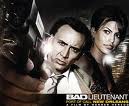
The title is the oddest thing about The Bad Lieutenant: Port Of Call New Orleans (henceforth BL: POCNO), because apart from its extreme ungainliness, it locks the film into being considered as a remake/sequel/hommage to Abel Ferrara's 1992 Bad Lieutenant, and a film which otherwise is intriguing enough on its own suffers by comparison with the original. Herzog has tried to say he knew nothing of the original, but even if you put it down to the screenplay, and assume the subject would have never come up in development, and Herzog would never have evinced any curiosity, one of the credited producers on BL: POCNO is Edward R Pressman, who has been promoted from just plain Ed Pressman since he produced the original Ferrara film, something it's unlikely (especially given the back stories of most Ferrara films) to have forgotten (if you think I'm kidding, read this interview with Ferrara, maybe the best director interview ever!) I saw the film last fall in the London Film Festival, and perhaps the delay in its opening is down to some confusion about just how to market it to the public.

Ferrara's film was one of redemption, in a specifically Catholic and New York context. Harvey Keitel's Lieutenant was a family man, drug-addicted corrupt and out of control, when he meets a nun who has been raped and won't identify her assailants, because she forgives them. His shame is that of the schoolboy caught in the confessional, but its enactment is far more serious. In some ways, Bad Lieutenant was a sequel to Ferrara's Ms .45: Angel Of Vengeance, in which a mute rape victim goes Death Wish on her attackers and then on men in general; the late Zoe Lund, who collaborated on the Bad Lieutenant screenplay, played (as Zoe Tamerlis) the victim, who at one point disguised herself as a nun (she also had a bit as a hooker in Bad Lieutenant).

By contrast, Nicholas Cage's cop is more ambiguous, as befits perhaps the difference between New Orleans and New York. There is a sort of genial corruption implicit in the police department, his girlfriend (Eva Mendes) is a high-end hooker with a bit of a drug problem, his father's an alcoholic ex-cop. But in the wake of Hurricane Katrina's floods, Cage's Lieutenant McDonagh rescues a criminal about to drown in his cell, and in the process, injures his back. When he rejoins the force, he's addicted to painkillers, and using other drugs to counter their effects. He's also in deep debt to his bookie, and eventually will need cash to bail himself out of trouble he got into getting Mendes out of. Meanwhile, he's investigating the murder of an entire family of Haitians, in a drug dealing dispute with a gangster known as Big Fate. So maybe, in a heavy-handed way, we can see Cage as battling against Big Fate, and trying to get what he really wants, a family. Families are an important part of this film. Herzog's characters are often mad dreamers, but here Cage's madness appears to stem from thinking he can have a real family of his own. His boy witness who escapes is a surrogate son for him and Mendes, he has his father, his step-mother, even his father's dog trying to draw him back into the normal world, but that world is not as much normal as an American comedy nightmare.

Unlike the original, the plot gets more and more complicated, as Cage uses his spiralling fall from grace as a weapon to get justice, as it were, for the murder victims, and to get himself out of the multiple traps he's fallen into. There was no element of 'solving' crime involved in the original, so this makes an almost diametrically opposed scenariio, yet it fits Herzog's mad dreamers, who are always guys insanely trying to make their crazy plans work. In this he gets a bravura performance of sorts from Cage, who shuffles though much of the film as if he's watched Klaus Kinski in Nosferatu, rather than any of his other Herzog roles, where he is the quintessence of the Herzog madman. Admirers of Herzog will find much to admire, or at least relate to, not least his Oliver Stone-like penchant for inserting lizards (and alligators) into odd places and at odd times. If you're inclined, you could see it as a way of saying the Hurricane has ripped up the swamp, and moved it back into the city, but if you're not then you might consider the whole backdropping of Katrina a lost opportunity. It is also a very funny film, which eventually turns Cage into a 'Not So Bad' Lieutentant. Cage can work the very funny lines in the script – some excellent writing by William Finklestein-- for all they are worth, though occasionally he starts mugging, as if Klaus Kinski were being played by Adam Sandler on Vicodin. At one point he pulls an oxygen mask off an elderly wealthy white woman, trying to force information from her, and as he's chased away he says 'you're the kind of people who are ruining this county!' Then he scuttles way, like one of Herzog's iguanas.

Thus, the scene in the original, where Harvey Keitel abuses two Jersey girls in a traffic stop, is transmuted in BL:POCNO into one where Cage, spotting a young couple doing drugs in a night club parking lot, braces them, intending to take the drugs, and winds up having wild sex with the girl in front of her boyfriend. It's a director's-eye catching performance by Katie Chonacas, but rather than scaring us, it leaves us feeling more like voyeurs. You almost expect Cage to send flowers the next day. Similarly, the relationship with his bookie is not the one filled with menace that Keitel's was, where the bookie is like the carnival-barker for his own trip to Hell, but more like a family thing, where the bookie is a relative irritated by Cage's inability to fix a ticket. Plus, in the earlier film, Keitel's bets on the baseball Mets eventually come through, as if by divine intervention; the figure of ex-Met Darryl Strawberry, now playing against them for the Dodgers and himself a figure fallen through drugs, adds an element of salvation/damnation that the current film's gambling scenario lacks. In BL: POCNO, the American footballer supposedly shaving points for Cage (not an easy thing to do in gridiron) does the honourable thing, but Cage wins the bet anyway. Consider the contrast between Mendes' whore-with-the-heart-of-gold and Lund's hooker from the original (see left), another ruthless beacon of descent. Female characters have never been one of Herzog's strongpoints, but when Abel Ferrara's women carry depth and character and emotion, and yours don't, you're in trouble. In fairness, the women who are in actual familiar situations get a break from Herzog, but even with Cage's stepmom, there's his temptation to see her as titillation.

Again, it's not totally fair to be reviewing BL:POCNO for not being another film, but that's what its title invites, and its situations suggest. On its own merits, I have to say I like the idea that film noir can be played forblackish humour, and certainly New Orleans is the place to try that. But I'm not sure that BL: POCNO can get tragic enough to wrap itself in the shadowy cloak of noir. It would certainly benefit by not being compared to Ferrara and Keitel's vision of New York's darkness, one that allows no humour, one that asks for no affection for its lead character. Apparently, the idea was for a series of Bad Lieutenant films, each set in a different port of call with a different director. I'm not sure how far that idea could go, not least because the films are being done all the time and don't need the referencing. Herzog's version is entertaining, especially if you can't get enough of Cage, but not nearly as bad as it ought to be.

Saturday, 10 October 2009

STAYING UP ALL NIGHT TONIGHT? LISTEN IN...

I'll be guesting on Dotun Adebayo's Up All Night tonight, Radio 5 at about 0230 Saturday night/Sunday morning. Likely topics include Vampire movies (including the new Korean film Thirst), Sergio Leone, and maybe Werner Herzog's remake of Abel Ferarra's Bad Lieutenant.
Beats sleeping! Those of you outside Britain can probably listen on your computers, at bbc.co.uk...