Showing posts with label Harvey Keitel. Show all posts

Saturday, 21 April 2018

LIES WE TELL: MITU MISRA'S FIRST-TIME THRILLER

When billionaire Demi (Harvey Keitel) drops dead in his private flat in Bradford, his chauffeur Donald (Gabriel Byrne) discovers his final job is to clear the place of any traces of Demi's mistress Amber (Sibylla Deen). But Amber has other problems with her life in the Pakistani community of Bradford, and Donald finds it impossible not to try to protect her from the violence that threatens her. Because there's a video....

When Lies We Tell had its theatrical release, most of the interest lay in finding out how first-time writer/director Mitu Misra and his producer Andy McDermott (who co-wrote the screenplay with Ewen Glass from Misra's story) were able to put together such a cast together for such a stylish-looking debut film. Misra was no recent film graduate; he is a 58 year old self-made millionaire, who sold off his double-glazing company to bankroll his dream of becoming a filmmaker. A certain amount of northern chutzpah and an equal amount of innocent enthusiasm seemed to do the trick, bringing the big names on board, and the story itself may have done a lot of the rest.

Amber is the focus of the film, caught between the world of Pakistani immigrants and the world of white Britain into which she wants to move, to practice law, something which her affair with Demi is financing. But she was married off at 16 to a cousin, KD, who has also made part of that transition, as a local gangster. By going public and accusing her cousin of raping her, Amber won a divorce, but also the suspicion of her community and the smouldering hatred of KD, who now wants to marry Amber's younger sister. Into this world of threat comes Donald, morose and lonely, divorced and living on a run-down farm with Billy, his ex-wife's brother.

Although Lies We Tell doesn't look like a first-time filmmaker's effort, in large part to the exceptionally sensitive cinematography of Santosh Sivan—a leading light in Indian film, and as much a star catch as Keitel or Byrne—his shooting sets the tones of each scene, and because the movie leaps around in tone, the pictures actually accentuate that. Which isn't always totally positive, as there are otherwise has a number of hallmarks of a beginner, not least the urge to cover loads of bases as if to prove the ability to work in all sorts of styles. The script is somewhat repetitive, especially where the younger sister is concerned, with conflicts restated that don't need to be, and the dialogue is often melodramatically one dimensional. The result is that KD, played with great enthusiasm by Jan Uddin, becomes almost a parody of villains we've seen before; similarly the women around Amber's family are classic harpies. But there are other fascinating touches, like KD's abuse of his English girlfriend Tracy, again a take on big-time gangster roles, and a sudden burst of strength from Amber's father (Harish Patel), which comes after one of the film's most realistic scenes, of men's release while betting on cock-fighting.

It's the up and down tone and the hesitation in resolving the film's many story-lines (Demi's son, for example, wants a piece of Amber) which both slow it down and make it frustrating. The Donald-Amber relationship, a riff of sorts on Mona Lisa, only really gains traction when she finally visits the farm, whose Hovis commercial look remind us of the wider context.

Deen, who comes to the role from Neighbours, is a revelation as Amber, and Misra lets her fill the screen. We've seen morose Byrne before, but he does it well, and makes it easier to believe the nature of their relation. Mark Addy is brilliant as his counterbalance, Billy, and there's a nice cameo from Gina McKee as Byrne's ex. But you have to wonder about the twists and turns, the back and forth, the odd longeur. Where did Amber get Donald's number? And why, in one key scene, is KD travelling without his minders? Not many first-timers begin on as grand a scale as Misra, and if it's not a solid success, it has its moments. The key question will be whether Lies We Tell will help him convince the next batch of talent to sign on board.

Lies We Tell is now available on download and on DVD

Tuesday, 11 May 2010

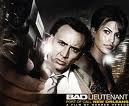
THE NOT-SO-BAD LIEUTENANT: WERNER HERZOG REVISITS ABEL FERRARA

The title is the oddest thing about The Bad Lieutenant: Port Of Call New Orleans (henceforth BL: POCNO), because apart from its extreme ungainliness, it locks the film into being considered as a remake/sequel/hommage to Abel Ferrara's 1992 Bad Lieutenant, and a film which otherwise is intriguing enough on its own suffers by comparison with the original. Herzog has tried to say he knew nothing of the original, but even if you put it down to the screenplay, and assume the subject would have never come up in development, and Herzog would never have evinced any curiosity, one of the credited producers on BL: POCNO is Edward R Pressman, who has been promoted from just plain Ed Pressman since he produced the original Ferrara film, something it's unlikely (especially given the back stories of most Ferrara films) to have forgotten (if you think I'm kidding, read this interview with Ferrara, maybe the best director interview ever!) I saw the film last fall in the London Film Festival, and perhaps the delay in its opening is down to some confusion about just how to market it to the public.

Ferrara's film was one of redemption, in a specifically Catholic and New York context. Harvey Keitel's Lieutenant was a family man, drug-addicted corrupt and out of control, when he meets a nun who has been raped and won't identify her assailants, because she forgives them. His shame is that of the schoolboy caught in the confessional, but its enactment is far more serious. In some ways, Bad Lieutenant was a sequel to Ferrara's Ms .45: Angel Of Vengeance, in which a mute rape victim goes Death Wish on her attackers and then on men in general; the late Zoe Lund, who collaborated on the Bad Lieutenant screenplay, played (as Zoe Tamerlis) the victim, who at one point disguised herself as a nun (she also had a bit as a hooker in Bad Lieutenant).

By contrast, Nicholas Cage's cop is more ambiguous, as befits perhaps the difference between New Orleans and New York. There is a sort of genial corruption implicit in the police department, his girlfriend (Eva Mendes) is a high-end hooker with a bit of a drug problem, his father's an alcoholic ex-cop. But in the wake of Hurricane Katrina's floods, Cage's Lieutenant McDonagh rescues a criminal about to drown in his cell, and in the process, injures his back. When he rejoins the force, he's addicted to painkillers, and using other drugs to counter their effects. He's also in deep debt to his bookie, and eventually will need cash to bail himself out of trouble he got into getting Mendes out of. Meanwhile, he's investigating the murder of an entire family of Haitians, in a drug dealing dispute with a gangster known as Big Fate. So maybe, in a heavy-handed way, we can see Cage as battling against Big Fate, and trying to get what he really wants, a family. Families are an important part of this film. Herzog's characters are often mad dreamers, but here Cage's madness appears to stem from thinking he can have a real family of his own. His boy witness who escapes is a surrogate son for him and Mendes, he has his father, his step-mother, even his father's dog trying to draw him back into the normal world, but that world is not as much normal as an American comedy nightmare.

Unlike the original, the plot gets more and more complicated, as Cage uses his spiralling fall from grace as a weapon to get justice, as it were, for the murder victims, and to get himself out of the multiple traps he's fallen into. There was no element of 'solving' crime involved in the original, so this makes an almost diametrically opposed scenariio, yet it fits Herzog's mad dreamers, who are always guys insanely trying to make their crazy plans work. In this he gets a bravura performance of sorts from Cage, who shuffles though much of the film as if he's watched Klaus Kinski in Nosferatu, rather than any of his other Herzog roles, where he is the quintessence of the Herzog madman. Admirers of Herzog will find much to admire, or at least relate to, not least his Oliver Stone-like penchant for inserting lizards (and alligators) into odd places and at odd times. If you're inclined, you could see it as a way of saying the Hurricane has ripped up the swamp, and moved it back into the city, but if you're not then you might consider the whole backdropping of Katrina a lost opportunity. It is also a very funny film, which eventually turns Cage into a 'Not So Bad' Lieutentant. Cage can work the very funny lines in the script – some excellent writing by William Finklestein-- for all they are worth, though occasionally he starts mugging, as if Klaus Kinski were being played by Adam Sandler on Vicodin. At one point he pulls an oxygen mask off an elderly wealthy white woman, trying to force information from her, and as he's chased away he says 'you're the kind of people who are ruining this county!' Then he scuttles way, like one of Herzog's iguanas.

Thus, the scene in the original, where Harvey Keitel abuses two Jersey girls in a traffic stop, is transmuted in BL:POCNO into one where Cage, spotting a young couple doing drugs in a night club parking lot, braces them, intending to take the drugs, and winds up having wild sex with the girl in front of her boyfriend. It's a director's-eye catching performance by Katie Chonacas, but rather than scaring us, it leaves us feeling more like voyeurs. You almost expect Cage to send flowers the next day. Similarly, the relationship with his bookie is not the one filled with menace that Keitel's was, where the bookie is like the carnival-barker for his own trip to Hell, but more like a family thing, where the bookie is a relative irritated by Cage's inability to fix a ticket. Plus, in the earlier film, Keitel's bets on the baseball Mets eventually come through, as if by divine intervention; the figure of ex-Met Darryl Strawberry, now playing against them for the Dodgers and himself a figure fallen through drugs, adds an element of salvation/damnation that the current film's gambling scenario lacks. In BL: POCNO, the American footballer supposedly shaving points for Cage (not an easy thing to do in gridiron) does the honourable thing, but Cage wins the bet anyway. Consider the contrast between Mendes' whore-with-the-heart-of-gold and Lund's hooker from the original (see left), another ruthless beacon of descent. Female characters have never been one of Herzog's strongpoints, but when Abel Ferrara's women carry depth and character and emotion, and yours don't, you're in trouble. In fairness, the women who are in actual familiar situations get a break from Herzog, but even with Cage's stepmom, there's his temptation to see her as titillation.

Again, it's not totally fair to be reviewing BL:POCNO for not being another film, but that's what its title invites, and its situations suggest. On its own merits, I have to say I like the idea that film noir can be played forblackish humour, and certainly New Orleans is the place to try that. But I'm not sure that BL: POCNO can get tragic enough to wrap itself in the shadowy cloak of noir. It would certainly benefit by not being compared to Ferrara and Keitel's vision of New York's darkness, one that allows no humour, one that asks for no affection for its lead character. Apparently, the idea was for a series of Bad Lieutenant films, each set in a different port of call with a different director. I'm not sure how far that idea could go, not least because the films are being done all the time and don't need the referencing. Herzog's version is entertaining, especially if you can't get enough of Cage, but not nearly as bad as it ought to be.