Showing posts with label Bob Dylan. Show all posts

Saturday, 20 June 2020

BOB DYLAN AND ELEANOR CATTON: THE FRONT ROW INTERVIEW

I was on BBC  Radio 4's Front Row last night, discussing the new Bob Dylan album, Rough & Rowdy Ways, and the TV adaptation of Eleanor Catton's Booker Prize-winning novel The Luminaries. Friday episodes are 45 minutes, so I thought we were going to have a longer amount of time to discuss each item, but unknown to me there were a number of other pieces going in the show, and they also did very well to have a fine interview about Ian Holm, who died that day. You can link to it here on BBC Sounds, our reviews (host Kirsty Lang and Guardian music writer Laura Barton) start at about 15 minutes in; the Holm tribute follows after them.

I have seen the first two episodes of the series, for which Catton herself did the adaptation, and I enjoyed them enough to watch on. As I said, I think as the two time-lines and locations converge, in the mining town of Hokitika: if they keep expanding the number of (male) characters they could lose the focus, and if they don't they need to keep the mystery, and the danger moving. One thing I didn't say was how much I thought Catton herself resembled NZ PM Jacinda Arden! Judge for yourselves.

As I said, I felt Dylan's record was his best in years, harking back to the song-writing of Blood On The Tracks, but with more of a feel of the Basement Tapes/John Wesley Harding years. It is elegiac, but when I thought about, those albums, after his motorcycle crash, were also in the vein of looking back. I was lucky to be able to squeeze in a Gregory Corso quote about Jack Kerouac into this context, and I have to say I thought it felt particularly appropriate.

I do intend to write reviews of both the record and the show here soon, so I won't say more, but have a listen to the show.

Sunday, 7 April 2019

MAVIS STAPLES, BOB DYLAN AND THE NEW/TANGLED UP IN BLUE

My Saturday evening was made this week by hearing the great Mavis Staples interviewed by a suitably respectful Clive Anderson on BBC Radio 4’s Loose Ends. Among the stories Mavis told was one about the time Bob Dylan proposed marriage to her, back in 1965. She talked about how cute Bob was, with his curly hair and blue eyes, and how she rejected the proposal.

I mentioned this on facebook (getting informed by the usual know-it-alls that the story of Bob's proposal was by now common knowledge, mea maxima culpa for missing that one) and I wrote that Mavis told Bob she was too young (she was 25 or 6), and didn’t know how to cook. You won’t have to cook, Bob said. Then I noted how that sounded like the lyrics to a Dylan song.

My friend Michael Goldfarb said ‘Tangled Up In Blue’ and I said ‘you got that right’, and proceeded to write a couple of verses for a revised version. So here, if Bob (or Mavis) wants it, is a newer version of the song:

Tangled Up In Blue (With Mavis

Mavis told Bob she was too young, that she didn’t know how to cook

You won’t have to cook at all said Bob, I just wanna sit and look

Up at you

Tangled Up In Blue


Mavis said Bobby you’re awfully sweet, and she looked into his blue eyes,

Bobby said girl please marry me, and I’ll win the Nobel Prize

Just for you

Tangled up in blue


Bobby oh Bobby you gotta relax, ever try taking it slow?

You say that you wanna just sit and look, but you know and I sure know

What you want to do

Tangled up in blue


Then they heard Pops play a guitar riff, comin’ out of studio two

Mavis walked out and she started to sing, Bob found his missing shoe,

As you do

Tangled up in blue

Sunday, 15 April 2018

THE CHELSEA HOTEL: IF THESE DOORS COULD TALK. NOTES ON MY FRONT ROW DISCUSSION

I was on BBC Radio 4's Front Row Friday night, discussing the auction of doors salvaged from the renovation of the Chelsea Hotel, bought by a property company and being turned into, well, part of whatever most of Manhattan has been turned into today. You can link to the programme on the IPlayer here; it's the second item, about 15 minutes in, and sadly was rushed for time for a subject that has so much popular culture currency. But we probably should have concentrated primarily on the relative value-ranking of the sold doors.

Setting the scene was taking too long, so I never got a chance to get to the most crucial character in the story, Stanley Bard, who ran the place from the Seventies onward. This was probably my fault, as I am fascinated by its origins: the architect Philip Hubert virtually invented the concept of a 'coop', and built the Chelsea (in 1884 not 1885) to house both artisans and artists, the upper floors having studios while many apartments were allocated to people who'd worked on the construction. The twelve story building was not, as is widely reported, the tallest building in New York when it opened; it was however the tallest without a spire (Trinity Church, at 279', was almost twice as tall). But by 1890, when structural steel took over in building, as it had in Chicago, Pulitzer's World building, 20 stories and 348 feet, took the mantle.

Hubert's vision didn't work out financially, and new owners included the very rich, and one of the mainstays of the Chelsea would always been its attraction to what someone called 'the troubled children of the very rich'. When the hotel had more financial problems during the Depression, it was bought by three partners, one of whom was Stanley Bard's father, and eventually Stanley took over as manager. He was finally forced out when the heirs of the other two partners decided to sell the hotel, which finally happened in 2007.

Bard would have been a better starting place;  I should have begun with the idea that there was never a house dick at the Chelsea in its glory days. Stanley let people do what they wanted, as long as they weren't 'destructive to the hotel'. That didn't apply to Edie Sedgwick, who famously fell asleep and set her room on fire; Bard moved her to the first floor, where the lobby staff could keep an eye on the room, and protect the art, often accepted in lieu of rent, that decorated the walls.

We did touch briefly on the way the Chelsea remained a melting point for bohemian artists and what we might today call 'trustafarians'. It's first peak was probably in the Fifties, when New York was the cultural capital of the world, and lots of the people who made it so were at the Chelsea, the beat writers, the abstract expressionist painters (Mark Rothko paid his rent with paintings). Arthur Miller wound up there in 1961 after his divorce from Marilyn Monroe, before moving to his farmhouse in Roxbury, Connecticut.  That's him with writing with Elia Kazan looking on, in his tidy room. Miller described the hotel as having 'no vacuum cleaners, no rules, no shame'. We mentioned Dylan Thomas, who didn't actually die in the hotel, nor actually drink himself to death at the White Horse, but the fact he was staying there was enough. Most of the Beats stayed at some point, though William Burroughs didn't write Naked Lunch there. Jack Kerouac's door went for $30,000.

In the Sixties Andy Warhol's crowd and musicians made the Chelsea. Warhol's film Chelsea Girls is more remembered than watched nowadays, while Shirley Clarke's Portrait Of Jason may get the actual feel of the place in the Sixties the best; Clarke was a resident there. Oddly, Chelsea Girls doesn't include Warhol's superstar, Viva, who was a long-term resident. Bard's efforts to get her to pay rent were legendary, cornering her in the slow lift, or yelling at her in lobby, but they only once wound up in court (her rent, legally controlled, was $920 a month). Once when the people in the flat next door moved out, Viva knocked a hole in the wall and doubled the size of her apartment. If you remember her film performances, you might imagine her righteous indignation. My favourite Chelsea Hotel photo is probably Viva and Patti Smith standing on one of the beautiful wrought-iron balconies, or maybe the one with singer Eric Andersen tied up with them there. Smith and Sam Shepard lived there, in a room slightly less neat than Arthur Miller's. Which reminds me, when you hear Viva talking about the suicides at the hotel, like her upstairs neighbour who landed head-first on a table in the courtyard, you get a real sense of ho-hum, don't you wish you could watch your neighbours do that, about her. Talk about neatness.

The highest price paid for a door was $100,000, for room 211, where Bob Dylan wrote 'Sara'. I wonder if Dylan was staying there because the Chelsea was where Harry Smith lived (and died). Smith's Anthology Of America Folk Music was a bible of sorts for Dylan; listen to The Basement Tapes if you don't believe me. And of course Leonard Cohen's (424).
That door went for $85,000. Host Stig Abel opened the show by playing a clip of Cohen's 'Chelsea Hotel 2', but spared the post-Archers audience the best line: 'giving me head on the unmade bed while the limousines wait in the street', which sums up what the hotel quickly became and may be the greatest rock/sex line ever. Janis Joplin, who was giving the head, and making an exception for the less-than-beautiful Cohen,was in room 411. Jimi Hendrix stayed  in room 430; his door drew only $13,000.

After that the decline began. Rich rock stars took rooms, tourists flocked to see them. After Sid Vicious killed Nancy Spungen, in the bathroom of room 100, Bard divided the room into two to stop tourists making a gawk shrine of it. There's a great picture of the two of them in the bathroom. What I love about it are the toothbrushes neatly lined up in the holder on the wall. Alex Cox's Sid And Nancy is probably the best of the movies set there; it's also one of funniest films of the 80s. Much more telling than Madonna's book Sex, which was the end of the line for the old Chelsea, being sold for celebrity, the entire hotel treated like the discarded doors would be 30 years later. In its later years stars like Rufus Wainwright would check in for a year and then release a record written in the Chelsea, as if they could appropriate a sense of artistic suffering and struggle by footing the bill for its artistic rub.

Stig also mentioned Arthur C Clarke writing 2001 there. It was actually the screenplay for the film he wrote there, with Stanley Kubrick also staying: according to Barry Miles, Clarke kept a telescope in his room, and used it to look into windows. Those were the kind of stories I wanted to bring in; a painter named Alphaeous Phileomon Cole lived in the hotel for 35 years and died in 1988 at the age of 112; he was supposedly the oldest living man on earth at the time. Or the masochistic heiress Isabella Stewart Gardiner picking up fellow drunks to beat and rob her. Of Julian Schnabel's daughter doing her college homework in the bar of the El Quijote restaurant in the hotel lobby. Charles Jackson, who wrote The Lost Weekend, killed himself in the Chelsea in 1968.

I was fascinated by the families who lived there. I didn't mention the novelist Joseph O'Neill, who lived there with his wife and three children. I did mention the composer Virgil Thompson, a long-term resident, whose flat 920 was bought after his death, and kept in period features by the couple who bought it. You can find pictures of it online, and it gives you a sense of the grace of those upper floors. It also made me think of the couple who bought it, also with three kids, sending them out trick or treating on Halloween up and down the Chelsea.

At the end of the item Stig asked me whose door I would choose he opened it up to anyone in history--trying to reduce my choices I fell on Kerouac, as I'd been trying to figure out how to get his one-night stand with Gore Vidal at the Chelsea into the conversation. I should have said Rothko, far more of an artistic idol for me, and the first thing I would have done would be look for paint drippings. When I called the Gramercy Hotel 'just around the corner and down the street' I was speaking figuratively: I wanted to get in the idea Beat and Warhol crew member Gerard Malanga always used to put his friends into the East Side hotel: when I finally had some money I stayed there too: you got a key to Gramercy Park, one of the nicest squares in New York, and it was two blocks from Pete's Tavern. Charles Ives lived off Gramercy Park; I liked the contrast with Virgil Thompson in the Chelsea.

Looking at what I've just written, it's no surprise I felt I hadn't done the best presentation: there is just too much. But I was hoping for Stig to ask if the passing of the old Chelsea was the end of an era. Being me, I managed anyway to squeeze in these lines, which I did not read well as I was rushing to get the item finished quickly. They're from a poem called The Hotel Chelsea:

Anita! Soon this Chelsea Hotel
Will vanish before the city's merchant greed.
Wreckers will wreck it and in its stead
More lofty walls will swell

The old street's populace. Then who will know
About the ancient grandeur, marble stairs,
Its paintings, onyx-mantels, courts; the heirs
Of a time now long ago. 

It was written by Edgar Lee Masters. In 1936. As former Chelsea Hotel resident Robert Crumb said: "It's always the end of some era in New York".

Friday, 21 April 2017

BRUCE LANGHORNE: THE GUARDIAN OBITUARY

My obituary of Bruce Langhorne, the session guitarist & percusionist who inspired 'Mr Tambourine Man' is online at the Guardian now, you can link to it here. He was, as I say, a crucial, perhaps seminal figure in the transition from folk music into rock; a brilliantly creative guitarist who added what you might think of as 'lead' guitar to the strumming and fingerpicking of folk. Only his 'lead' was more counterpoint. In fact, his best playing has that kind of just hitting the very edges of the melody, like Thelonius Monk on folk guitar. He was the session guy on so many of the crucial folk records on Vanguard, Elektra, and of course Dylan's Columbia records. And that photo of him, Dylan, and Bill Lee playing with Carolyn Hester on her first record in 1961 is a perfect moment of frozen time.

Bringing It All Back Home is probably the pivotal album for Bob Dylan, opening the door for Highway 61 and his live touring with Mike Bloomfield and Al Kooper and then with The Band. I've tried hard to try to pick out the bits of Langhorne and the bits of Al Gorgoni (Kenny Rankin also plays on the album) but you can easily hear how their interplay segues into Bloomfield on the next record. And it is not really a coincidence that Gorgoni plays on Al Kooper's records, especially the first Blood Sweat & Tears album.

But I was enthralled by Langhorne with Richard and Mimi Farina. I was listening to their song 'V' and then had to read Thomas Pynchon, and read Farina's Been Down So Long It Looks Like Up To Me, and be entranced by Mimi's voice, and autoharp, and guitar. It was a sort of time of magic innocence. There's a great picture of the three of them at Newport; Bruce is playing tambourine while Kooper sits in on guitar and Joan Baez seems to be hurrying onto the stage to get into the act. There are those who say that Dylan appropriated much of the psychedelic poet image from Farina (Mimi said Richard always hid the songs he was writing whenever Dylan came by) in much the same way Joan Baez took her singing style from Debbie Green. I'd like to think of it more as cross-pollination, but it is significant in an eerie sense that Farina died in a motorcyle accident coming back from his book launch on Mimi' birthday, and Dylan poses in a Triumph t-shirt on the cover of Highway 61.

I already knew Langhorne from folk albums, especially Odetta's.  And I remember their playing just before Martin Luther King spoke in Washington before the 300,000 people, though I must've seen it later on film. There was an interesting diversion to be written about the way, as folk melded into rock, black folk artists faded from the spotlight. Just as country blues singers gave way to the electric Chicago blues, and to white rock bands. One of the fascinating aspects of Langhorne's life was his moving between worlds; it was only a chance reference to his having a first wife who was a dancer, and whose name was Georgina, that led me to discover he (and Brother John Sellers) played with Alvin Ailey's dance troupe.

Avalanche is not one of my favourite Eric Andersen records; that's not Langhorne's fault, but he would have been better providing the edge when Andersen was singing more softly. I got the feeling that playing tasteful chops behind singers like Noel Harrison was probably a good motivation to play with Hugh Masekela; some versions say it was Masekela who introduced Bruce to Peter Fonda. I recommend The Hired Hand as a movie and also for Langhorne's score. I didn't remember that he'd done Stay Hungry, whose value seems to have diminished by our later perceptions of Arthur Schwartzenegger, but it was a piece of synchronicity that I should have been reviewing Warren Beatty's Howard Hughes movie just before I had to write Bruce Langhorne's obit: Jonathan Demme's Melvin And Howard says a lot about Hughes, a lot more than Beatty's does.

I originally started the piece with a thought about those who are not so much written out of history as never written into it, but then I realised although it sounded good, it didn't really apply to Bruce Langhorne. He's written into history for perhaps the wrong reason, but that serves as springboard to the vast spectrum of his music making. It was a privilege to be able to revisit his polyglot talent, and give it and him the recognition he deserves. And I'm gonna have to hunt down some Brother Bru Bru's Hot Sauce, for sure.

Monday, 27 February 2017

BOB'S BACK PAGES (BEFORE THE NOBEL PRIZE): MY BOB DYLAN HEADPRESS ARTICLE

I wrote this piece more than 15 years ago; it appeared in Headpress 18, which was published in January 2002. I came across it the other day, and wished I had remembered it around the time Bob was given the Nobel Prize, and I kept thinking about 'dogs run free/why not we' as the sub-atomic kernel of a literary conflagration. I probably wrote this quite a bit earlier than its publication, and last year I wrote about the Free Trade Hall performance on its 50th Anniversary, you can link to that article here. But I like the way this piece, which I believe started as a simple review of the Andy Gill book, moved, so here it is again. I don't believe I'd heard the official Columbia release of the concert when I wrote this, internal evidence would agree with that, so I've amended it slightly to include my hearing of it...

BOB'S BACK PAGES

The apotheosis of Bob Dylan really grew out of the period where he electrified his music, and in the process, legitimized for rock music the sort of lyrical content that folk music had carried. Even though Dylan had already produced major electric hits by 1966, and in LA groups like the Byrds were already doing Beatlized interpretations of his songs, the sense of betrayal felt by his fans of the old era was still palpable at the Free Trade Hall in Manchester, on May 17 1966.
The tape of that show is probably the most famous bootleg of all time, and because the original tapes were somehow mis-identified, has always been known as the Albert Hall tape. It has been available for some time in an allegedly Italian pressing with the odd title of Guitars Kissing And The Contemporary Fix. It was supposedly dubbed from the same master tapes as Columbia’s official 'bootleg' release three years later, which retains the old, misleading title. Columbia declined to send a review copy of that official release to Headpress. You’ll have to ask them why. You would assume that they have remastered the tapes beyond what the bootleg offers, but the differences are not huge. There's a bit more of The Band audible more clearly on the electric disc (of the two disc set). Of course, now that the official release is out, the bootleg is a sort of pirate disc, and it would be very wrong of me to suggest that you search the bootleg out and deny Sony their rightful legal share of your money, because Sony’s deep love of the music and concern for Dylan’s loyal listeners deserves to be rewarded fully. And coincidentally, the disc is released for in time for Christmas too, only thirty years too late.
Whichever disc you hear, as I recounted in my review of Greil Marcus' Invisible Republic in Headpress 16, this is an extraordinary set. It marks the point where 'rock n roll' music was finally transmuted into 'rock', for better or worse. This is where it starts to transcend the pop traditions, top 40 boundaries, and even, for a short while, the control of the hustlers and conmen who handled the money. It also marks the beginning of a divide in pop music, roughly between black and white, coinciding with the move from AM top 40 radio into album-oriented FM radio.

The two disc packages begin with Dylan’s acoustic set, the Woody Guthrie Bob already shifting into something else. The second disc, with the group that would become The Band (apart from Mickey Jones here replacing Levon Helm on drums) is a revelation. It’s not just the booing from the crowd, the voice that yells “Judas”, to which Dylan replies “I don’t believe you, you're a liar” and tells the band to “Play fucking loud”. Dylan was used to this by now. At Newport in 1965 Pete Seeger had tried to cut the cables bringing power to his instruments. Al Kooper was so shook up after the crowd reaction at Forest Hills, NY (virtually Kooper’s backyard) that he quit Dylan’s band. So too did Helm, who was depressed by the constant booing.

But as Don Pennebaker’s film of Dylan’s 65 tour of Britain showed, Dylan didn’t really care. Or, as the Free Trade Hall showed, he’d adopted an attitude to deal with it. It's incredible to watch his surreal snideness in mocking the press who interview him, and painful to follow his constant disparagement of the “British Dylan”, Donovan. Pennebaker gets great footage of manager Albert Grossman in action, conning the BBC, and also a series of really creepy-crawly shots of groupie-extraordinaire Bob Neuwirth. Although everyone, including Joan Baez, seems happy to bask in Dylan’s reflected shadow, Neuwirth is more like one of those guys who carries the heavyweight champion’s belt to the ring. “Yeah champ, you got it, you the man champ, whatever you say boss.” When he starts dissing the soon to be dumped Baez, you actually start feeling sorry for her.
All of this is covered in Andy Gill’s My Back Pages. This is a useful reference book, but suffers from an anoraky tendency to miss the forest while concentrating on the trees, like a hippie on a trip studying every vein in that groovy leaf. Gill’s source interviews, especially with Al Kooper, have provided him with great material, but it isn’t distributed evenly: it’s as if the book had been finished before all the interviewing could be done, and of course Dylan himself is only here second-hand.
Fortunately, Gill is strongest in the period we’re concerned with here, the 65-66 transformation. Like an old folkie, it’s also very thorough on the early folk albums. But it tails off quickly after Highway 61 Revisited with the albums from Blonde On Blonde through Nashville Skyline getting progressively shorter shrift, which is a particular shame because The Basement Tapes and John Wesley Harding. I wonder occasionally about Gill’s instinctive knowledge of Americana: the Bill Lee who played bass on Dylan sessions is Spike Lee’s father, which is a cool piece of trivia. When Dylan sings “his pointy shoes and his bells” he may be singing about a jester’s costume, and he may also be talking about sharply pointed Cuban-heeled shoes and flared trousers, known as bell-bottoms in America, and often “bells” in 60s jargon. That sort of nit-picking isn’t the point. Gill cares deeply about this music, and it shows throughout. Who knows what the 52 page CD booklet in the Columbia release is like, but if you didn’t behave legally and buy the official release, this book would surely make up for that loss.
The official Dylan tribute concert is old news by now, but it has been broadcast recently in the UK on VH1. It’s sad. Al Kooper gets to sit in with John Mellancamp, whose backup singers do a full Vegas assassination of “Like A Rolling Stone” while Kooper does his organ bits in anonymous obscurity. Kris Kristofferson reads off an autocue stuff written by the same kind of guys who write the intros to the Oscar ceremonies, which is no surprise since the 'musical director' comes from Saturday Night Life and prances around in centre stage but never seems to mete a solo to Steve Cropper.  The weirdest moment comes when Sinead O'Connor tries to face down a New York crowd, and they send her backstage crying.
There are a few good points. Richie Havens seems to have lost nothing in 30 years, and Tracy Chapman seems a bit like Havens’ reborn. But apart from Booker T & the MGs, the only people who appear to be enjoying themselves are Eric Clapton, who does a brilliant job as a sort of chairman of the board, and, in sharp contrast to Clapton’s executive sleekness, Neil Young, who bounds around the stage like a kid set free by Dylan’s 60s brilliance. The Band is represented by the 1992 version, with Jim Weider on guitar and no Robbie Robertson, nor Richard Manuel, who was dead, but Garth's on accordion and Levon is back playing mandolin. When Dylan himself appears, you realise how many great epitaphs he’s already written. “I Shall Be Released” (sung at Richard funeral), “Knockin on Heaven’s Door”, “Forever Young”and yes, "My Back Pages'.  You wish it were true. Bob’s own performance is a letdown; I couldn’t help but feel we were hearing that same sort of mumbling he used to put off the crowds back in 1966 after they'd booed him. Thirty years on, and that’s what it’s come to.


MY BACK PAGES: Classic Bob Dylan 1962-69
Andy Gill
Carlton Books, 144pp, £14.99 (1998)

THE “ROYAL ALBERT HALL” CONCERT 1966
Bob Dylan & the Hawks
Sony/Columbia CD 1998

GUITARS KISSING AND THE CONTEMPORARY FIX
Bob Dylan & the Hawks
Bootleg CD (no label) 1995

THE BOB DYLAN 30th ANNIVERSARY TRIBUTE CONCERT (1992)
VH1

DONT LOOK BACK (1967)
a film directed by DA Pennebacker

Monday, 19 September 2016

GREIL MARCUS: THE HEADPRESS/DAILY TELEGRAPH INTERVIEW

I did this interview in the autumn of 2000, in the bar of London's My Hotel, just before the US presidential elections. One version of it appeared in the Daily Telegraph. The editor there, Casper Lewellyn Smith, was most interested in Marcus' thoughts about punk rock, but Marcus' Dadist take was far too academic for the music he (Casper) loved for different rebellious reasons. Unfortunately I'd found Lipstick Traces enigmatic to the point of incomprehension; punk rock not only couldn't take the weight of Dada which Marcus wanted to load onto it, but the bridge he wanted to build between Punk and surrealism never seemed complete. I wrote the piece anyway for Casper, who cut it severly, and then I wrote this, the more complete version, for Headpress, where it ran in 2001. I also reviewed the re-issue of Mystery Train for the Spectator, which is another story, and met my future ex-wife at My Hotel soon afterwards, which is another another story....


GREIL MARCUS: DYLAN, THE BAND, PUNK, ELVIS, & BILL CLINTON
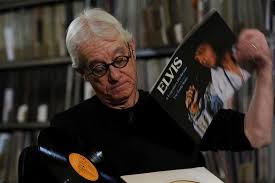
 
Greil Marcus’ Mystery Train is a landmark of rock criticism, a look at America myth seen through the magic lens of rock and roll, from Robert Johnson through Elvis to The Band. Its publication turned Marcus, at age 30, into an instant eminence grise for an entire generation. There had been writers, like Ralph J Gleason, who had discussed rock music in terms of the wider world, but no one had attempted so wide a sweep, nor accomplished it so gracefully. With one book, Marcus changed rock writing forever, becoming, in effect, the music’s creative conscience.

Indeed, behind Bertold Brecht spectacles, Marcus resembles a cultural commissar. He’s never considered himself a rock critic. “I ignore the industry, don’t go to the parties,” he says. His essays now appear in such rocking outlets as Artforum, Suddeutsche Zeitung, and Salon. But you can still see the excitement behind his eyes each time an idea clicks into place. A sense of risk-taking danger gives Mystery Train its edge. It’s criticism as creative art.
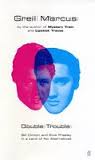
Marcus was in London to promote the 25th anniversary edition of the book (“presented finally the way I always envisioned it”) alongside simultaneous publication of Double Trouble, a collection of essays dealing with a very different American myth. Double Trouble is subtitled “Bill Clinton and Elvis Presley in a Land of No Alternatives.” When we meet at his London hotel, Marcus is worried about the upcoming presidential alternatives to America's First Bubba. He’s living temporarily in New York while he teaches at Princeton University, and although he’s registered to vote there, his wife isn’t.
We registered on the subway. New York sends people to wander the cars, signing up voters; they pay them a commission,” he says. “But only my registration went through. So if an absentee ballot hasn’t arrived by the time we get back, Jenny’s going to fly home to San Francisco, just to vote.” Marcus was born in Palo Alto, outside San Francisco, and educated at Berkeley. His lifelong addiction to rock began with a different sort of poll. I was 11 years old, my favourite song was “All Shook Up.” Chuck Berry’s “School Days” was everyone else’s favourite, and threatening to knock “All Shook Up” out of number one in the local charts. So I went and bought the record, in an unsuccessful attempt to keep Chuck Berry from number one.
 
He became a “self-conscious” fan in the summer of ’64. “I was interning in Washington, and I’d brought the Beatles’ album with “Money” on it with me. One of my flatmates said ‘what’s the big deal?’ and I said, ‘just listen to the instrumental break, the way you hear the whole machinery of industrial society grinding the man down, and he refuses to go under.’ A light bulb went ‘click’ in my head. I knew it was all bullshit, but I also believed it.”

When Rolling Stone magazine appeared, Marcus submitted a review to editor Jann Wenner, a college buddy. “A week or so later it was printed and I got a check for $12. That was it. I’d spent all my time studying at Berkeley, undergrad and grad school, and my professors seemed to have stopped trying to inspire students, and instead were training them for jobs. It was time to leave.” 
 
Marcus eventually became Rolling Stone’s book critic, and in Mystery Train he brought the devices of literary criticism to bear on rock music. I ask about what I feel is the particular influence of Leslie Fiedler, author of Love And Death In The American Novel, obvious in the way Marcus uses his personal sensibility to interpret wider issues of myth.

That sums it up pretty well. I thought a book might work if I could combine the instinctive reaction of a fan with the bigger ideas that attracted me. I felt that the whole of America was somehow captured in songs like “Mystery Train”, Robert Johnson’s “Stones In My Passway”, The Band’s “Cripple Creek”, Sly Stone’s “Thank You For Talkin To Me Africa”, Randy Newman’s “Sail Away”. If you’re presuming that, the theoretical ideas wouldn’t work without the visceral reaction.
But that book was really motivated by Watergate, by the idea that the country was up for grabs, being fought over daily. It was tremendously thrilling, but also scary, the sense of a battle taken away before it was finished.” 
 
Mystery Train was published in 1975, by which time many of the artists profiled had already slipped from the creative peaks Marcus chronicled. Soon Bob Dylan would retreat into born-again Christianity, Sly Stone would begin his odyssey through jail and rehab, Elvis would be beyond comebacks. Almost immediately after Mystery Train appeared, The Band would play their “Last Waltz”. 
 
Coincidentally, on this trip to London, Marcus read an article in Mojo chronicling the bitterness among the Band’s surviving members over song-writing credits. In Invisible Republic, his study of The Band and Dylan’s Basement Tapes (note: now retitled The Old Weird America), Marcus wrote that he still found himself framing questions for Richard Manuel, who hanged himself in 1986, knowing Manuel could not answer them. Marcus won’t go into some of the aspects of the Mojo article, but remembers when Manuel once told him he hadn’t been able to finish a song in two years. “Why not?” asked Marcus. “I haven’t been able to finish a song in two years,” said Manuel. 
 
I was most interesting in seeing Rick (Danko) say he got a $200,000 cheque for his share of “Wheels on Fire”. This was 25 years ago. There are various stories out there about what went on with song writing credits. For example, there’s one that Garth wrote the early version of “Daniel and the Sacred Harp”, and sold it away, but I won’t say any more about that.”

As America turned to mellow rock and disco in the late 70s, Marcus embraced punk, which led to Lipstick Traces, a study of punk and dada which attempts to deconstruct the entire 20th century. The book left many Marcus fans cold, perhaps because it was more intellectual?

It didn’t feel different to me, but it is more intellectual in the sense that I started with a question I wanted to answer, ‘why is “Anarchy in the UK” so powerful?’ which is a different approach than Mystery Train, where I started with an instinctive understanding. But I found the lack of understanding no less thrilling. Lipstick Traces was very much a Reagan book; in the same sense that Mystery Train sprang from Watergate. It was written at a time when I literally couldn’t bear to think about America. So intellectually, I left for Europe.
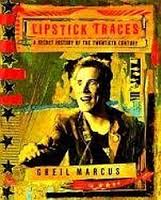
It was a burning desire to get to the heart of something I knew I wasn’t going to get to the heart of. I do think I got close to figuring out what made Dada a thorn in the side of the 20th Century. After I’d finished my research and before I wrote the book, I actually wrote a play combining all its characters in a night club. I spent a month writing footnotes to the play, but it never got into the book itself.
Recently a theatre company in Austin, Texas adapted Lipstick Traces as a play. My only involvement was to see the finished product, which they did as a comedy. I said, ‘you’ve staged the book I wanted to write!'

A quarter of a century after Mystery Train, Marcus says America is once again up for grabs. Again, he’s following instinct, because the parallels between Bill Clinton and Elvis go further than their white-trash upbringings in the hinterlands of Memphis. Clinton auditioned for his job by playing America’s First Elvis on the Arsenio Hall show, donning shades and blowing the sax. 
 
When President Bubba’s activities below the waist began exciting America’s right-wing would-be moralists, he literally forced Elvis off the front pages of the scandal sheets. What was Kenneth Starr, after all, but another Ed Sullivan telling Clinton to keep his hips out of camera shot? In Double Trouble, Marcus quotes Jonathan Alter saying “(Clinton) may be a hound dog, but he’s our hound dog”.

From the moment Clinton was elected, the right has tried to deprive him of his legitimacy,” he explains. “His temerity was believing in himself, just like Elvis. Elvis could’ve been accepted, if he’d dropped his Memphis buddies, took the right drugs, slept with the right celebrities. Instead he stayed in Memphis, where local society treated him with contempt. Clinton went to Washington and met similar contempt from a similar high society. He didn’t do what Reagan did, invite them all to the White House, where they’d say, ‘what class!”. Clinton didn’t schmooze them. He and Elvis are fundamentally outsiders, hicks who see no reason to become sophisticated. 
 
And if he had invited them, they’d feel this deep sexual terror, a nightmare of waking up in the White House hungover with Clinton snoring next to them. Elvis communicated a sense that life is easier than you’ve been told it is. The people who hated him, who hate Clinton, are the ones telling you it’s not."

During the London Film Festival I watched Elvis: The Way It Is, Rick Schmidlin’s magnificent re-edit of Dennis Sanders’ 1970 Las Vegas documentary. The new film captures Elvis’ ability to draw something from an audience. It struck me I hadn’t seen a performance like that since Bill Clinton’s speech at the Democratic Convention in August.
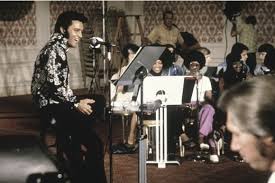
Exactly,” Marcus smiles. His eyes light up again and I feel like a student being given a A. “Think about it, from the time Elvis was 19 or 20, he was a citizen of a nation divided. Half the country wanted to BE him, and the other half wanted him removed! Clinton divided the country in the same sort of way. People thought: ‘if they can do that to the President, what can they do to me if I step out line? And they keep redrawing the line!’ They look at Clinton and they’d simply like to feel as good as he does in his element.”

We also agree on the film’s defining moment, when Elvis flirts with one of his backup singers. “Yes, here’s the woman who is black, she could feel ‘oh, he’s stolen our music’, but then he spins around to her and turns it on, and she’s jelly.” 

Marcus misses that sense of joy in music today. Does he believe, as he writes in Double Trouble, that rock music “no longer seems to speak in unknown tongues“? 

Well, so much is subject to commodification. John Langford, of the Mekons, plays in the Waco Brothers, and he began one show I saw by saying ‘we do not play no alt country.' Someone wrote that Britney Spears is 18, and she looks like a 35 year old 1950s housewife at the same time she’s an ingenue. Like she’s used up her capacity to have new experience.” 
 
In an essay “The Summer of Love Generation Reaches the White House, and So Do Their Kids”, Marcus quoted Margaret Drabble’s 1977 observation that people are “more ironic, more cynical, more amused by more things, and less touched by anything.” 
 
It’s more true than ever now,” he says. “But people are still moved by what they hear. Polly Harvey and Coren Tucker of Slater Kinney are infinitely more alive—it isn’t age—they will be touchstones in the next 20 years. They’re younger than other people and of course now they’re younger than I am. The last music to come out of nowhere and change my expectations was the last three Dylan albums, the two acoustic and “Time Out Of Mind”. They tell a single story, it’s a great detective story, as good as The Big Sleep
 
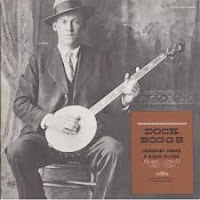
Most music today is a different story, but it’s a continuing one. The groups I revile, like Rage Against the Machine, Limp Biskit, Christina Aguilera, well they were created so I wouldn’t like them. Dock Boggs, the banjo-playing white bluesman said it best when he was older, “I don’t really like rock and roll, but then, I’m not supposed to like it.”

Tuesday, 17 May 2016

HOW DOES IT FEEL? BOB DYLAN AND JUDAS REVISITED

Today is the 50th anniversary of Bob Dylan and The Band's performance at the Manchester Free Trade Hall, when a spectator yelled 'Judas' at Dylan, who was in the midst of an amplified set. Note it's a 20 shilling ticket; I assume they didn't have the press set up to charge £1!

I listened to a 'report' on the incident on the BBC Radio 4 News tonight, presented as the moment Dylan's electric band faced the music, so to speak, and the audio quality of both the accusation, and Dylan's response: 'I don't believe you...you're a liar' were a lot more audible than they were on my bootleg CD, called Guitars Kissing And The Contemporary Fix, which I find I still listen to even though I have the 'official' version from Dylan's own Bootleg Series.

But the BBC version omitted what Dylan said next, as he turned to The Band and told them to 'play fucking loud'. I thought about the song they played next, 'Like A Rolling Stone', and how this reflected something essentially English. Not the BBC's coyness, despite the song, which benefits from loudness, being Dylan's best riposte. Listen to it: Mickey Jones (sitting in for Levon Helm who didn't make that tour) makes the snare drum explode as he starts the song, and Garth Hudson's organ swirls.

No, it was because the whole controversy was old hat by the time Dylan made it to Manchester. 'Like A Rolling Stone' had been played at Newport, to booing (although some of that allegedly was due to the bad sound system) and elsewhere (organist Al Kooper says the crowd was fierce at Forest Hills a little after Newport). But that was the summer of 1965, not '66.The song was released as single in July, and went to number 2 in the US charts (behind 'Help'). By the time the Highway 61 Revisited album was released in August, 'Like A Rolling Stone' was also number 4 in the charts in Britain. The Free Trade Hall protestor was already nine months past his sell-by date when he compared Dylan to Jesus' betrayer. Some things never change, and many things are presumed not to exist until they reach British shores.

Apparently Keith Butler, the guy who yelled Judas died 15 years ago, after a violent reaction to bee stings. A lonesome fate for a participant in what may be the most hallowed bootleg moment ever.

As Sgt. Pepper might have said:

It was 50 years ago today
Bob Dylan told the Band to play
Fucking Loud
 

Friday, 19 June 2009

FORCED TO LOOK BACK: SCOTT FROST'S HIGH CONCEPT NOVEL

Don't Look Back is a 'high concept' novel: a serial killer called 'Goya' leaves his first victim in the Rose Bowl. Goya is avenging abuse by Catholic priests, and those who covered up that abuse, and he's leaving pictures and clues based on paintings (by guess which Spanish artist?), and, best of all, the Pope himself is coming to LA, and guess at which 100,000 seat stadium he's going to make his personal appearance? That's high concept!

It's also high concept because after concept, everything else is low priority. As I followed the investigations of Lt.Alex Delillo, I became intrigued at the notion he was a gay cop, working with a gay boyfriend. That, at one point he mentions his daughter merely added to the frisson; here was the potential for severe conflict, and all that in the face of the Catholic church. It wasn't until around halfway through the novel that Delillo mentions an ex-husband, and I realised she was a woman.

Highly embarrassed by my mistake, I went back and re-read carefully, looking for any evidence there might be as to Delillo's gender, and found none. Nothing descriptive, no personality traits, no reminiscence of that first embarrassing confessional, zip, nada, zilch. To say that Delillo has no personality would be an understatement; she hasn't even the hint of a personality. The boyfriend, Dylan Harrison (the rest of Traveling Wilburys preferred to remain anonymous, maybe because Don't Look Back was a Dylan movie, though a Motown song) has even less; he exists to make assumptions Delillo can correct and supply Latin translations, even those from religious use that Delillo has no idea about, although she can quote chapter and verse from the gospels. Go figure.

When it turns out Goya, whose personality is also subsumed beneath the artwork he's chosen as his trademark, has predicted Delillo will be his executioner, that should rachet up the suspense; instead, the finale proceeds like a clockwork toy, Black Sunday with wheelchairs instead of blimps. An intriguing subplot, with shadowy Swiss Guards who might be acting as the Vatican's enforcers, simply fades away.

Sometimes you can see the makings of a screenplay in a novel, sometimes even its roots. Here you can see Ashley Judd trying on the uniform and asking can't we throw in another sex scene or three? I don't know why I'm so bothered; at least I got the Pope's sex right.

Don't Look Back, Scott Frost
Headline £19.99 ISBN 9780755346479


this review also appears at www.crimetime.co.uk

Wednesday, 27 May 2009

SUNDAY AFTERNOON WITH BOB DYLAN AND MIKE BLOOMFIELD


The Sunday Times Magazine ran a big Bob Dylan cover story interview last week. It was actually a Rolling Stone interview, as you'd discover if you read the small print, and although RS is sold in the UK, I doubt it reaches many people here (given its extremely odd mix of US mainstream commercial pop and TV with rather good US political coverage that's not surprising). The interview was conducted by the historian David Brinkley--something of an odd choice, but one that indicates in its own way just how mainstream Dylan himself has become.

Yet even as he conducts his 'perpetual tour', Dylan's music works against his mainstream status. It's as if after hearing Ricky Nelson accuse him of being 'Mr Hughes wearing Dylan's shoes' he took the moral of Ricky's song to heart and figured you could please everyone by simply pleasing yourself. It seems as if there is no attitude he can strike, no experiment in music so outre, that he could alienate his core audience. This challenging nature is the mark of an artist who remains active, growing: a serious artist indeed.

Anyone who's read Chronicles would be acutely conscious of just how self-aware an artist Dylan is--and even in that book he's not giving the fact away. His RS interview is the same: Brinkley's questions are academically sound, and Dylan runs circles round the answers, as he's been doing ever since those interviews we can see in the documentary Don't Look Back.

But one thing bothered me. Dylan is talking about his band, how they play differently from anyone else, and then he's quoted as follows: 'The guy I always miss, and I think he'd still be around if he'd stayed with me, actually, was Mike Broomfield,' Dylan says of his collaborator on Highway 61 Revisited.

BROOMfield? OK, Douglas Brinkley could easily mis-transcribe the interview, but if he knows Mike Bloomfield well enough to know he played on Highway 61, then he would have to know his real name. I couldn't check the original RS article, as the issue's off the stands and the interview's not online, but it's possible an eager Sunday Times sub figured Mike was Nick Broomfield's older brother or something, a few years ahead of him at Oxford, before he went on tour with Dylan. (postscript: RS did have Bloomfield's name correct, see the comment below by Peg, so it does appear to be a sub at the Sunday Times correcting Bloomfield's American misspelling of his own name!).

Mike Bloomfield was my favourite guitarist when I was growing up in the 60s: not Hendrix, not Clapton, not BB King, not anyone else. He came up with the Paul Butterfield Blues Band, played with Dylan at Newport and on record, and then, not staying with Bob, moved on to found The Electric Flag, whose first album holds up remarkably well today, and then play half of Super Session with Al Kooper, which also holds up well. He had all sorts of problems, which basically coalesced into drugs, and that's what killed him at a cruelly young age.

I'm not sure why I was so bothered. The error may have been just a simple literal. I think it was the idea that Bloomfield is already half-forgotten, and while Dylan's music will live on, at least as long as any pop music we've seen live on already, his contribution will be noted only on the tiny cover notes of CDs that aren't downloaded, and on the bootleg versions of Dylan songs. I was thinking about it, so I went back and put the Flag on, then Super Session (that's Al and Mike pictured right with Norman Rockwell, who painted their portraits for the cover of their live double album, and called them 'nice boys'), then I opened the door to the garden, and sat in the sunshine willing myself back to 1968 and the crazy non-Norman Rockwell world that beckoned ahead. The music didn't quite manage to remove me in time and space, but it sure sounded good.