Showing posts with label Headpress. Show all posts

Monday, 27 February 2017

BOB'S BACK PAGES (BEFORE THE NOBEL PRIZE): MY BOB DYLAN HEADPRESS ARTICLE

I wrote this piece more than 15 years ago; it appeared in Headpress 18, which was published in January 2002. I came across it the other day, and wished I had remembered it around the time Bob was given the Nobel Prize, and I kept thinking about 'dogs run free/why not we' as the sub-atomic kernel of a literary conflagration. I probably wrote this quite a bit earlier than its publication, and last year I wrote about the Free Trade Hall performance on its 50th Anniversary, you can link to that article here. But I like the way this piece, which I believe started as a simple review of the Andy Gill book, moved, so here it is again. I don't believe I'd heard the official Columbia release of the concert when I wrote this, internal evidence would agree with that, so I've amended it slightly to include my hearing of it...

BOB'S BACK PAGES

The apotheosis of Bob Dylan really grew out of the period where he electrified his music, and in the process, legitimized for rock music the sort of lyrical content that folk music had carried. Even though Dylan had already produced major electric hits by 1966, and in LA groups like the Byrds were already doing Beatlized interpretations of his songs, the sense of betrayal felt by his fans of the old era was still palpable at the Free Trade Hall in Manchester, on May 17 1966.
The tape of that show is probably the most famous bootleg of all time, and because the original tapes were somehow mis-identified, has always been known as the Albert Hall tape. It has been available for some time in an allegedly Italian pressing with the odd title of Guitars Kissing And The Contemporary Fix. It was supposedly dubbed from the same master tapes as Columbia’s official 'bootleg' release three years later, which retains the old, misleading title. Columbia declined to send a review copy of that official release to Headpress. You’ll have to ask them why. You would assume that they have remastered the tapes beyond what the bootleg offers, but the differences are not huge. There's a bit more of The Band audible more clearly on the electric disc (of the two disc set). Of course, now that the official release is out, the bootleg is a sort of pirate disc, and it would be very wrong of me to suggest that you search the bootleg out and deny Sony their rightful legal share of your money, because Sony’s deep love of the music and concern for Dylan’s loyal listeners deserves to be rewarded fully. And coincidentally, the disc is released for in time for Christmas too, only thirty years too late.
Whichever disc you hear, as I recounted in my review of Greil Marcus' Invisible Republic in Headpress 16, this is an extraordinary set. It marks the point where 'rock n roll' music was finally transmuted into 'rock', for better or worse. This is where it starts to transcend the pop traditions, top 40 boundaries, and even, for a short while, the control of the hustlers and conmen who handled the money. It also marks the beginning of a divide in pop music, roughly between black and white, coinciding with the move from AM top 40 radio into album-oriented FM radio.

The two disc packages begin with Dylan’s acoustic set, the Woody Guthrie Bob already shifting into something else. The second disc, with the group that would become The Band (apart from Mickey Jones here replacing Levon Helm on drums) is a revelation. It’s not just the booing from the crowd, the voice that yells “Judas”, to which Dylan replies “I don’t believe you, you're a liar” and tells the band to “Play fucking loud”. Dylan was used to this by now. At Newport in 1965 Pete Seeger had tried to cut the cables bringing power to his instruments. Al Kooper was so shook up after the crowd reaction at Forest Hills, NY (virtually Kooper’s backyard) that he quit Dylan’s band. So too did Helm, who was depressed by the constant booing.

But as Don Pennebaker’s film of Dylan’s 65 tour of Britain showed, Dylan didn’t really care. Or, as the Free Trade Hall showed, he’d adopted an attitude to deal with it. It's incredible to watch his surreal snideness in mocking the press who interview him, and painful to follow his constant disparagement of the “British Dylan”, Donovan. Pennebaker gets great footage of manager Albert Grossman in action, conning the BBC, and also a series of really creepy-crawly shots of groupie-extraordinaire Bob Neuwirth. Although everyone, including Joan Baez, seems happy to bask in Dylan’s reflected shadow, Neuwirth is more like one of those guys who carries the heavyweight champion’s belt to the ring. “Yeah champ, you got it, you the man champ, whatever you say boss.” When he starts dissing the soon to be dumped Baez, you actually start feeling sorry for her.
All of this is covered in Andy Gill’s My Back Pages. This is a useful reference book, but suffers from an anoraky tendency to miss the forest while concentrating on the trees, like a hippie on a trip studying every vein in that groovy leaf. Gill’s source interviews, especially with Al Kooper, have provided him with great material, but it isn’t distributed evenly: it’s as if the book had been finished before all the interviewing could be done, and of course Dylan himself is only here second-hand.
Fortunately, Gill is strongest in the period we’re concerned with here, the 65-66 transformation. Like an old folkie, it’s also very thorough on the early folk albums. But it tails off quickly after Highway 61 Revisited with the albums from Blonde On Blonde through Nashville Skyline getting progressively shorter shrift, which is a particular shame because The Basement Tapes and John Wesley Harding. I wonder occasionally about Gill’s instinctive knowledge of Americana: the Bill Lee who played bass on Dylan sessions is Spike Lee’s father, which is a cool piece of trivia. When Dylan sings “his pointy shoes and his bells” he may be singing about a jester’s costume, and he may also be talking about sharply pointed Cuban-heeled shoes and flared trousers, known as bell-bottoms in America, and often “bells” in 60s jargon. That sort of nit-picking isn’t the point. Gill cares deeply about this music, and it shows throughout. Who knows what the 52 page CD booklet in the Columbia release is like, but if you didn’t behave legally and buy the official release, this book would surely make up for that loss.
The official Dylan tribute concert is old news by now, but it has been broadcast recently in the UK on VH1. It’s sad. Al Kooper gets to sit in with John Mellancamp, whose backup singers do a full Vegas assassination of “Like A Rolling Stone” while Kooper does his organ bits in anonymous obscurity. Kris Kristofferson reads off an autocue stuff written by the same kind of guys who write the intros to the Oscar ceremonies, which is no surprise since the 'musical director' comes from Saturday Night Life and prances around in centre stage but never seems to mete a solo to Steve Cropper.  The weirdest moment comes when Sinead O'Connor tries to face down a New York crowd, and they send her backstage crying.
There are a few good points. Richie Havens seems to have lost nothing in 30 years, and Tracy Chapman seems a bit like Havens’ reborn. But apart from Booker T & the MGs, the only people who appear to be enjoying themselves are Eric Clapton, who does a brilliant job as a sort of chairman of the board, and, in sharp contrast to Clapton’s executive sleekness, Neil Young, who bounds around the stage like a kid set free by Dylan’s 60s brilliance. The Band is represented by the 1992 version, with Jim Weider on guitar and no Robbie Robertson, nor Richard Manuel, who was dead, but Garth's on accordion and Levon is back playing mandolin. When Dylan himself appears, you realise how many great epitaphs he’s already written. “I Shall Be Released” (sung at Richard funeral), “Knockin on Heaven’s Door”, “Forever Young”and yes, "My Back Pages'.  You wish it were true. Bob’s own performance is a letdown; I couldn’t help but feel we were hearing that same sort of mumbling he used to put off the crowds back in 1966 after they'd booed him. Thirty years on, and that’s what it’s come to.


MY BACK PAGES: Classic Bob Dylan 1962-69
Andy Gill
Carlton Books, 144pp, £14.99 (1998)

THE “ROYAL ALBERT HALL” CONCERT 1966
Bob Dylan & the Hawks
Sony/Columbia CD 1998

GUITARS KISSING AND THE CONTEMPORARY FIX
Bob Dylan & the Hawks
Bootleg CD (no label) 1995

THE BOB DYLAN 30th ANNIVERSARY TRIBUTE CONCERT (1992)
VH1

DONT LOOK BACK (1967)
a film directed by DA Pennebacker

Monday, 19 September 2016

GREIL MARCUS: THE HEADPRESS/DAILY TELEGRAPH INTERVIEW

I did this interview in the autumn of 2000, in the bar of London's My Hotel, just before the US presidential elections. One version of it appeared in the Daily Telegraph. The editor there, Casper Lewellyn Smith, was most interested in Marcus' thoughts about punk rock, but Marcus' Dadist take was far too academic for the music he (Casper) loved for different rebellious reasons. Unfortunately I'd found Lipstick Traces enigmatic to the point of incomprehension; punk rock not only couldn't take the weight of Dada which Marcus wanted to load onto it, but the bridge he wanted to build between Punk and surrealism never seemed complete. I wrote the piece anyway for Casper, who cut it severly, and then I wrote this, the more complete version, for Headpress, where it ran in 2001. I also reviewed the re-issue of Mystery Train for the Spectator, which is another story, and met my future ex-wife at My Hotel soon afterwards, which is another another story....


GREIL MARCUS: DYLAN, THE BAND, PUNK, ELVIS, & BILL CLINTON
 
Greil Marcus’ Mystery Train is a landmark of rock criticism, a look at America myth seen through the magic lens of rock and roll, from Robert Johnson through Elvis to The Band. Its publication turned Marcus, at age 30, into an instant eminence grise for an entire generation. There had been writers, like Ralph J Gleason, who had discussed rock music in terms of the wider world, but no one had attempted so wide a sweep, nor accomplished it so gracefully. With one book, Marcus changed rock writing forever, becoming, in effect, the music’s creative conscience.

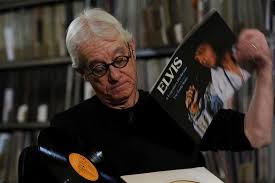
Indeed, behind Bertold Brecht spectacles, Marcus resembles a cultural commissar. He’s never considered himself a rock critic. “I ignore the industry, don’t go to the parties,” he says. His essays now appear in such rocking outlets as Artforum, Suddeutsche Zeitung, and Salon. But you can still see the excitement behind his eyes each time an idea clicks into place. A sense of risk-taking danger gives Mystery Train its edge. It’s criticism as creative art.
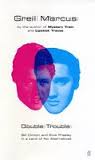
Marcus was in London to promote the 25th anniversary edition of the book (“presented finally the way I always envisioned it”) alongside simultaneous publication of Double Trouble, a collection of essays dealing with a very different American myth. Double Trouble is subtitled “Bill Clinton and Elvis Presley in a Land of No Alternatives.” When we meet at his London hotel, Marcus is worried about the upcoming presidential alternatives to America's First Bubba. He’s living temporarily in New York while he teaches at Princeton University, and although he’s registered to vote there, his wife isn’t.
We registered on the subway. New York sends people to wander the cars, signing up voters; they pay them a commission,” he says. “But only my registration went through. So if an absentee ballot hasn’t arrived by the time we get back, Jenny’s going to fly home to San Francisco, just to vote.” Marcus was born in Palo Alto, outside San Francisco, and educated at Berkeley. His lifelong addiction to rock began with a different sort of poll. I was 11 years old, my favourite song was “All Shook Up.” Chuck Berry’s “School Days” was everyone else’s favourite, and threatening to knock “All Shook Up” out of number one in the local charts. So I went and bought the record, in an unsuccessful attempt to keep Chuck Berry from number one.
 
He became a “self-conscious” fan in the summer of ’64. “I was interning in Washington, and I’d brought the Beatles’ album with “Money” on it with me. One of my flatmates said ‘what’s the big deal?’ and I said, ‘just listen to the instrumental break, the way you hear the whole machinery of industrial society grinding the man down, and he refuses to go under.’ A light bulb went ‘click’ in my head. I knew it was all bullshit, but I also believed it.”

When Rolling Stone magazine appeared, Marcus submitted a review to editor Jann Wenner, a college buddy. “A week or so later it was printed and I got a check for $12. That was it. I’d spent all my time studying at Berkeley, undergrad and grad school, and my professors seemed to have stopped trying to inspire students, and instead were training them for jobs. It was time to leave.” 
 
Marcus eventually became Rolling Stone’s book critic, and in Mystery Train he brought the devices of literary criticism to bear on rock music. I ask about what I feel is the particular influence of Leslie Fiedler, author of Love And Death In The American Novel, obvious in the way Marcus uses his personal sensibility to interpret wider issues of myth.

That sums it up pretty well. I thought a book might work if I could combine the instinctive reaction of a fan with the bigger ideas that attracted me. I felt that the whole of America was somehow captured in songs like “Mystery Train”, Robert Johnson’s “Stones In My Passway”, The Band’s “Cripple Creek”, Sly Stone’s “Thank You For Talkin To Me Africa”, Randy Newman’s “Sail Away”. If you’re presuming that, the theoretical ideas wouldn’t work without the visceral reaction.
But that book was really motivated by Watergate, by the idea that the country was up for grabs, being fought over daily. It was tremendously thrilling, but also scary, the sense of a battle taken away before it was finished.” 
 
Mystery Train was published in 1975, by which time many of the artists profiled had already slipped from the creative peaks Marcus chronicled. Soon Bob Dylan would retreat into born-again Christianity, Sly Stone would begin his odyssey through jail and rehab, Elvis would be beyond comebacks. Almost immediately after Mystery Train appeared, The Band would play their “Last Waltz”. 
 
Coincidentally, on this trip to London, Marcus read an article in Mojo chronicling the bitterness among the Band’s surviving members over song-writing credits. In Invisible Republic, his study of The Band and Dylan’s Basement Tapes (note: now retitled The Old Weird America), Marcus wrote that he still found himself framing questions for Richard Manuel, who hanged himself in 1986, knowing Manuel could not answer them. Marcus won’t go into some of the aspects of the Mojo article, but remembers when Manuel once told him he hadn’t been able to finish a song in two years. “Why not?” asked Marcus. “I haven’t been able to finish a song in two years,” said Manuel. 
 
I was most interesting in seeing Rick (Danko) say he got a $200,000 cheque for his share of “Wheels on Fire”. This was 25 years ago. There are various stories out there about what went on with song writing credits. For example, there’s one that Garth wrote the early version of “Daniel and the Sacred Harp”, and sold it away, but I won’t say any more about that.”

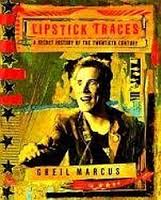
As America turned to mellow rock and disco in the late 70s, Marcus embraced punk, which led to Lipstick Traces, a study of punk and dada which attempts to deconstruct the entire 20th century. The book left many Marcus fans cold, perhaps because it was more intellectual?

It didn’t feel different to me, but it is more intellectual in the sense that I started with a question I wanted to answer, ‘why is “Anarchy in the UK” so powerful?’ which is a different approach than Mystery Train, where I started with an instinctive understanding. But I found the lack of understanding no less thrilling. Lipstick Traces was very much a Reagan book; in the same sense that Mystery Train sprang from Watergate. It was written at a time when I literally couldn’t bear to think about America. So intellectually, I left for Europe.
It was a burning desire to get to the heart of something I knew I wasn’t going to get to the heart of. I do think I got close to figuring out what made Dada a thorn in the side of the 20th Century. After I’d finished my research and before I wrote the book, I actually wrote a play combining all its characters in a night club. I spent a month writing footnotes to the play, but it never got into the book itself.
Recently a theatre company in Austin, Texas adapted Lipstick Traces as a play. My only involvement was to see the finished product, which they did as a comedy. I said, ‘you’ve staged the book I wanted to write!'

A quarter of a century after Mystery Train, Marcus says America is once again up for grabs. Again, he’s following instinct, because the parallels between Bill Clinton and Elvis go further than their white-trash upbringings in the hinterlands of Memphis. Clinton auditioned for his job by playing America’s First Elvis on the Arsenio Hall show, donning shades and blowing the sax. 
 
When President Bubba’s activities below the waist began exciting America’s right-wing would-be moralists, he literally forced Elvis off the front pages of the scandal sheets. What was Kenneth Starr, after all, but another Ed Sullivan telling Clinton to keep his hips out of camera shot? In Double Trouble, Marcus quotes Jonathan Alter saying “(Clinton) may be a hound dog, but he’s our hound dog”.

From the moment Clinton was elected, the right has tried to deprive him of his legitimacy,” he explains. “His temerity was believing in himself, just like Elvis. Elvis could’ve been accepted, if he’d dropped his Memphis buddies, took the right drugs, slept with the right celebrities. Instead he stayed in Memphis, where local society treated him with contempt. Clinton went to Washington and met similar contempt from a similar high society. He didn’t do what Reagan did, invite them all to the White House, where they’d say, ‘what class!”. Clinton didn’t schmooze them. He and Elvis are fundamentally outsiders, hicks who see no reason to become sophisticated. 
 
And if he had invited them, they’d feel this deep sexual terror, a nightmare of waking up in the White House hungover with Clinton snoring next to them. Elvis communicated a sense that life is easier than you’ve been told it is. The people who hated him, who hate Clinton, are the ones telling you it’s not."

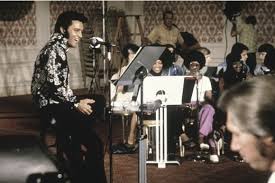
During the London Film Festival I watched Elvis: The Way It Is, Rick Schmidlin’s magnificent re-edit of Dennis Sanders’ 1970 Las Vegas documentary. The new film captures Elvis’ ability to draw something from an audience. It struck me I hadn’t seen a performance like that since Bill Clinton’s speech at the Democratic Convention in August.

Exactly,” Marcus smiles. His eyes light up again and I feel like a student being given a A. “Think about it, from the time Elvis was 19 or 20, he was a citizen of a nation divided. Half the country wanted to BE him, and the other half wanted him removed! Clinton divided the country in the same sort of way. People thought: ‘if they can do that to the President, what can they do to me if I step out line? And they keep redrawing the line!’ They look at Clinton and they’d simply like to feel as good as he does in his element.”

We also agree on the film’s defining moment, when Elvis flirts with one of his backup singers. “Yes, here’s the woman who is black, she could feel ‘oh, he’s stolen our music’, but then he spins around to her and turns it on, and she’s jelly.” 

Marcus misses that sense of joy in music today. Does he believe, as he writes in Double Trouble, that rock music “no longer seems to speak in unknown tongues“? 

Well, so much is subject to commodification. John Langford, of the Mekons, plays in the Waco Brothers, and he began one show I saw by saying ‘we do not play no alt country.' Someone wrote that Britney Spears is 18, and she looks like a 35 year old 1950s housewife at the same time she’s an ingenue. Like she’s used up her capacity to have new experience.” 
 
In an essay “The Summer of Love Generation Reaches the White House, and So Do Their Kids”, Marcus quoted Margaret Drabble’s 1977 observation that people are “more ironic, more cynical, more amused by more things, and less touched by anything.” 
 
It’s more true than ever now,” he says. “But people are still moved by what they hear. Polly Harvey and Coren Tucker of Slater Kinney are infinitely more alive—it isn’t age—they will be touchstones in the next 20 years. They’re younger than other people and of course now they’re younger than I am. The last music to come out of nowhere and change my expectations was the last three Dylan albums, the two acoustic and “Time Out Of Mind”. They tell a single story, it’s a great detective story, as good as The Big Sleep
 
Most music today is a different story, but it’s a continuing one. The groups I revile, like Rage Against the Machine, Limp Biskit, Christina Aguilera, well they were created so I wouldn’t like them. Dock Boggs, the banjo-playing white bluesman said it best when he was older, “I don’t really like rock and roll, but then, I’m not supposed to like it.”

Thursday, 15 August 2013

CHARLES BUKOWSKI: DRINKING AND THE CRAZY LIFE, THE HEADPRESS REVIEW

NOTE: Blake Morrison wrote a piece for the Saturday Guardian a few weeks ago (20/7) about why writers drink. It ran through the usual alcoholic suspects, though it never did get around to answering the question it posed. The piece included a quote from Charles Bukowski, to the effect that booze 'yanks or joggles you out of routine thought and everydayism'. That seemed to suit what Morrison wanted to say, but the more I thought about it, the less convinced I was that, although it fitted the image of Bukowski, it was really what Bukowski's life was about, or what his writing was about. Because although his life wasn't the everyday life of everyday people, it had its roots in the humdrum there, and in his writing was a routine, a different sort of routine, and when you look at it closely enough, you see it bends back, a soaked worm eating its own tail, into the everyday mundane. But that look didn't suit Morrison, nor did it suit Bukowski.

So I went back and found this review of Howard Sounes' biography of Bukowski, which I wrote for Headpress 18, in January of 2002. The issue was subtitled, appropriately enough, 'The Agony And Ecstasy Of Underground Culture'. The review seems also to have been reprinted in the Headpress Guide To Counter Culture, published in 2004.

After the Amber O'Neil book I mention was published John Martin of Black Sparrow Press said he liked it, asked for a number of copies, and then sued because she used some of Bukowski's letters, to which Black Sparrow held the copyright. It has never been released, though copies have drifted out, apparently from boxes in the author's garage.

As 16 August is Bukowski's birthday, I thought I'd post the original review now--giving my take on why he drank, and what he meant to me as a reader. And lift a bottle to Bukowski too.


CHARLES BUKOWSKI AND THE 'CRAZY LIFE'


Although Charles Bukowski achieved a cult status in America, which seems to be growing all the time, for most of his career he was actually more popular in Germany. Perhaps this was because he had been born there, though his American father soon moved him back to the USA. More likely it was because Bukowski’s autobiographical stories, poems, and novels struck a chord with Germans: Bukowski was a man who wrote bildungsromans all his life, and he was a romantic in the great Germanic sense. There is an adolescent quality which his work never loses, and it seems to appeal to the adolescent which lies buried under many adult selves.

Bukowski was ugly. He drank. He sorted letters in a post office. He went to the track and played the horses. He chased easy women. He drank. He got into fights. All that made him different from thousands of other wasted souls in flop houses and skid rows across America was that he wrote about it. Fuelled with a sort of hard-boiled romanticism, he wrote about it in a bare, straightforward style which gave his tales an air of reality, and turned much of their adolescent world-view into self-deprecating humour. It is his way of coming out on top, of maintaining faith in a romantic view of the world, even when seen through a haze of smoke, drink, and rejection. It is not that the life Bukowski presents to us is false, it is that it is presented through eyes that are never as bloodshot as they seem, a sensibility that is never as lost or cynical as it appears on the surface.

Through the unlikely avenue of two small-press publishers, Bukowski became famous, in a fashion, and through his fictional alter-ego of Henry Chinaski his bottled dreams came true. All the booze he could drink, pretty women throwing themselves at him, and his work being taken seriously. In the world of small literary magazines, he was a force of nature, something 'real' in a genre dominated by careerist poetasters, creative writing professors in flannel shirts writing poems about chopping wood.

Writing a biography of someone who has constructed such a vibrant existence through fiction is a challenge which Howard Sounes meets head on, and battles at least to a draw. He is particularly good on the realities of Bukowski’s childhood, and on his progression to loser status. Detailing the nature of his relationships, and seeing in particular the three women who made up the bulk of his life before his writing became successful rounds out and balances somewhat the more romantic picture Bukowski draws in his work. 

Strangely enough, Sounes is less revealing about how it was that Bukowski’s work eventually caught the public’s eye. Although he turned against most of the small press people who aided him in the early days, it is not a common thing for someone to move from the mimeographed magazines where he began his career to financial success. It can be argued that Bukowski made Black Sparrow Press as much or more than they made him, but there isn’t a good sense of just how that came to happen, of whether Bukowski’s ultimate popularity “just happened” or whether John Martin or someone else played the Buk card deftly.

If anything, Bukowski’s biography cries out for more space and more salacious detail. Perhaps not surprisingly, Sounes is one of the many writers to produce books on the West killings. His FRED AND ROSE is one of the most reticent of that genre, unwilling to dwell on prurient gore. This is understandable, perhaps, when dealing with murder. But it's less understandable when you’re relating the life of a man who tossed the intimate details of his own life onto the page with a seemingly casual disregard.

Bukowski was a drunken fuckup, but he used his typewriter while crying in his beer the next day. In classic juicer behaviour, he turned against many of the people who loved him or helped him. As success gave him more opportunity to indulge, and to screw-up more spectacularly, the dichotomy became more and more pronounced. But as the situations got more and more bizarre, you long for more detail. I wish Amber O’Neil’s “Blowing My Hero”, an account of being sickened by having sex with Bukowski, could have been reprinted as an appendix. The recollections of the various women who now found Bukowski the successful writer attractive and romantic stand in sharp contrast to his early life: yet almost all the stories seem cut off before they get to the gut-wrench stage. The tension between Bukowski the romantic and Bukowski the cynical love machine lies underneath almost all of them, and needs to be brought to the surface. Even the potential absurd hilarity of Hollywood tough-guy types like Sean Penn paying hommage to a small-press poet doesn’t get played out for all it's worth. 

In the end, Bukowski got to indulge his adolescent fantasies of priapic power, not just in the pages of little magazines, but in life. Yet he found the character he had constructed became a self-fulfilling prophecy. No matter how bad he got the night before, Bukowski was back at the typewriter the next day. Few of us can literally work and make our dreams come true, but he was able to. In that sense, Bukowski’s life was far less crazy, and less tragic, than people think. Did he start out as a clean-cut loner looking to become a literary light? Was he, in the end, heroic, or were the readers who believed in Henry Chinaski simply taken in by a giant creative con, and wound up buying the drinks for the guy telling funny stories at the bar? That was what the movie Barfly played with, and it's the question Sounes doesn’t ask, and it stops this engrossing biography just short of the final hurdle of greatness.

CHARLES BUKOWSKI: Locked in the Arms of a Crazy Life

by Howard Sounes (Rebel Inc 354pp £16.99)

Thursday, 9 June 2011

WILLIAM BURROUGHS' NAKED LUNCH: THE 50TH ANNIVERSARY APPRECIATION

NOTE: I originally wrote a piece on Naked Lunch for Headpress, then revisited the idea for London Magazine to celebrate the book's 50th anniversary, and the anniversary edition that was published then. It appeared in the October/November 2009 issue of that estimable magazine, as noted on this blog at the time, but it has not been available online, in either version, until now. What follows is the London Magazine essay, slightly revised. I find it easy to choose the four greatest American novels (The Confidence Man, Moby Dick, Huckleberry Finn, The Great Gatsby) but numbers five through ten seem to change and re-order constantly. But Naked Lunch is always one of those next six....

When I was 17, in the summer of 1968, I brought a copy of Naked Lunch home from the library. Mrs. Doyle, the librarian, who had been watching over my reading ever since she snuck me my first library card when I was only four, had no negative reaction; after all, she'd put the book on the shelves. But my father, perhaps remembering the book's obscenity trial only a few years before, or more likely reading the Grove Press cover blurbs (ignoring Norman Mailer’s praising Williams Burroughs as “perhaps the only American writer possessed of genius”) and worried perhaps about my motivations, took it back the very next morning.

Imagine my surprise when I arrived at university just a couple of months later and Naked Lunch was the first book I was assigned to study in John Hackett's freshman English class. That assignment put an end, once and for all, to any idea I had of studying religion, or even worse, political science. I was hooked.

Hooked being the operative word for the kaleidoscopic parade of addictions on display in Naked Lunch. Burroughs was writing about the way human need creates the conditions for humans to be controlled, and I, along with my generation, was starting to feel the cultural imperative to rebel against control. Read the essay “Testimony Concerning a Sickness” which introduces the novel. Addictions, to Burroughs, were like viruses; they took over your body's metabolism and changed it, so it couldn't function normally without them. 'Language is a virus,' he said, and language was just another thing he refused to allow to control him. Thus Naked Lunch proceeds almost at random, its cut-ups disdaining elements of control like plot, or logic, but it drives its points home directly, with image and with language that reflects both pulp fiction and pornography, language that works to get a reaction from the reader.

Reading Naked Lunch was like studying a combat map of the Sixties' culture war battle zones. Although it was almost a decade old, the writing was fresh, hallucinatory. I’d already read the Beat heroes, starting, oddly enough, with Gregory Corso, whose appeal was more to romantic adolescents than to revolutionaries. But Corso, Allen Ginsberg and Jack Kerouac symbolised rebellion to a younger generation looking for freedom but also dependent on their new parental figures to show them the way. It was part of being a baby-boomer, this expectation of having things done for you while you changed the world. But where most of the Beats were wild and loud, the bad neighbours who needed to turn down their be-bop music at four in the morning, Burroughs was more the quiet guy walking down the street staring at his feet, maybe mumbling to himself. But, and this was an important lesson to learn, despite not being wild, not being loud, Burroughs was farther out than anyone. Ginsburg’s hero, Walt Whitman, said “I contain multitudes.” Hidden inside the grey suit uniform of middle America, Burroughs’ said 'of course you do, you have to'.

I sought out his first novel Junkie, published under the pseudonym William Lee. It's a pure pulp first person tale of addiction written in tight prose, Naked Lunch before it flipped out. My friend Michael Goldfarb told me when he was young he fantasized about Bill scoring scag at the same Automat he used to visit with his parents. I envisioned Bill waiting for his man, eying Joseph Cornell in a corner table surreptitiously checking out the counter girl. Michael and I were both middle class college boys and could identify with Burroughs’ life story. It enhanced his mystique. Born in St. Louis, attended Harvard: he could have been TS Eliot. But after Harvard he wandered to New York and hooked up with the Beats, discovering crime, drugs, and the sleaziest side of the gay underworld. Even better, family money supported him. It came from his grandfather’s cut of the Burroughs' adding machine fortune—some tales had his granddad actually inventing the thing—and he even called his last collection of essays The Adding Machine, along the lines of 'when the legend becomes fact, print the legend'. Now the Burroughs Co. is gone, merged into the giant Unisys, a monolith corporation straight out of one of Burroughs’ Nova Express novels.

Well ahead of the hippies, in the Fifties, Burroughs left the cities and went back to the land, growing dope in Texas with Joan Vollmer. He married her as if to defy the controlling conventions of his own sexuality. They lit out for Mexico one step ahead of the police. The story of his failed attempt to play William Tell with her is well known, but her death was the pivotal event of his life. In the introduction to his novel Queer (written just after Junkie but not published until 1985) he said 'I live with the constant threat of possession and a constant need to escape from control. The death of Joan brought me into a lifelong struggle, in which I have had no choice but to write my way out.'

Control again. He jumped Mexican bail and wound up in Tangiers. He wrote notes and stories, and in Paris, with Ginsburg, Brion Gysin, and Harold Norse cutting and pasting and editing, produced Naked Lunch. Norse, whose died only recently (I wrote his obituary for The Independent, you can link to that here), produced his own cut-up novel, Beat Hotel, but it wasn't published until 1973, and then only in German. There's nothing addictive about it; Norse, a poet, lacked the pulp edges of the writer of Junkie, lacked the tormented vision of control.

The ripple effect was immediate. Mailer’s Why Are We In Vietnam?, one of his two or three best novels, drew heavily on Naked Lunch, blending it with Faulkner's The Bear into a searing take on the addictions of pre-Sixties America. Meanwhile Burroughs was extending his cut-up techniques, going farther into the realm of Philip K Dick paranoia in his Nova Express trilogy. Rock bands named themselves after props in his novels, Steely Dan, Soft Machine. David Cronenburg understood what Burroughs was about when he tried valiantly to film Naked Lunch, trying with limited success to find an objective correlative for what Burroughs saw, to translate his hallucinations into celluloid reality. Less successfully, what was Trainspotting if not the outer trappings of Burroughs moved to Edinburgh and reduced to mundane Scots dialect? Forty years later, writers could still be copying his prose and calling it avant garde.

Eliot fled Missouri because it wasn’t respectable enough, became a bank clerk in England. Burroughs left Missouri to abandon respectability, then, having discarded it, trampled it, inverted it, perverted it, gave up the bohemian haunts of Tangiers, Paris, London, and New York to return to Lawrence, Kansas, a town whose claim to fame is its pillaging by Quantrill’s guerillas during the Civil War. Did Thomas Wolfe say you can't go home again? Lawrence was the hated mirror image of Missouri, a final finger flung in the face of his respectable tradition. Shooting Joan didn’t lessen his fascination with guns. In the 1980s Burroughs began painting, exhibiting works of “shotgun” art, created by blasting buckets of paint onto the canvas with buckshot, Jackson Pollack meets Travis Bickle. Interviewers would show up expecting mystic rap and be driven to distraction by his laconic drawling reticence. With-it celebrities, millionaire actors and rock stars, Sean Penn and Dennis Hopper and Kurt Cobain, came to pay tribute to his far-out genius. Bill put on his suit and showed them his guns. (Hopper, at least, got it: that's his portrait of Burroughs on the right). Burroughs had returned to his roots physically. Emotionally, he had never left them. He always was Bill Lee, his alter-ego narrator of Junkie, clinically aware of the effects of the many abuses to which he subjected his system. Like Hopper, he could stand back and observe his addictions even while serving them. Unlike Hopper, he could write them into his books. He never gave up drink or drugs, though he did clean up his heroin addiction. He outlived Cobain, with whom he cut an album in 1992, and outlived almost all the major, younger figures of the Beat Generation.

The enduring image of the Beat movement will be Kerouac and Cassady in their T shirts and Levis. The advertisers won’t let that die. Burroughs never fit that image, even though his sober, business-suited figure itself should be as iconic, in its ironic way. Burroughs' writing was the most dangerous of all the Beats, and the most original. We can all sit at home now and use computers to rearrange paragraphs the way Burroughs did with scissors and glue. Interzone has its own web space on the internet. Heroin hasn’t gone away, though it had to move over for crack. I still prize my Sixties Grove Press edition of Naked Lunch, the most subversive of all the Beat works, the feel of it, that sense of being rebellious by being a consumer of the right stuff. Ironic isn't it? I haven't actually held that book in years. Fifty years since it was published? Forty since I read it? In the age of Google and Wikipedia, I wrote this essay from memory, nothing more.

Friday, 14 November 2008

NORMAN BATES HE'S A PEACH: The Long-Lost Chuck Parello Interview

Ed Gein is an American icon: the original deranged serial-killer, the inspiration for movies as diverse and famous as PSYCHO, SILENCE OF THE LAMBS, or THE TEXAS CHAINSAW MASSACRE, and as unknown as Bob Clark’s much-underrated DERANGED. But though he’s served as a role model for countless grave-robbing, flesh-wearing, serial-killing weirdos, no one had ever thought to explore what made Ed Gein tick; he had never had his own bio-pic. Not, that is, until director Chuck Parello’s ED GEIN (aka, in some areas, IN THE LIGHT OF THE MOON). Released in 2001, the film starred Steve Railsback (best-known for his role in THE STUNT MAN or for playing Charlie Manson in the 1976 TV movie HELTER SKELTER) as Gein, and the late Carrie Snodgress (DIARY OF A MAD HOUSEWIFE) as his mother.

The facts of the Gein story are fairly well known. Ed was a somewhat slow-witted odd-job man who lived alone in the ramshackle farmhouse he’d inherited from his parents. In 1957, following the disappearance of general store owner Bernice Worden, her son, a local deputy sheriff, got a bad feeling about Gein. Following his hunch, he discovered his mother’s body hanging in Gein’s smokehouse, and, in the main farmhouse, parts of numerous other bodies, furniture made from skin and body parts, collections of lips and noses, and a skin mask and vest which Gein would wear while he went about his daily domestic routine. It transpired Ed had similarly murdered the local bartender, Mary Hogan, and also indulged in grave robbing.

Horror writer Robert Bloch, who lived only 40 miles from Plainfield, used Ed’s story as the basis for his novel PSYCHO, from which Hitchcock drew his film. But no one had ever portrayed Gein the way Parello and Railsback presented him, with a great deal of sympathy for someone left alone to pursue the inner drives which tormented him. Railsback may have learned some sympathy when he played Manson, a man with a similar detachment from the realities of death. And Parello came by his serial-killer sympathies in an interesting way. He first worked with director John McNaughton on the film HENRY, PORTRAIT OF A SERIAL KILLER, in which Michael Rooker gave a chilling but understanding, interpretation of a psychopath. Parello then wrote and directed the well-received sequel, HENRY 2: MASK OF SANITY.

Parello himself cuts a benign figure, looking rather more like a researcher for documentaries than a successful director. I talked with him at the National Film Theatre, but the interview I did for Headpress got sidetracked to their newly-launched horror film mag, the suavely-titled Creeping Flesh. Sadly, CF lasted only two issues, so I never got the chance to include it in my CV. Instead, the interview is published here for the first time. Parello, since then, has co-written and directed THE HILLSIDE STRANGLER (2004), with C Thomas Howell as Kenneth Bianchi and Nicholas Turturro as his much-older cousin Angelo Buono, another film about a serial killer inspired, as it were, by an older family member...

MC: WHAT ATTRACTED YOU TO ED GEIN?
CP: Well, I was asked to do it because of my first film, HENRY 2. The script gave me a definite sense of the creeps and I said ‘why not?’
YOU STARTED OUT ON THE ORIGINAL HENRY…AND JOHN MCLAUGHLIN CREDITED YOU WITH HELPING MAKE IT INTO A CULT SUCCESS
I was working as a journalist and publicist in Chicago, and got hired as a director’s assistant and did publicity for HENRY. Then I wrote the script for HENRY 2, and was offered the chance to direct it. That led to ED GEIN.
ARE YOU AFRAID YOU MIGHT BE TYPECAST AS A HORROR DIRECTOR?
No, I’m not. I chose these films because they were very interesting stories, not because they’re shockers…they don’t pay me enough to pander to audiences! ED GEIN stays really grounded in reality, and I’m supposed to do another true crime story, which I was attracted to for the same reason…it’s grounded in reality. But actually, the whole film industry seems to be serial-killer films now…so I should be golden!
WHAT WAS THE REACTION TO HENRY 2?
It got good reviews, but people seemed put off by the idea of a sequel to a film they’d liked so much, in such a unique way.
DID THAT MAKE YOU WORRY ABOUT THE EFFECT OF THE PREVIOUS VERSIONS OF THE ED GEIN STORY?
No, because there was so much not used before. As a true crime buff I knew there was lots of stuff. There are a few things we had to change because of legal ramifications, and we did indulge in some dramatic embellishment.
YOU HAVE REMARKABLE PERFORMANCES FROM YOUR LEADS. DID THE CASTING CHANGE THE TONE OF THE FILM?
Well, just like me the script attracted both Steve and Carrie, and I always meant it to be that way. In the beginning Carrie was cool, but when she said yes I was amazed because she’d been a favourite of mine ever since DIARY OF A MAD HOUSEWIFE. She didn’t care about being typecast, nor how bad she might have to look…her best gift was being able to inhabit evil people, and make it a revelation.
HER VENOM MADE IT EASIER FOR STEVE RAILSBACK, WHO CERTAINLY MAKES ED MORE SYMPATHETIC THAN AN AUDIENCE MIGHT EXPECT
That was not my intention. I saw Ed as an evil person, but Steve said people didn’t want to sit through such a relentless portrayal. He does it well. It’s like Michael Rooker in HENRY, he does what he can do. You always harken back to what you do well. I didn’t set out to make audiences feel sympathy for him, but seeing the result, I’m glad that’s the case.
IT’S ALMOST COMIC AT TIMES, THE WAYS HE TRIES TO SET HIMSELF FREE
I think he was trying to liberate himself from anger directed at his mother.
IT DOES THROW THE BURDEN BACK ON MOM, THOUGH
Well, Carrie was so great. You know, she looked to real people for her inspiration, which makes you wonder.
THERE’S ALSO THAT REPRESSED FEAR OF INCEST
Ed always said he never opened his mother’s grave. I think he didn’t because he was so freaked by her. Erroll Morris (the documentary filmmaker) was going to go to Plainfield and see for sure, I think.
YOU SAID SOMEWHERE THAT ED’S HEAD WAS FULL OF IDEAS BUT HE WAS CLUELESS
The way he killed the two people we really know he killed was so stupid I don’t really believe he was a serial killerThe body parts in his house were mostly grave-robbing. But they blamed every unsolved murder in the area on him, which was convenient for the authorities. But trying to understand why he did what he did, the aggression it expressed, is part of the fascination. I do want audiences to understand him, though. He was basically a guy who missed his mama.
ONE OF THE MOST FASCINATING MOMENTS IN THE FILM COMES WHEN WE SEE THE ACTUAL NEWSREEL FOOTAGE OF ED BEING LED AWAY, AND WE REALISE THAT HIS HOUSE WASN’T ACTUALLY A DESERTED FARMHOUSE, BUT IN ALMOST A SUBURBAN SETTING.
Yes, the house had close neighbours, but a lot of land. The citizens of Plainfield, Wisconsin have been bugged for years by people, academics, screenwriters, and they aren’t happy about it. When we were filming we were warned not to go near Plainfield, because there’s still lots of ill-will there. There’s even a web-site warning people about worshipping Gein. The film did play in Madison, Wisconsin, though.
THERE’S THAT SMALL TOWN POLITENESS TOO
Yeah, people are too polite to say ‘you’re off your rocker’. And Ed too, was so polite, so mild-mannered, and friendly. Just one of the guys.
YOUR SUPPORTING CAST IS GREAT.
Oh yes, they really got the nature of small town life. We did take some liberties. Sally Champlin is so good as the bartender, Mary Hogan, who Ed kills. But the real Mary Hogan was a real German cow, 200 pounds.
IT’S SO ROOTED IN THE 1950s. THERE’S A BRILLIANT MOMENT WHEN ED’S ATTACK IS COUNTERPOINTED TO THE RED SKELTON COMEDY SHOW ON TV
Yes, there’s a Wisconsin Death Trip kind of feel. Plus, I always thought the guy was funny. And we see comic books lead to masturbation and sin! But it’s also that small town thing, where we recognise the weird and patronise them. Maybe Ed would have got off today. Maybe he was just trying to draw some attention to himself.
THE FILM WAS MADE FOR $3 MILLION. WHAT MIGHT YOU HAVE DONE DIFFERENTLY HAD YOU HAD MORE MONEY?
I would’ve added some salary for myself and more points for the crew! But basically this project really got done only through the bravery of one man, Hamish McAlpine at Metro Tartan films in England.
COULD THE FILM HAVE REACHED A WIDER AUDIENCE?
Well, I think older people want to see it for nostalgia…I’ve also found lots of women love the film, which is a good sign. I think women love true crime, they’re fascinated by stories at a safe distance. It’s vicarious. Look how well Ann Rule’s true crime books sell.
OR PATRICIA CORNWELL, WHERE THE AUTOPSIES MAKE HORROR ACCEPTABLE?
Exactly. I mean, look at the tabloid papers, or Lifetime Channel (a woman-oriented cable network in the USA), full of stories of women who’ve been brutalised, raped. ED GEIN is just like Oprah, but a little more graphic. I mean, we’ll get lots of criticism, but some rape story, if it’s in a package with Victoria Principal, well, that’s OK.
WHAT’S YOUR FAVOURITE OF THE PREVIOUS ED GEIN MOVIES?
Oh, I don’t know anyone who doesn’t like PSYCHO. SILENCE OF THE LAMBS is my least favourite. I just don’t get it, but again, it’s a lot of women’s favourite film. But I just love Psycho. Norman Bates, he’s a peach. But I think this film is a completely different experience from any of the ones that came before. Whenever we started to resemble TEXAS CHAINSAW, I’d try to move in the opposite direction. Some elements will seem the same, but sticking to the real story is what makes ours unique. That’s much more horrifying than whatever you can make up.