Showing posts with label Elmore Leonard. Show all posts

Wednesday, 17 June 2015

JUSTIFIED: THE FINAL SHOW

I've just watched the final episode of the last series of Justified, a triumph of serial scripting that both ties up loose ends and brings the show full circle to the point where it began. Just to make sure I wasn't giving Justified some sort of nostalgic benefit of the doubt, I went back and watched the very first episode, and it was as I remembered--full attention was paid to detail and the show held firm to its six-season focus, which was primarily the relationship between Marshal Raylan Givens and the man he comes to Kentucky to get, his childhood buddy Boyd Crowder.

The sixth series maintains a frantic focus, resembling nothing more than bloody Shakespearian drama, as the betrayals and the deaths come thick and fast. Old blood feuds mix with modern greed, traditional outlaws butt heads with 'modern' corporate criminals, and the reason is the coming legalisation of pot in the Bluegrass State--a modern form of coal that could turn Harlan prosperous once again. Raylan of course is in trouble with the authorities, including Art, back on the job and played with the usual avuncular grace by Nick Searcy.

The outsiders are played by Mary Steenburgen (chilling as a cold-blooded gangster bent on revenge against the man she thinks betrayed her husband) and Sam Elliott, cast brilliantly without moustache as both a charmer and a killer. With handlebar, Elliott is a natural hero, deep-voice and solid jaw. But take away the fuzz, and it reveals a weak-lip, and a much more interesting character, the same kind of tic that makes Jere Burns as Wynn Duffy so effective too. Their machinations, with Boyd hovering between and amongst them, are worthy of the best revenge tragedies.

The other ongoing betrayal is between Boyd and Eva, out of prison on a deal to be Raylan's informer. In some ways Joelle Carter is at the center of this series: her decisions are sometimes hard to interpret, her feelings even moreso. But Justified ends with a couple of twists, and the first of them explains her motivations perfectly, as her actions and consequences make perfect sense.

Perhaps the weakest part of the series is the introduction of Boone, Sam Elliott's hired gun, who's even more of a neo-cowboy gunslinger than Raylan. It is building to a shootout between the two, of course, and the way that shootout ends is another twist that has been set up, deftly, by just an off-hand bit of dialogue.

The ultimate confrontation, however, the one that the whole series has been building, is the one between Rayland and Boyd. It too has a twist, one that harkens back to the very first episode. But before that happens, we get a superb bit of scene-setting episode after episode, as Walton Goggins gets to go more and more over-the-top, his white teeth flashing and his revivalist dialogue making him seem an almost-mad king seeing his dreams drift away. The show's fulcrum has always rested between Goggins' fire and Timothy Olyphant's ice, and it works so perfectly because they play it so well, and each time they do it takes us right back to the beginning.

In the first episode, before Raylan shoots (but does not kill) Boyd, Boyd has asked if Raylan is going to kill him, and Raylan says 'if you make me I will'. Those words resonate here. Graham Yost and the writing team have kept this series true to the spirit of Elmore Leonard. And the ultimate line is the one that resonates the most, again returning right back to that first episode, which established Raylan's 'anger' (as Natalie Zea described wonderfully at the end of that very first episode) and his coolness (as the very opening shootout showed). It's a simple line, but it speaks about Harlan, about work, about men. It echoes of Leonard. 'We dug coal together.' It was Justified.


Saturday, 1 November 2014

ACE ATKINS' BROKEN PLACES

Ace Atkins introduced Quinn Colson in The Ranger, and when I reviewed that book last year (you can link to the review here) I noted the tropes from westerns (which Ace and I had discussed with Mariella Frostrup on Open Book), and from novels and films about returning war veterans, itself a sub-genre that goes back to encompass at least the Civil War.

Colson is now the sheriff of Tibbehah County, Mississippi, based in Jericho, where he exists in an sort of uneasy truce with the local crime boss Johnny Stagg. The novel opens with a prison break from Parchman Farm, famous from blues songs. Esau Davis and Bones Magee make their getaway on horses, just like in a western, but from there the story gets very modern. Because they're headed for Jericho, where one of their former convict pals, Jamey Dixon, has seen the light, and is a fundamentalist preacher with a line in redemption. And, coincidentally, he's living with Colson's sister Caddy, who's got a line in redemption herself.

And then it gets complicated. What Atkins does well is delineate the violence that simmers just under the overheated surface of rural Mississippi. It's something that gets pushed aside in the daily life of the people, just as the the rest of the darker side of human behaviour does. At times Atkins' prose, which in this series is very much in the Elmore Leonard vein, touches on the Southern gothic overtones of a Flannery O'Connor, and it is a pleasure to read.

But Atkins is also writing the continuation of Robert B. Parker's Spenser novels, and very well too (see my review of Lullaby here), and at times Quinn Colson starts to resemble Parker's Jesse Stone. He is partnered by a wise black woman sheriff. He has a relationship with his former true love, Anna Lee, who's now married to the good-guy town doctor. And although he doesn't have Stone's ability to charm a steady stream of women, the town undertaker and coroner, Ophelia, seems to have a soft spot for him. Anna Lee, Ophelia, Jericho, Esau...it gets very literary, if not downright Biblical, down there in the Gothic South.

This is a series book, and though it gets resolved with action and violence, enough issues both violent and non-violent, are left unresolved to ensure the next entry in the series will continue to put Colson into perilous positions. There's something major breathing under the surface of the Colson series, and it will be fascinating to see what Atkins does with those intimations.

The Broken Places by Ace Atkins
Corsair £7.99 ISBN 9781472112156


Sunday, 30 March 2014

ELMORE LEONARD'S ROAD DOGS: AN OBJECT LESSON IN CRIME WRITING

If you want (you surely don't need!) an example of what made Elmore Leonard such a great writer, turn now to his 2009 novel Road Dogs. Leonard, who by this time was in his mid-80s, brought back bank robber Jack Foley, star of Out Of Sight (1996), and teamed him up in prison with marielito Cundo Rey, last seen getting shot by Joe LaBrava in 1983's La Brava (which won an Edgar for best novel). Foley and Rey are prison 'road dogs', looking out for each other, and after Rey's lawyer gets Foley's 30 year stretch reduced, he sends Foley out to LA, where he's got two houses in Venice, a Cuban silent partner looking after them, and a psychic girl friend named Dawn Navarro, whom we last saw in Riding The Rap (1995).That last was a sequel to Pronto, and you can read here what I wrote about that, in tribute soon after Leonard died.

You'd look at the set-up of Road Dogs and you might accuse many others writers of being lazy, and trying to take advantage of established characters—in this case especially Foley, about whom it is admittedly difficult to read without seeing George Clooney step out from the excellent film version of Out Of Sight. But I wonder if, given he produced Riding The Rap and Out Of Sight back to back, if something hadn't clicked in the back of Leonard's mind, thinking Jack and Dawn ought to encounter each other at some point. After all, there's more than a little Raylan Givens in Foley's adherence to a strong, if flexible, moral code.

But there is nothing lazy about this novel, and that's because of the way Leonard works. 'Character is action,' as F. Scott Fitzgerald said, and what Leonard does is establish characters and then let them interact, and where his phenomenal story-telling ability lies is in his understanding of his characters and his willingness to let the story go where they lead. Which means this tale of double-cross and potential double-cross moves quickly and smoothly through a pretzel configuration of possibility. It's made more interesting by Leonard's omnipresent internal narration—he gets inside each character and lets you know what they're thinking. People concentrate on dialogue, and Leonard owed a lot, for example, to George V Higgins. But where Higgins would clue you in by making you follow what the characters were saying, Leonard is willing to let you follow what they are thinking, and see how that's reflected (or not) by what they're saying.

The freedom he gives his characters means there are one or two surprises along the way, and the confrontations that materialise are not necessarily the ones you are expecting, but that's what makes the novel work so well. Like the best of Leonard's writing, it's compulsive, and you feel that in writing it, Leonard wanted to know what was going to happen just as much as you do reading it. An object lesson....

Road Dogs by Elmore Leonard
Weidenfeld & Nicholson 2009, £18.99, ISBN 9780297856702

Saturday, 7 September 2013

CALIFORNICATION GETS JUSTIFIED: ON IN-FLIGHT SYNCHRONICITY, NATALIE ZEA AND NATASCHA MCELHONE,

While flying to and from London, Los Angeles and Auckland on Air New Zealand I managed to watch the entire fifth series of Californication (the only other time I'd seen the show was watching what I think was the third, when I made the same trips back in February and March of 2012). I also rewatched the whole first series of Justified.

Californication gets better when you can watch a storyline through—individual episodes often seem disjointed or lacking in depth, but that isn't unusual in half-hour comedies. David Duchovny's aptly-named Hank Moody is played with a great amount of passivity as well, and that makes it hard to follow his arc, as he might say, in an individual episode. So the whole of a season really is more than the sum of its parts. Series five also offers Natascha McElhone, as Karen, a chance to be more than just the epitome of the ideal goddess, though she does play that, and she does well with it, especially a scene on the beach at night which takes itself out of the usual rhythm of her interplay with Duchovny.

What struck me most was the change in approach between series 3 and 5. The former was more about Hank, as a writer (and teacher) and fell very much into the almost-but-never-quite passe genres of so-called dirty realism and campus fiction. He is a self-regarding frustrated writer who looks for comfort and insight in the brief pleasures available to such people when they are attractive and witty. It was funny, but there was a melancholy hanging over the show that it seemed unable to dodge but at the same time unwilling to accept.
By the fifth series, however, the show has morphed into more of a sitcom, a new millennium's version of The Honeymooners, with a bit of The Life Of Riley and a little Love That Bob thrown in. Thus we have the classic two couples scenario, but they've been doubled: Hank is not Ralph Kramden, he's too smart and less self-deluded for that, but if you put him together with Karen's new husband Richard (Jason Beghe) he gets closer. Karen is very much Alice though. Similarly, Evan Handler's Runcle, who is often the real comic focus of the show, is doubled with the excellent Stephen Tobolowsky to create a single Ed Norton for Pamela Adlon's Marcy to shriek about.
That morphing is made easier by the switch of the focus from Hank's writing books to the film industry, which allows freer reign for sexual sitcomming that often comes close to Feydeau farce. It also gets the best out of Handler, to the extent that Daniel Benzali gets to play a brilliant cameo as the agent Runcle would be when he grows up. This is not to say the darkness is completely gone: every time Hank's daughter Becca (Madeleine Martin) comes on stage we are reminded of that, in case we needed reminding.
The fifth series ends on an exceedingly dark note, courtesy of Natalie Zea, and this is where the in-flight synchronicity was awesome, as I was watching her alternately as Winona in Justfied and here as the New York-based Carrie (a light nod to Sex In the City there), who starts off as a breath of realistic air in Hank's life, and ends up as a bunny-boiler. The scene where, at a dinner party with the other two couples, she realises Hank doesn't love her, and announces she 'gave him her ass', which he shouldn't have taken if he didn't, is spectacular.
Zea is brilliant in this context, and looking back at Justified's first season I appreciated her a little more. In fact, I found both her and Joelle Carter's performances more nuanced than I had the first time around—Carter's is hidden under a surface sexiness and Zea's behind a surface of mundanity, both of which they manage to undercut, at least on second viewing.In terms of ensemble cast, Justified is hard to beat, and if not comedy, there are very Elmore Leonard-esque moments of irony in every show.
I liked that opening year of Justified even more the second time around, and I found Californication more fun with series five. Even if I already feel Natscha McElhone's disappointment in series six.

Thursday, 29 August 2013

PRONTO AND JUSTIFIED: A TRIBUTE TO ELMORE LEONARD

A couple of days after Elmore Leonard died, I was flying to Los Angeles, and then to New Zealand, and I happened to read a piece by Bob Greene about him, about how after he heard the news the went to a library, because that's where you'd find Elmore, and how he pulled a book at random from the shelves, and it was Pronto, and here's the opening line:

One evening, it was toward the end of October, Harry Arno said to the woman he'd been seeing on and off the past few years, “I've made a decision. I'm going to tell you something I've never told anyone before in my life.”

Pronto, it occurred to me, was one of few Leonards I hadn't read, but I'd been meaning to, because it features Raylan Givens, of Justified fame, and I wanted to see how the TV character evolved from the one Leonard wrote.

So a couple of days later I found myself in a ski lodge on Mt. Ruapehu, and there on the bookshelf was a copy of Pronto. I started reading it immediately, and, as is usual with Leonard's novels, finished it that night when I woke up jet-lagged and couldn't get back to sleep. What's interesting is that Pronto was published in 1993, so this is its twentieth anniversary, and the pleasure I took in reading it make it seem to me both an anniversary celebration and a memorial to a great writer.

Pronto ends with the scene with which Justified begins—the Miami show down, but it goes in some unexpected directions before it gets there, primarily Italy, but more surprisingly, the Italy of Ezra Pound. Toward the end of World War II when Pound was imprisoned, one of his guards was Harry Arno, now a successful bookie in Miami, looking to get out. If Pound seems an odd touchstone for a Miami bookie, it gives him a town, Rapallo, where he can flee when he's set up by feds looking to get him to turn on the local mob guy Jimmy Capoto. All their threats do is get Arno arrested for murder and make him the target of a contract. What makes it interesting is that Arno has history with Raylan Givens, having given him the slip once before, and pretty soon Arno, his ex-stripper girlfriend, Raylan, and Jimmy Cap's Italian-born 'Zip', aka Tommy Bucks, are all in Rapallo. Orchestration by Elmore Leonard, and the eccentricity of the set-up simply reinforces the brilliant melody of the dialogues of betrayal and confrontation.

Pronto was mined for another of Justified classic scenes, the two on one shoot out where Raylan warns the pro not to take another step or he will shoot him, and does when he does, while the amateur stands frozen. Raylan then tells the schlub to use the gun or drop it, and in the series he pretends to dro it but tries to shoot, and Raylan kills him too. In the novel, Leonard has Raylan, understanding decisions are hard for this kind of guy, making the choice for for him, then saying 'drop it,' which he does. They get to different ends, but the written version tells you so much more about Raylan in the getting there.

But then, they are different Raylans, Elmore's character and the one played by Timothy Olyphant. Reading helps you appreciate how Olyphant has caught the sense in which Raylan is playing a character he has in his mind as much as the one his experience has made him; the way his sureness in his self is allied to his ability to almost seem to be amusing himself. Olyphant isn't as physically dramatic as Leonard's Givens; you envision someone just a little bit bigger and more worn, which in a way was Olyphant's difficulty in Deadwood, which he overcame by giving Bullock an overwhelming, self-contradictory, righteousness.

But Justified has stayed true to the essence of Elmore, somewhat slicker, certainly aware of the gold mine it is for its actors, but at heart all about loyalty, betrayal, and most of all the way we use words to fool ourselves as much as others. It's also important to remember Leonard's westerns--they get Timothy Olyphant's hat wrong, but the use of the hat, to play with the image of the west when Raylan isn't totally a cowboy, is important. Interestingly, Leonard thought that Richard Boone, who played in two films based on his writing (The Tall T and Hombre) was the actor who best got the sound he was trying to write. 

When you read Leonard's early Western stories, you can feel palpably the influence of Hemingway, which I've mentioned before—not a copying of his style, but an awareness of how to tell the story through what is said, and unsaid, in the moments between the actions, or around the smallest and seemingly inconsequential actions. That's what happens here. You have to pay attention because a throwaway line may be carrying all the meaning of the entire story, and it is easy to miss, just as it is so easy to miss in life, and we miss it all the time. That's the genius of Elmore Leonard. He lets us see what we so often miss.

Tuesday, 20 August 2013

RIP ELMORE LEONARD

Despite knowing he couldn't go on forever, the news of Elmore Leonard's death is truly saddening, partly because he went on so long, partly because he did it so well, and partly because he was so matter-of-fact, humble, and good humoured about his success. He was the perfect of example of a writer who laboured at his craft until the world caught up to his talent, and then kept labouring, unspoiled by his success. It was a marvelous run, the kind every pulp writer might have dreamed about. And if he were underappreciated in his early years, he was perhaps over-hyped as mainstream literary people caught up. But if that were true, he certainly deserved it. 
I met him at the NFT. 'Call me Dutch', he said, and after his lecture when he signed my copy of his Complete Western Stories, I hadnt yet realised that it would be the best book I'd read all that year.  The last thing I wrote about him was this essay on Hombre, here on New Year's Day. He will be sorely missed.

Sunday, 17 March 2013

ACE ATKINS' THE RANGER

If you listened to Open Book today (see the previous post) you would have heard Ace Atkins explaining the influence of Elmore Leonard on his new novel, The Ranger, particularly Leonard's western Last Stand At Sabre River, in which a Confederate soldier home from the Civil War has to fight to reclaim his homestead which has been taken by ex-Union men. There's also a respectful TV movie of the book, starring Tom Selleck. Elmore Leonard provides a blurb for Atkins' new novel, and justifiably so, but the influences on this book go far beyond Leonard's work, and come from two directions.

The returning soldier finding the home front different and corrupt enough for him to have lost what is his goes back a long way, and not just in the western (think of film noir, The Blue Dahlia for example). And there are countless films modelled after the original Walking Tall (although in that one Buford Pusser came home not from war but from wrestling), among which Rolling Thunder might be considered crucial.

The home Quinn Colson comes back to Jericho upon the death of his uncle is the hill country of northeast Mississippi. Colson is still in the Army Rangers; in fact he shows up having won a gun a poker game, and bought a truck in Phenix City, Alabama (if you haven't seen Phil Karlson's great noir film, The Phenix City Story, in which ex-servicemen clean up the most corrupt small town in America, you need to, but until you do you'll miss what that signals). Colson doesn't believe his uncle, a sherrif, killed himself, and he finds his uncle's land is being claimed by the local bigwig, Johnny Stagg.

Stagg has his fingers in lots of pies, some legitimate and many less so. This includes meth cooking, which has become the equivalent of train robbing in the new west. Colson encounters, by chance (echoes of Mickey Spillane) a pregnant teen, travelling to Jericho to find the baby's father. Along the way Colson will also have to deal with his ex-girlfriend, now married, and his sister, now run off and leaving a bi-racial baby behind for her mother to tend. This may be the new south, but it is the same violent south that has been written about since before the Civil War, the south of Jesse James and Deliverance, of Southern Comfort, of Daniel Woodrell's country noir and James Carlos Blake's In The Rogue Blood, the modern south of Leonard's Justified or Atkins' own novel of 1950s corruption in Tampa, White Shadow (you can find my review, written two years ago, of that novel here).

Colson finds some allies (this isn't quite High Noon), and stands his ground, and it is resolved finally in a shootout which, again if you heard Ace explain this you will already know, bears more than a little resemblance to the gunfight at the OK Corral (Doc Holiday, of course, was a southerner).

So it is a western, and it's done with some penache. It reminds me in some ways of when George Pelecanos turned to echoing western tropes in his novels; the prose is more straightforward than, say, White Shadow's,
moving more forcefully. It's closer to Leonard, and it also shows signs of the style which may have prompted Robert B Parker's estate to decide on Atkins to continue the Spenser series. Parker's greatest strength was the ability to set small scenes, through dialogue, that drew portraits of characters quickly and efficiently; there were those in bit parts in the Spenser series whom readers felt they knew, or recognised, in the space of only a few paragraphs. Atkins can do this, and he needs to do it more fully with some of the more major characters, because he has clearly set this up to become a series, and there are already conflicts and ambiguities enough for books to come.

The Ranger is a good start. Again, as he said on Open Book, he'd moved closer and closer to the present day in his novels; it seems to me that by appropriating western themes he also leaves himself some room to do other things within that modern setting. I haven't yet read Atkins' version of Spenser, but since Parker himself also went to westerns, both in Spenser novels and directly in his Cole and Hitch novels, this would seem a rich vein to mine.

The Ranger by Ace Atkins
Corsair, £12.99, ISBN 9781472100313

This review will also appear at Crime Time (www.crimetime.co.uk)

MODERN WESTERNS: MARIELLA, ACE & ME ON OPEN BOOK

I was on the BBC Radio 4 programme Open Book today, with host Mariella Frostrup and the writer Ace Atkins, to talk about westerns. The hook was two radio adaptations of western novels which will air on R4: Elmore Leonard's Hombre (you can see my take on the book, which I read recently, here), at 2:30 next Saturday 23rd, and Jack Schaefer's Shane the following Saturday. You can find programme on IPlayer here, for at least the next week, and it will be repeated on Thursday 21/3 at 3:30pm --it's a good listen, with Kate Atkinson preceding us, and an interesting discussion of betting on the Womens Prize for Fiction. Which, had I heard it, might have prompted me to note that westerns serve, for America, much the same function as costume drama does for Britain; it's way of reassuring the present by showing its roots in the past.

This was a discussion that was immense fun when we recorded it in the studio, and it's also one that could have go off in any number of directions--I could easily have traced the western through Fenimore Cooper's Deerslayer through Melville's Confidence Man to Nick Carter--the dime novel western hero who becomes Nick Carter the detective later on--but Ace drew the comparison, of 'gunslingers moved to town', which made it unnecessary.

We might also have delved a little further into the connection between movies and novels, in reverse perhaps, because as Ace made clear, movies influence writers' own concepts of the west as much as books used to fertilise Hollywood's west. I probably ought to have made clear another distinction: westerns were a major part of the pulpy and slick magazine fictions just as film was coming into being--The Great Train Robbery, after all, was the first narrative film--but the movies' immense appetite for westerns was expressed primarily in B features, serials, and the like--John Wayne made many forgettable westerns in between Raoul Walsh's The Big Trail and John Ford's Stagecoach. Then television did the same thing in its early days--wringing the genre dry to the point that from the middle Sixties onward, we get western films that are in many ways commentaries on the genre and its conventions.


One thing that was cut was the question of what our favourite western novel actually is: Ace chose True Grit (our discussion of which also fell by the wayside) and I was torn between True Grit, Warlock by Oakley Hall and Little Big Man by Thomas Berger. Have a listen to the programme as it stands; you'll like it.

Tuesday, 1 January 2013

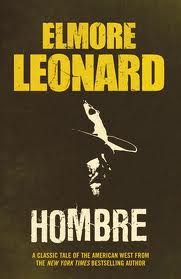
ELMORE LEONARD'S HOMBRE

I'd never read Hombre, probably because I knew the movie so well that it never occured to me to go back and seek it out after I'd exhausted all Elmore Leonard's other westerns, and the magnificent collection of his western stories. But I came a across a copy recently, and read it as a little Christmas treat for myself. It turned out to be more of a Christmas treat, it's a superb novel, whose strong points typify what makes Leonard so good.

The biggest difference from the film version is that Leonard's story is told from the point of view of a young man, whose job with the stagecoach company that's closing down of the local office provides the starting mechanism for the plot. Carl is extremely naive, and not very courageous, and he's the one who has the rifle in the book's climactic scenes, and his version of events that is the only one being told. He's a more dependable narrator than, say, Charles Portis' Mattie in True Grit, which came a bit after Hombre and might well have been influenced slightly by it. The obvious influence on Leonard is Stagecoach, which similarly puts the passengers together on the stage, and includes one figure of authority who's fleeing with an agenda of his own.

John Russell, raised by Apaches, is the hero, and he's a quieter character in Leonard's version, remembering that it's Carl's perception that is passed down to us. In the film, Carl turns into a young man who's leaving with his wife, along with the woman (Diane Cliento) who ran the boarding house Russell inherited and which he's closed down. You can see how the movie involves Russell more in white society even before he gets on the stage--in Leonard's book it's not a decision he's fully embraced yet--and the Cilento character becomes a woman who was kidnapped by Apaches and lived with them for two months. This serves to heighten both the racial tension and debate, and also to emphasise Russell's ultimate decision when it comes to the codes each race lives by. Leonard's Russell is less knowable (again, remember, we are at the mercy of our narrator), and his actions more matter-of-fact than the film's star; Newman plays him far more Christ-like at film's end. But then he is Paul Newman; when you read the description of Russell's blue eyes you realise Newman was almost perfect for the role, and he plays with almost the restraint it requires, although in the end it always seems improbable that Paul Newman would be turned away from anything, even if he were an Indian.

Where the movie is superior in in the villains. Frederic March and Richard Boone are each, in their own ways, hams at heart; March draws out every drop of venal hypocrisy from his portrayal of the corrupt Indian agent Favor. His slickness contrasts perfectly with Boone's sandpaper roughness; just as Boone's bombast and earthiness contrasts with Newman's restraint. Boone's best roles were as likeable villains (see The Tall T), and he injects Grimes (called Braden in the book; the name is shifted to Cameron Mitchell's outlaw in the film), with a perfect mix of cruelty, charm, and slyness. Between them Favor and Grimes define the bit of white civilisation not defined by women. Barbara Rush, as Audra Favor, makes the most of what is a rather thankless role, but the better she plays it, the more difficult and telling Russell's final decision becomes.

Unlike the original film version of 3:10 To Yuma, where an entire backstory was tacked onto Leonard's movie, filling it out brilliantly (what the remake did is another story!), the film follows the book pretty faithfully, and is all the better for that. But it inevitably has to show things Leonard lets you intuit for yourself; he builds his characters by letting them say and do, and letting you compare those things. That you are placed behind the eyes of a naive young man probably tells us more about ourselves, as readers of, or perhaps believers in, the myths of the West than we need to know, and that's what makes Hombre so brilliantly discomforting.

Hombre by Elmore Leonard
originally published by Ballantine in 1961
Orion Phoenix Books, £8.99 ISBN 9780753819111

Tuesday, 5 July 2011

HORROR ON NORTH 40

Let's say HP Lovecraft was born around 1980 and was a big Elmore Leonard and Justified fan, read comics and Stephen King, loved punk music and southern rock. Well, maybe not that last. But posit all that and Lovecraft might well have written something a lot like North 40—an entertaining update of Cthulu for redneck America in the 21st century.

In Conover County, somewhere in America's Dukedom of Hazard, a book is opened by slackers in the town library and with it opens a hole and threatens to await one of those evil sleeping things that horror fiction couldn't die without. Meanwhile, half the county's people are transformed, given strange powers and, some, even stranger appetites, and all this with the big dance at the high school about to happen.

Scripter Aaron Williams not only keeps the action moving, he actually makes all of this make sense, progress in a fashion which never asks us to suspend our disbelief. Like King, he works the inequities and battles of mundane life into the supernatural creatures these people become, and like Lovecraft he imbues his hidden monster with exactly the kind of hidden fears and desires that drive horror, that make Lovecraft, for all his baroque eccentricity, still scary after all these years.

The art, by Fiona Staples, complements the script perfectly; her creatures are inventive and well realised, and always remind us of the people they once were. The sense of this evil merely being an extension of real life is palpable in the art, which is why the story works so well. That its apocalyptic finish is confined to Conover County is a lesson in restraint, but the setting up of a sequel is welcome. This is one of the most engaging comics I've seen in a long time.

North 40 by Aaron Williams art by Fiona Staples
Titan/DC Wildstorm £14.99 ISBN 9780857680501

Tuesday, 25 May 2010

JUSTIFIED: ELMORE LEONARD ON THE SMALL SCREEN

At the end of the first episode of Justified, deputy US marshal Raylan Givens (Timothy Olyphant) has showed up at his ex-wife Winona's house in the middle of the night, scaring her current husband. As they stand on her porch, Givens, who has been transferred back to his home state of Kentucky after provoking and winning a showdown gunfight with Cartel killer in Miami, allows as how he has just come to realise he is angry. 'Angry?' she says. 'You're the angriest man I've ever known.'

That moment was a perfect definition of what Justified, based on the character Elmore Leonard used in two novels and one short story, was trying to do, and it's not strictly speaking, Leonard's own territory. Leonard's heroes like Givens, or Carlos Webster, are not as much angry as self-aware. It's an older-fashioned attitude, one you might have seen echoed in Cormac McCarthy's No Country For Old Men, a sort of 'man's gotta do' mentality. It may seem like a fine line, but you can see the difference between Leonard's Givens, whose miner father died of black lung, and the version created by Graham Yost, where Givens' father, as yet unseen after the first three episodes which I've seen on Britain's Channel Five, is both a con-man and a strong-arm thug. This puts Givens' own working as a boy in the coal mines into a different sort of context, most likely one in which his father was in jail. It also suggests issues of both disappointment and abuse beyond the strictness and straps of an older generation. But an angry Givens, with something to prove to the world, is a far different character from one who has to prove things only to himself, and that's where the nub of the difference lies.

The show's first episode was busy trying to define the character, get him back to Kentucky, and set up the rest of the cast. In the second and third programmes, much more of the Leonard feel came through, not as much in Givens as in the criminal characters. In fact, I thought Yost's script for the second show, 'Riverbrook' may have been as good an adaptation of Leonard as almost any, even though it wasn't an adaptation per se. There were moments of pure Elmore; the woman being held hostage complaining about wasting money on breast implants, and politely thanking the woman holding her hostage when she says how nice she thinks they are. The casual incompetence of the hostage-takers, and the kidnappers in the third programme, is exactly what makes later Leonard in particular flow so well, and the show captures it nicely.

There's also a nice contrast between Winona (Natalie Zea) and the appealingly trashy Ava (Joelle Carter, left, looking a bit like Bridget Fonda in Jackie Brown), who's shot-gunned her husband to death in the first episode, and somehow is released and back in the crime scene dining room quickly enough to be flirting with Raylan, a siren trying to lure him back into the Kentucky he tried hard to avoid. But there's a subtle reminder here, because even as we contrast Eva with Raylan's ex-wife Winona, we recall that Winona has, like Raylan, returned to Kentucky, from which she wanted to escape every bit as much as he did.

That contrast also appears to be setting up a parallel of sorts between Rayland and Boyd Crowder (Walton Goggins), his childhood friend who's the villain of the first episode 'Fire In The Hole', which was the title of Leonard's original story, but who is allowed here to survive, with the intent, it would seem, of making him Raylan's evil alter-ego. Those are the strong points of the structure. Otherwise, there is a certain generic quality to the set-up of the Lexington US Marshal's office, you've seen it in a million cop shows, and unless they can drum up some bureaucratic conflict for Raylan pretty quickly it is going to become stale.

But the show will succeed or fail on Timothy Olyphant's performance, and at times I wonder if he's just that little bit too attractive and little bit less steely than he needs to be. The show-down in a Miami restaurant which opened the first show was a bravura set-piece, and he carried it off with real flair, but it also reminded me not a little of Deadwood, where Olyphant faced the same kind of challenge; there he also played a pleasant, attractive man who might well be concealing an anger against life's circumstances, and who needs to display a vast reservoir of determination. He was at odds with Ian McShane's more demonstrative villain, but there is always the sense that he is just a little too nice, or too soft. Or maybe too small. Small in the sense of better suited for the small screen, without the gravitas that would make him naturally master of the role. The way Justified is building, he will have to be the strong silent presence at times, and he will have to be the steely gunfighter at others; he can do the latter, it is the former that is the question.

Oddly enough, I came to Justified and Luther at the same time, you can see my take on the latter here. Idris Elba would seem, on the face of it, a more commanding, larger presence than Olyphant, yet where the original set-up has led to more interesting stories and more development in Givens' character, in Luther the set-up has remained unchanged, same conflicts, same types of stories through its first four episodes. Luther too is an angry man, though his anger expresses itself through tantrums of frustration at being able to express it. Givens' anger, on the other hand, gets expressed through action. So though I had immediate reservations about both, I've already come around to Justified, and have much higher expectations for the rest of the series.

Friday, 1 May 2009

EUGENE IZZI'S THE CRIMINALIST: A Forgotten Friday Entry

Eugene Izzi was found hanging outside the window of his Chicago office in December 1996, the noose anchored to his desk. His death was ruled suicide, but it took place in strange circumstances. When I wrote about it for the Financial Times, I dismissed the idea of murder (in his pockets was the manuscript, on disc, of a novel about a man who infiltrates a white supremacy group, and there was a suggestion that such a group might have been seeking revenge for his own infiltration of them) but did consider that he might have been enacting a scene from the novel, which then went wrong. But in Izzi's 1996 novel Players, a career criminal arranges his own death, in order to provide for his family, and after publishing 16 novels in just ten years Izzi might have been feeling a similar need.

Izzi broke onto the scene with 1987's The Take, and his third book, Bad Guys (1988) was a classic which already set up his main themes of corruption, betrayal, revenge and other difficult personal choices. Izzi wrote feverishly, and in some of his books the material can seem out of control, but when he was at his best, he was among the best and most hard-boiled writers in the field. He was George Pelecanos, but more into the corruptions of the criminal and cop world, and offering less in the sense of redemption coming from the hard work of everyday life.

The Criminalist was his second novel published posthumously (the first, A Matter Of Honor, was a sequel to Bulletin From The Streets, two books which seemed to take off from Elmore Leonard's City Primeval, but neither in a very convincing fashion). It is one of his very best, having the same sense of powerful anger all his books do, while avoiding that headlong speed-rap prose that particularly detracted from some of his longer novels, including those two Leonard pastiches.

Dominick diGrazia is the criminalist of the title, a sort of super-cop who operates as a lone wolf within the Chicago Police Department. DiGrazia is a trained forensic scientist who prefers to remain on the street, and he has powerful friends in high places to cover his back in the political snakepit that is the CPD. When a corpse is discovered in an alley, maimed in the same way as a famous unsolved murder from twenty years earlier, DiGrazia manages to take over the investigation himself.

Since DiGrazia’s ex-partner, now retired, had been the original investigating officer, and since the original victim was the sister-in-law of a cop, who was accused of killing her, the strands of the story are set up carefully. The most detailed and labyrinthine plots exist within the police, which we see primarily through the eyes of Janice Constantine, a veteran beat cop who becomes DiGrazia’s temporary partner.

Many of Izzi’s core personal themes throw themselves up here, the ones that appeared to reflect aspects of his own life: abusive parents, distrustful marriages, the inability of people to transcend the hands dealt to them by life. But his usual sense of rage is tempered here by care and even sensitivity; using a female point of view seems to help give him some distance, and, unlike some of his novels, he's here concerned about keeping the reader guessing about what is true and what isn’t. The investigation may reach its conclusion with a slight anti-climax, but the story plays fair even as it carries you along. You could also look at it as a precursor to TV shows like CSI, in that Izzi took the popular forensic strand of crime writing, and transferred it to actual investigators. This time, his adapting of his work to popular trends worked perfectly, and it deserved to be a springboard to greater success.

We can speculate about what sort of conditions conspired to grant Izzi the artistic peace to keep this novel so well under control. We can also speculate further about the locked-room mystery he left behind with his death. We can regret that this was the last Izzi novel we got to see (the family apparently decided not to release the novel which was on his person when he died, just as they honoured his wish to keep his second novel, The Eighth Victim, out of print—it's not great, but it's not THAT bad!). The Criminalist was said by some sources to be Izzi's best-selling novel, though when I interviewed his editor, Jennifer Sawyer-Fisher, she said the book had received only a 'small boost' from his death. When I originally reviewed The Criminalist ten years ago, I said that, given the circumstances of his death, 'it’s heart-warming to read something so good'. That's still true, and after George V Higgins, he's the writer I'd most like to see get back into print.

THE CRIMINALIST Avon Books, USA, 1998